
 Search Articles


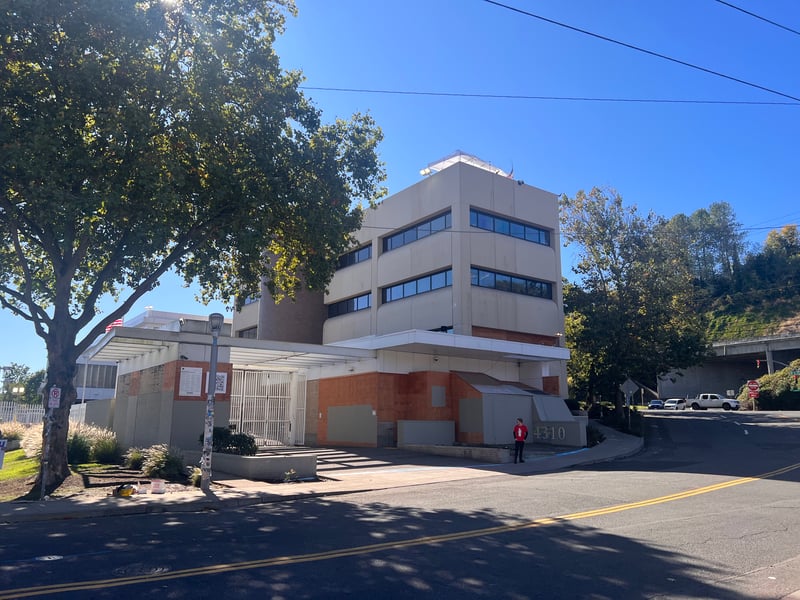
PORTLAND, Ore. (CN) — A decision on whether federalized troops will deploy to protect “war ravaged” Portland and its Immigration and Customs Enforcement facility is expected by the end of the weekend.
“You will have a decision by Sunday, but I don’t know exactly when,” U.S. District Judge Karin Immergut said at the close of a three-daytrial over the legality of the Trump administration’s bid to send military forces to Portland.
The city of Portland, along with the states of Oregon and California, sued Trump to block the deployment of federalized National Guard troops to protect Portland’s ICE facility, which has been the site of ongoing protests since June.
“This is, I think, one of the most significant infringements on state sovereignty in Oregon history,” Oregon Justice Department Attorney Scott Kennedy said during closing arguments.
The city and states accused the Trump administration of “manufacturing a crisis” in order to justify the deployment of federalized troops.
“Defendants cannot cause the very emergency they seek to address with the National Guard,” Kennedy said.
The Trump administration argued conditions at the ICE facility were severe enough to warrant federal intervention, saying federal officers were overstretched and lacked local support.
Under Title 10, Section 12406 of the U.S. Code, the president may deploy state National Guard troops when regular forces are insufficient or there is a “danger of rebellion.” The administration said both criteria were met.
“The court and the president don’t have to find there’s actually a rebellion; there just has to be a danger of a rebellion,” Justice Department attorney Eric Hamilton said, citing testimony from officers who reported threats and harassment from “violent agitators.”
Cammillia Wamsley, field director for ICE’s Seattle office, described the damage done to the building: shattered windows, broken doors, damaged access card readers and an inoperable entrance gate.
When questioned by the state, Wamsley repeatedly denied having seen any reports detailing events at the ICE facility, prompting Immergut to ask a question.
“I’m confused; do you ever see these kinds of documents that talk about your region that you’re in charge of?” Immergut asked.
Wamsley said she was usually given broader reports with less detail.
The city and states argued the federal government offered no photos or videos to support its vivid accounts of protesters, including claims that demonstrators brought a prop guillotine or carried weapons.
While federal officials said National Guard deployment would relieve overworked officers, the plaintiffs argued the strain stemmed from routine staffing shortages that have not hindered immigration enforcement.
Wamsley told the court she was directed to double the daily arrests in her region when she assumed her position earlier this year.
Bringing up a clip of Kristi Noem on a Fox News interview in which she said she would send “four times the amount of officers” to Portland, Kennedy argued that the defendants had substantial resources to draw upon without calling up the National Guard.
Hamilton argued that local police have all but left federal officials to manage protesters on their own, without local police assistance.
“It has become common knowledge that the Portland Police Bureau is not going to respond to assist us with protest activity at the ICE facility,” said a commander with the Federal Protective Service, identified only by his initials W.T., out of fear of harassment.
The city and states defended local police, noting Oregon’s sanctuary laws bar state officers from aiding federal immigration enforcement. Other state laws restrict use of force and prevent agencies from using proxies to bypass those limits.
Federal officials argued Portland police used those laws as an excuse to avoid helping remove people blocking the ICE facility’s driveway, even when they couldn’t tell if those leaving were ICE officers.
Kennedy countered that Oregon has the right to withhold assistance and noted federal officers successfully cleared the driveway on their own each time.
He also pointed to evidence showing the Portland Police Bureau stayed in contact with federal officers and couldn’t assist either because the officers’ use of force violated state law, and because Portland officers sometimes had to leave the area after federal officers deployed tear gas.
The Trump administration remained steadfast that the National Guard is necessary to quell the crowds.
“I’ve never seen the Guard aggravate a situation or incite a situation,” said Timothy Rieger, acting vice chief of the National Guard Bureau. “I’ve only seen it calm a situation, and that’s in 30 years of service.”
Federal officials said deploying the 200 Oregon National Guard members they requested would free other federal agents to return to their regular duties.
They also argued the dispute could have been avoided if Oregon Governor Tina Kotek had agreed to oversee the Guard mission, saying the federal government would still have retained control and decided whether to station troops at the ICE facility.
“It would have been entirely her decision,” Rieger said about Kotek.
Yet, Trump still would have been able to federalize the troops if he didn’t think they were adequately protecting the facility, the plaintiffs pointed out.
In early October, Immergut issued two temporary restraining orders. The first blocks the federalization and deployment of the Oregon National Guard and has been stayed by the Ninth Circuit pending rehearing en banc. The second blocks the deployment of any National Guard troops to Oregon and expires at midnight on Sunday.
The federal defendants refused to agree to extend the second restraining order for a few days to give the court more time to consider the facts and to give both sides more time to submit post-trial briefings.
Subscribe to our free newsletters
Our weekly newsletter Closing Arguments offers the latest about ongoing trials, major litigation and rulings in courthouses around the U.S. and the world, while the monthly Under the Lights dishes the legal dirt from Hollywood, sports, Big Tech and the arts.