
 Search Articles


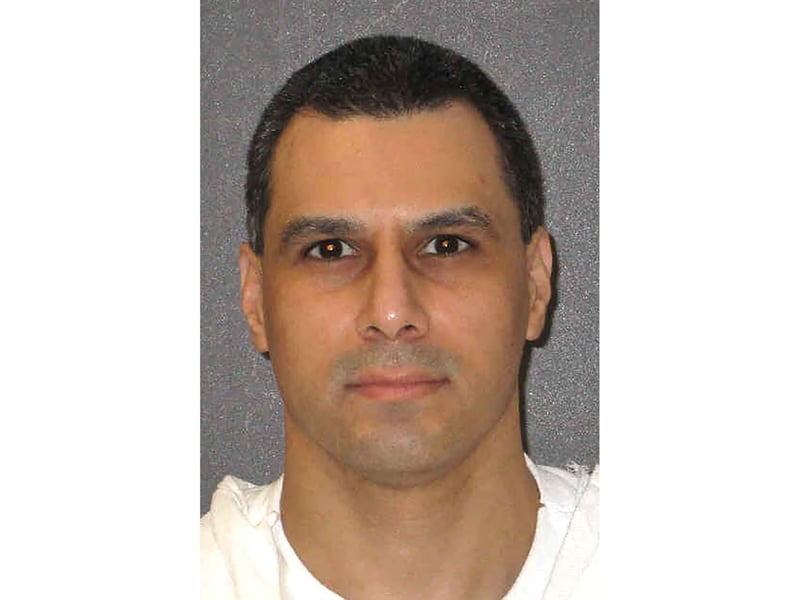
WASHINGTON (CN) — The public debate over following court orders bled into the Supreme Court’s review of a Texas man’s decades-old fight for DNA testing on Monday.
During a protracted 90-minute oral argument session, the justices weighed whether the Fifth Circuit erred in finding that Ruben Gutierrez lacked standing to pursue post-conviction DNA testing. According to the appeals court, Gutierrez’s case was “meaningless” because the Texas prosecutor was unlikely to comply with a federal court order.
Justice Brett Kavanaugh, a Donald Trump appointee, balked at the idea that Gutierrez couldn’t seek a resolution to his DNA request on the assumption that a prosecutor would continue to withhold testing.
“If President Nixon said, ‘I’m not going to turn over the tapes no matter what,’ you wouldn’t say, ‘oh I guess we don’t have standing to hear the executive privilege case,’” Kavanaugh remarked.
Kavanaugh’s comments follow Vice President JD Vance’s suggestion that the Trump administration could disobey court orders that it believed to be unlawful. Legal scholars worried that Vance’s post on X foreshadowed a constitutional crisis.
In Gutierrez’s case, the Texas prosecutor argued that he would continue to withhold evidence based on a 2011 ruling from the Texas Court of Criminal Appeals, finding that Gutierrez would still be eligible for the death penalty even if he received favorable DNA test results.
“Multiple, independent state-law grounds that are unaffected by the district court’s declaratory judgment continue to support Saenz’s decision to deny Gutierrez access to the evidence for DNA testing — and thus block his path to filing a state habeas application accompanied by the DNA testing results,” Texas wrote. Luis Saenz is the district attorney of Cameron County, Texas, a defendant in Gutierrez’s case.
Gutierrez was sentenced to death for the 1999 murder of Escolastica Harrison. He admitted to his involvement in a plot to rob Harrison, but he maintains he had nothing to do with the 85-year-old’s murder.
Under Texas law, Gutierrez’s capital murder conviction would still be viable because of his connection to the underlying felony that led to Harrison’s murder. However, Gutierrez says he isn’t eligible for the death penalty because he didn’t plan or participate in the killing. He claims that never-before-tested DNA evidence from the crime scene will help prove his story.
Texas’s strict DNA testing statute — Texas Code of Criminal Procedure Article 64 — left Gutierrez fighting a 14-year battle for DNA testing. In its latest iteration, Gutierrez says prosecutors violated his due process rights by only permitting DNA testing to prove innocence and not for sentencing challenges.
Two years ago, the Supreme Court approved a nearly identical due process claim on the testing law’s statute of limitations. Still, the Fifth Circuit said Gutierrez lacked standing to bring his case.
Kavanaugh was not alone in his concerns. Justice Ketanji Brown Jackson, a Joe Biden appointee, worried there would be large downstream impacts if the court endorsed the Fifth Circuit’s theory.
“What I’m really, really worried about is that this case — which seems very small and narrow and about a particular guy and DNA testing and the interpretation of this statute — could actually have major implications for how we understand standing,” Jackson said.
Traditionally, Jackson said, redressability isn’t a major hurdle for the court to overcome.
“You’re setting up redressability to require the exclusion of any other ground for relief,” Jackson said.
For Kavanaugh, the prosecutor’s argument boiled down to: “Who cares about the procedures, they’re not going to win anyway.”
Justice Sonia Sotomayor, a Barack Obama appointee, questioned why prosecutors were fighting tooth and nail to deny Gutierrez’s testing request.
“It would seem that somehow we’re fighting a legal issue that really is less legal than it is ‘don’t you want to know you’re convicting the right person for the right thing?’” Sotomayor said. “I mean, he’s going to spend time in jail no matter what because he admits to being at least an accessory to the robbery.”
Not all of the justices appeared convinced that Gutierrez should prevail, however. Chief Justice John Roberts, a George W. Bush appointee, questioned why Gutierrez would have standing if the DNA evidence wouldn’t impact his case at all.
“Standing may not require much, but it requires something,” Roberts said.
Justice Samuel Alito, a George W. Bush appointee, said the court’s 2023 ruling hinged on the district attorney turning over DNA testing in Rodney Reed’s case. For Gutierrez, Alito said there was not a similar justification.
“It’s really hard for me to see how a decision on this distinction between death eligibility and guilt could make a difference in the district attorney’s decision,” Alito said.
It appeared Justice Amy Coney Barrett, a Donald Trump appointee, may hold the deciding vote. Barrett questioned the prosecutor’s discretion to deny Gutierrez’s testing request. She was concerned that even if Gutierrez met all the qualifications under Texas’ testing statute, the prosecutor wouldn’t comply without judicial intervention.
“Could the DA deny access to the DNA evidence … saying, ‘Listen, I don’t believe in giving DNA evidence, you can go to the court and try to get it, but it’s the policy of this office not to hand it over’?” Barrett asked.
The prosecutor said the office relies on informal discretion to decide whether to provide evidence for testing.
 Follow @KelseyReichmann
 Follow @kelseyreichmann.bsky.social
Subscribe to our free newsletters
Our weekly newsletter Closing Arguments offers the latest about ongoing trials, major litigation and rulings in courthouses around the U.S. and the world, while the monthly Under the Lights dishes the legal dirt from Hollywood, sports, Big Tech and the arts.