
 Search Articles


MANCHESTER, England (CN) — With the transatlantic alliance facing tension on multiple fronts, U.K. Prime Minister Keir Starmer’s invitation to U.S. President Donald Trump for a second state visit raises issues about how to navigate an unpredictable White House.
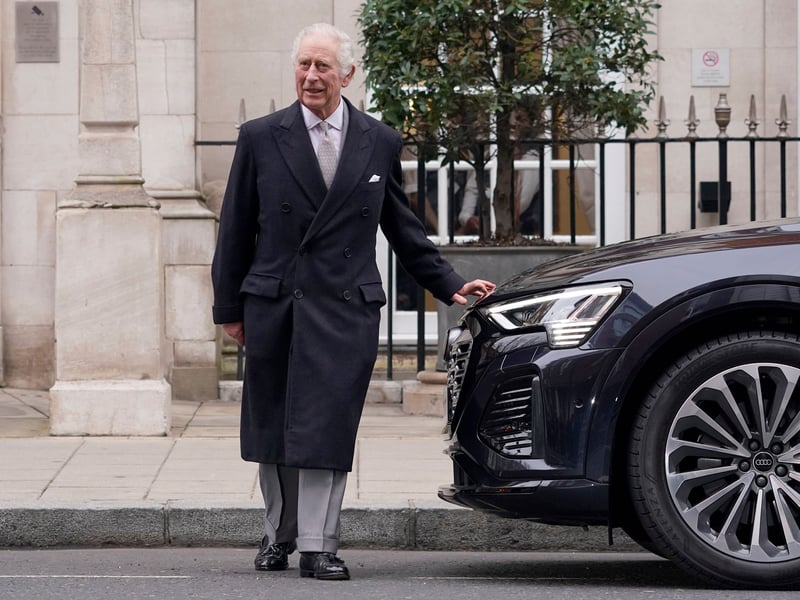
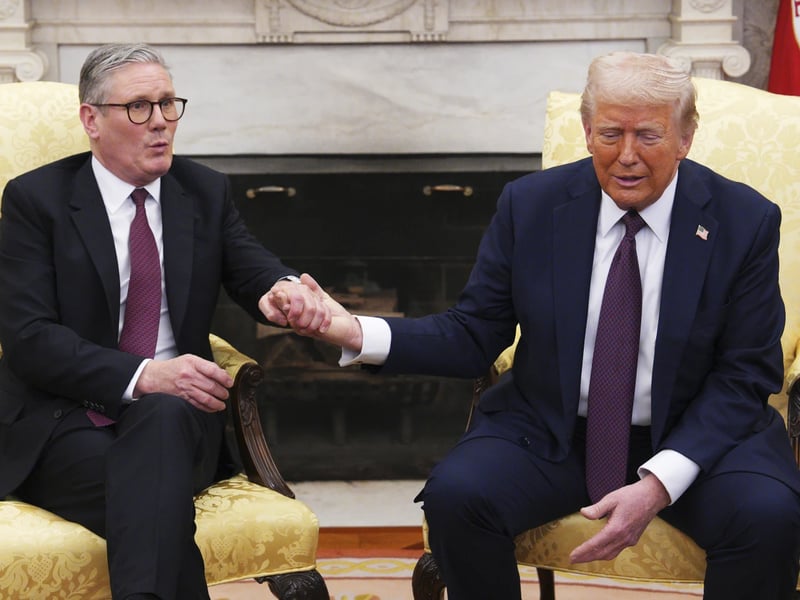
During Starmer’s visit to Washington in February, he handed Trump an invitation from King Charles III, calling it “truly historic” and “unprecedented.” Trump accepted, saying it would be an “honor” to visit the “fantastic country,” praising the king as a “beautiful man, a wonderful man.”
For Starmer, the invitation was both diplomatic and strategic, aiming to stabilize the U.K.-U.S. relationship in the face of transatlantic fractures. Trump has long admired Britain, from the royal family and his relationship with the disgraced Prince Andrew to his golf courses in Scotland, where his mother was born and raised.
However, the invitation has opened up challenges for both the U.K. government and the monarchy.
Balancing diplomacy with domestic skepticism
“A state visit from Donald Trump is fraught with domestic political difficulties for Keir Starmer,” according to Richard Johnson, a lecturer in U.S. politics and policy at Queen Mary, University of London.
“Trump is unpopular in the United Kingdom,” he added. “Any visit is likely to attract protestors, especially in London. So, the domestic political payoffs for Keir Starmer are relatively minimal.”
During Trump’s first state visit in June 2019, he met with Queen Elizabeth II while tens of thousands of people protested. The now-iconic orange-tinged Baby Trump blimp flew in the air as Trump sat at a banquet in Buckingham Palace. The 3-day visit required 6,300 officers and cost $4.5 million in security.
Starmer would have weighed the domestic backlash against any potential benefits. “The gains have to be diplomatic and strategic, otherwise there is little point politically in bearing the domestic political costs of the visit,” Johnson said. “The visit itself may not produce anything particularly concrete, but it is clearly the intention of the U.K. government to be in Donald Trump’s good books and maintain the U.S.-U.K. relationship.”
While Trump has imposed specific tariffs on Mexico, Canada, the EU, and China, citing the country’s large trade deficits, his wider tariffs are set to impact the U.K. as well as the rest of the world — despite the U.S. having a $11.9 billion trade surplus with the U.K.
There are no expectations that a state visit would accelerate a trade deal, but the optics may help anyway. “A visit like this will help to reaffirm these ties,” Johnson said. “Diplomacy is sometimes as much, and often more, about maintaining ongoing relations as it is seeking change.”
Whatever Starmer is hoping to get from Trump, he will be doing so without the support of much of the British public.
British attitudes toward the U.S.
Only a third of the British public view the U.S. as a friend and ally, according to a recent YouGov poll, the lowest level since 2019. The number of Britons seeing the U.S. as “a hostile threat“ has jumped from 3% at the end of last year to 11%.
Public sentiment toward the president is largely negative. One study found that when asked to describe Trump in one word, the most common responses were “idiot”, “dangerous” and “funny.” However, younger men were more favorable, with 53% of those under 35 saying they would have voted for him — mirroring the president’s U.S. support.
Despite this, a thin majority of Britons support prioritizing cooperation with Trump rather than standing up to him — the approach of a number of Western leaders, including Canada Prime Minister Mark Carney and incoming German leader Friedrich Merz.
Andrew Clarke, 62, a home improvement specialist from Cheshire, thinks that canceling the visit now would be a mistake. “It would be a massive insult to the president’s office, and that in itself could harm our special relationship.”
But citing Trump’s stance on the Ukraine conflict and threats to annex Greenland and Canada, Clarke said the visit is problematic. “We do sometimes have to hold our noses for the greater good of the nation,” he said. “However, in threatening to annex a Commonwealth member,” it would be “too much to bear.”
A petition calling for the withdrawal of Trump’s invitation has more than 200,000 signatures.
A royal headache: The king and Canada
State visits are formally issued by the king on the advice of the prime minister. Trump is only the third U.S. president to attend a U.K. state visit, following George Bush in 2003 and Barack Obama in 2011.
While the monarchy remains apolitical, the king has shown subtle signs of support for Canada amid Trump’s annexation threats of its northern neighbor. Last month, he met with former Canadian Prime Minister Justin Trudeau at the royal family’s private estate. During the visit, King Charles, suited in navy uniform, adorned Canadian medals and honors. He also planted a red maple tree at Buckingham Palace, met with representatives from the Canadian Senate, and welcomed Carney as part of the Canadian prime minister’s diplomatic tour of Europe.
King Charles now faces the delicate task of balancing his ceremonial role with growing public unease over Trump’s proposed visit. The optics of hosting a president who is widely unpopular in the U.K. could negatively impact the king’s favorability.
Unease is not just confined to the halls of Westminster or Buckingham Palace. It reflects a broader transatlantic shift in attitudes toward the U.S., with tensions deepening and calls to boycott American goods and services gaining traction.
The U.K. joins boycott of U.S. products
Trump’s tariffs and annexation remarks have fueled anti-American sentiment among its allies. Canadians are booing the American national anthem, canceling their holidays in the U.S., and turning up their noses at American goods.
Europeans are also boycotting. In response to Trump’s remarks on Greenland, Denmark’s largest retailer, the Salling Group, announced it will tag European-made goods with a black star. Its CEO, Anders Hagh, said the move is in response to consumer demand to avoid American products.
While no major boycotts have taken hold in the U.K., smaller movements are emerging, with forums and online groups openly discussing tactics on what products to shun and what alternatives are available.
Laura from Cambridge joined a boycott group after Trump paused intelligence sharing with Ukraine. “I was horrified when Trump and Vance turned on Zelenskyy in the White House,” she said.
“The only way to channel my anger and feel less helpless was to hurt them in the pocket,” she added. “I’ve been substituting groceries, something a lot more challenging and surprising than expected .You really have to drill down on some products’ many layers to get to the real owners.”
Laura said she’s found a community of like-minded individuals, while being fully aware of the irony of using Facebook to “beat the devil with his own tail,” she added, “as they say in Canada, apparently.”
Another tactic British boycotters use is to turn American-made goods upside down on shelves, so people can easily identify them, Laura said. She has written to the country’s largest supermarket, Tesco, asking them to clearly label whether products come from the U.S., Europe or the U.K.
James Atchley, from Lancashire, founded the group following Trump’s escalation with Canada.
“This was never about hating America or its people,” James said. “This is about challenging the unchecked corporate and geopolitical power,” and standing against “U.S. foreign policy that bulldozes international alliances.”
The group is also promoting European and Commonwealth alternatives.
While the boycott movement may not unbalance Starmer, who is treading a diplomatic tightrope with Trump, it reflects a growing divide in the special relationship.
Whether it strengthens ties or deepens divisions at home, the invitation underscores the prime minister’s delicate balancing act in an era of global uncertainty.
 Follow @jayfranklinlive
Subscribe to our free newsletters
Our weekly newsletter Closing Arguments offers the latest about ongoing trials, major litigation and rulings in courthouses around the U.S. and the world, while the monthly Under the Lights dishes the legal dirt from Hollywood, sports, Big Tech and the arts.