
 Search Articles


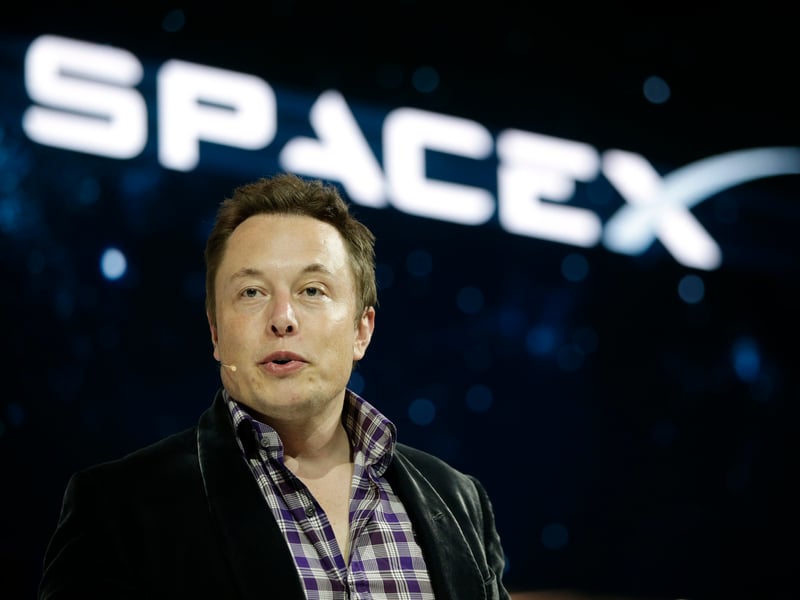
WASHINGTON (CN) — A D.C. Circuit panel on Friday upheld a Federal Communications Commission decision to license a new SpaceX satellite system over challenges by Dish Network and the International Dark-Sky Association.
The three-judge panel, made up of U.S. Circuit judges Neomi Rao and Michelle Childs and Senior U.S. Circuit Judge Douglas Ginsburg, rejected concerns that the FCC had failed to consider the risks of signal interference or conduct the necessary environmental review.
Rao, a Donald Trump appointee, wrote the panel’s unanimous opinion — with Joe Biden appointee Childs and Ronald Reagan appointee Ginsburg joining.
SpaceX applied for a license to operate 29,988 low-altitude non-geostationary orbit satellites — they continuously circle Earth rather than remain in a fixed position — to deliver internet service as part of its second generation Starlink system.
The FCC conditionally approved a license for 7,500 satellites, finding that the move was in the public interest because the system would improve broadband access to “unserved and underserved” regions in the United States and around the world.
SpaceX’s application was subject to an entity created by a multinational treaty, the International Telecommunications Union — referred to in the opinion as the “ITU” — which ensures satellites comply with certain power flux-density limits.
Applicants must undergo a two-step process with the union, certify that they will comply with those limits and submit power flux-density data to confirm the system complies. The union then may issue a finding in favor of the applicant, after which the FCC can issue the license.
In SpaceX’s case, the FCC conditionally approved the license while the union’s determination was still pending, but cautioned that the company would have to adjust its operations if it failed to meet the union’s standards.
The Dark-Sky Association challenged the licensing with declarations from two members, including an astronomy professor, who argued the new satellites would likely contribute to light pollution and hamper their ability to view the night sky.
Rao found the organization and its members had standing to sue over the licensing, but had failed to convince the panel that the FCC’s decision and lack of an environmental analysis was arbitrary and capricious.
She explained that SpaceX’s license fell within a “categorical exclusion” that only requires an environmental assessment if the FCC found the license could lead to a significant environmental impact. The FCC found otherwise, Rao said, which sank the Dark-Sky Association’s argument.
Rao noted that the FCC cited two relevant European Space Agency studies which found that such satellite launches and reentries would have no significant environmental impact.
“The FCC concluded the studies were ‘the most relevant evidence in the record’ and ‘sufficiently persuasive … to conclude that there would not be a significant environmental impact associated with a constellation of 7,500 Gen2 Starlink satellites,’” Rao wrote.
Dish also challenged the approval, arguing that the FCC was wrong to ignore evidence that the Starlink system would exceed the union’s limits, defer the union’s favorable finding requirement and withhold SpaceX’s data from public release until the licensing process ended. Further, Dish argued that the FCC illegally delegated its decision to the union.
Rao wrote that Dish failed to offer a “smoking gun” that proved the Starlink system would exceed the union’s limits, finding that the FCC was right to disregard a separate analysis Dish conducted that it purported showed that Starlink should fail.
Further, the FCC’s decision to grant the license while awaiting the union’s decision was “reasonable and reasonably explained,” as the commission can waive its rules for a good reason, which in this case was the public interest in a quick deployment.
She pointed to a previous decision by the D.C. Circuit upholding SpaceX’s first-generation satellite system.
“Reviewing that license, this court held the interim waiver was reasonable because the FCC sought to avoid the harm resulting from ‘long delays in the provision of internet service to Americans who remain totally unserved by other broadband solutions,’” Rao wrote. “We reach the same conclusion here.”
In regard to whether the FCC was right to withhold SpaceX’s data, Rao found the FCC was not required to disclose that data because it was only used to facilitate the union’s analysis and never independently evaluated by the FCC.
Finally, Rao found that the FCC did not illegally delegate its decision to the union because the commission did not delegate its decision-making authority at all, rather it only sought the union’s advice on the “highly technical” limits.
“Importantly, a favorable finding by the ITU does not automatically yield a license,” Rao wrote. “The commission must consider a variety of factors, including satellite interference, to determine whether a license is in the public interest. After receiving the ITU’s compliance finding, the commission makes the final decision about whether to grant a license.”
 Follow @Ryan_Knappy
Subscribe to our free newsletters
Our weekly newsletter Closing Arguments offers the latest about ongoing trials, major litigation and rulings in courthouses around the U.S. and the world, while the monthly Under the Lights dishes the legal dirt from Hollywood, sports, Big Tech and the arts.