
 Search Articles


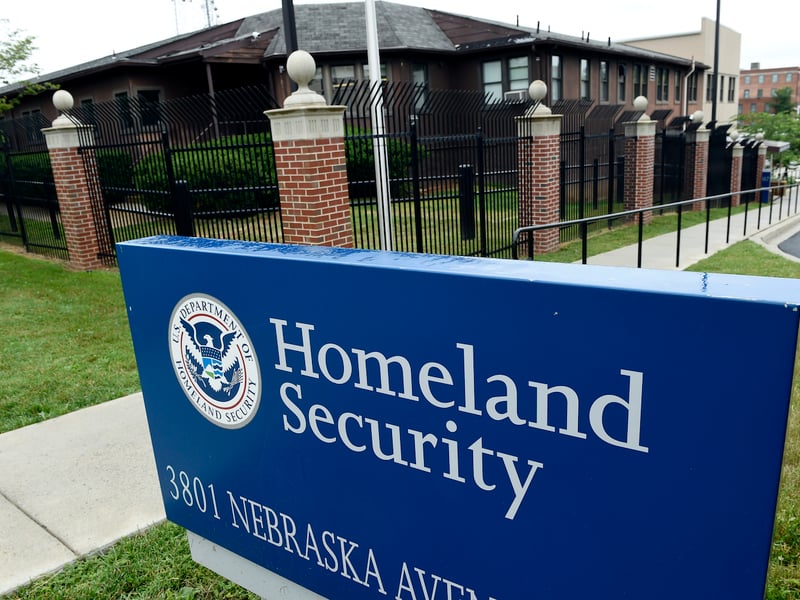
WASHINGTON (CN) — A D.C. Circuit panel on Thursday signaled the Trump administration’s universal national registry for noncitizens may need to be narrowed as to the sort of information the government can require immigrants turn over, rather than blocked outright.
A three-judge panel heard arguments in a challenge brought by a coalition of immigrant rights groups who argue the registry — which requires all migrants 14 and older to register their fingerprints and carry an ID card or face criminal prosecution — unilaterally upends 80 years of immigration policy.
The rule, referred to as the “Alien Registration Requirement,” applies to everyone over 14 who enters the country without being registered, which the Department of Homeland Security estimated includes between 2.2 and 3.2 million people. Younger children would need to be registered by their parents or legal guardians, then reregister when they turn 14.
First set in the Alien Registration Act of 1940, the registration requirement was incorporated into the 1952 Immigration and Nationality Act.
The main target of the measure is people who have entered the United States without permission. Canadians, who are usually able to enter the U.S. without a visa for 180 days, must also register if they stay longer than a month.
While the panel expressed doubt they could block the registration forms outright, they indicated that its current form — only available online and in English — and the breadth of the questions should be changed.
U.S. Circuit Judge Patricia Millett, a Barack Obama appointee, asked the Justice Department whether police officers had adequately provided a non-English speaker their Miranda rights if they were only read in English.
Justice Department attorney Kartik Venguswamy said he didn’t know.
“No, they would not have been Mirandized, that’s why police have it in different languages,” Millett quickly responded. “And now you’re going to say, ‘We’re going to impose an obligation, on penalty of criminal prosecution, for you to fill out information you can’t read and you can’t understand.’”
Venguswamy replied that under that analysis, immigrants “would not have willfully failed to register” and thus would not be subject to prosecution, but emphasized that position was purely under Millett’s hypothetical.
Michelle Lapointe of the American Immigration Council, representing the coalition, argued the sudden decision to begin enforcing a registration provision of the Immigration and Nationality Act reversed the long-standing determination that registration was effectively handled through the immigration process.
She described it as a “big switcheroo,” adding that the registration forms include a series of questions asking immigrants to report their advocacy activities and effectively admit to having committed a crime of any kind.
She argued the questions chill immigrants’ speech, citing examples of immigration agents arresting noncitizens for their advocacy — such as Tufts student Rümesya Özturk — and force them to self-incriminate to even crimes as minor as speeding, in violation of the First and Fifth Amendments.
Millett seemed unconvinced by Lapointe’s First Amendment claim as the speech is only being chilled by the government’s wider immigration enforcement tactics, not the form itself. She noted the government regularly and legally collects similar information from diplomats and tourists, and it seemed unlikely the court could rule it unlawful for the government to then use such information.
U.S. Circuit Judge Gregory Katsas, a Donald Trump appointee, asked why they were discussing chilled speech in the first place when the advocacy groups’ main claims are that the rule was wrongfully implemented without any notice and comment period in violation of the Administrative Procedure Act.
Lapointe replied that the groups did not have a freestanding First Amendment claim, but instead argue that the government failed to consider potential First and Fifth Amendment harms when it crafted the registration forms.
Venguswamy added the panel should agree with U.S. District Judge Trevor McFadden that the advocacy groups have not suffered any irreparable harm from the forms themselves.
He tried following up on Millett’s point that any constitutional harm derived from the administration’s wider enforcement efforts rather than the form itself, but she quickly interrupted him to clarify that her observation did not mean there was no harm.
She said the form’s questions regarding whether an immigrant has committed any crime went far beyond the questions outlined in the INA and its requirement that any additional questions be reasonable.
“If I say, have you ever committed any crime, recognizing that speeding on the George Washington Parkway or the Baltimore Washington Parkway is a crime, not a civil infraction, littering in a national park is a crime,” Millett said. “That’s asking you to confess to things that no government authority is aware of. That’s a big step closer to the Fifth Amendment than disclosing police and criminal records, which are matters of public record.
On Aug. 12, a separate D.C. Circuit panel rejected the advocacy groups’ emergency appeal to halt implementation of the requirement, finding they failed to satisfy the “stringent” requirements needed.
U.S. Circuit Judge Michelle Childs, a Joe Biden appointee, rounded out the panel.
 Follow @Ryan_Knappy
Subscribe to our free newsletters
Our weekly newsletter Closing Arguments offers the latest about ongoing trials, major litigation and rulings in courthouses around the U.S. and the world, while the monthly Under the Lights dishes the legal dirt from Hollywood, sports, Big Tech and the arts.