Search Articles


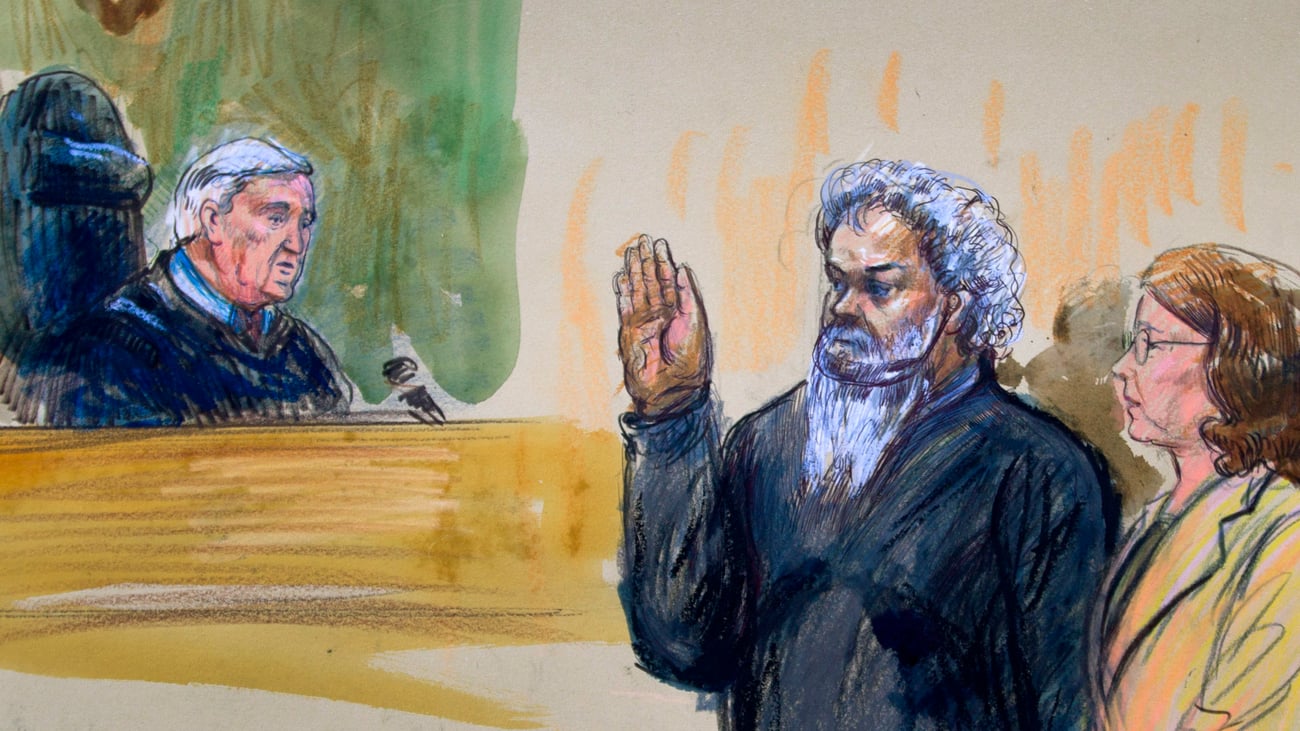
WASHINGTON (CN) — A D.C. Circuit panel ruled on Friday that a Libyan man who helped plan the 2012 attack on the U.S. diplomatic compound in Benghazi must again be resentenced after finding his 28-year prison term was “unreasonably lenient.”
The three-judge panel remanded Ahmed Abu Khatallah’s case to U.S. District Judge Christopher Cooper for a third sentencing after another D.C. Circuit panel ruled his 22-year prison term was “shockingly” lenient.
U.S. Circuit Judge Karen Henderson, a George H.W. Bush appointee, wrote the opinion, joined by U.S. Circuit Judges J. Michelle Childs and Florence Pan, both Joe Biden appointees.
Henderson wrote that the panel concluded the sentencing guidelines for Khatallah’s conduct began at 40 years in prison and extended to life, and that Cooper clearly erred in varying downward.
“A 28-year sentence does not reflect the seriousness of Khatallah’s crimes,” Henderson wrote. “Khatallah helped prepare for and execute a premeditated, armed attack on a U.S. diplomatic outpost. He pressured a Libyan security force not to patrol the mission during the attack.”
“His only stated regret was that the terrorists did not kill every American at the mission,” Henderson continued. “Although Khatallah did not realize that goal, his failure to inflict harm — whether due to fortuity or incompetence — does not dilute the ‘gravely serious’ nature of his crimes.”
Khatallah was convicted on four counts by a jury in November 2017 but acquitted of the most serious charges stemming from the deaths of Ambassador Christopher Stevens, Glen Doherty, Sean Smith and Tyrone Woods.
Friday’s decision revives a case that began nearly 14 years ago, when assailants overran the U.S. compound in Benghazi on the night of Sept. 11, 2012, and set it ablaze. The fire killed Stevens, the first U.S. ambassador slain in the line of duty since 1979, and Smith, a foreign service officer, by smoke inhalation.
The jury convicted Khatallah of conspiracy to provide material support to terrorists, providing material support to terrorists, destroying property that endangered others and using a semiautomatic firearm during a crime of violence.
The jury acquitted Khatallah of the remaining 14 counts, including those tied to a mortar attack on the compound the morning of Sept. 12 that killed Doherty and Woods, both CIA contractors working at the Benghazi complex.
In July 2022, U.S. Circuit Judges Patricia Millett, Greg Katsas and Neomi Rao — an Obama appointee and two Donald Trump appointees, respectively — overturned Khatallah’s sentence, writing in a per curiam opinion that it was “substantively unreasonably low in light of the gravity of his crimes of terrorism.”
Before Khatallah’s Sept. 26, 2024, resentencing, the Justice Department urged Cooper to impose a sentence of 30 years to life, saying the lower term failed to reflect the gravity of the crimes or deter similar conduct.
During the 2011 uprising against Libyan dictator Muammar Gaddafi, Khatallah formed a militia of about two dozen fighters.
Trial evidence showed Khatallah directed armed militia members to attack the Benghazi compound before arriving armed and preventing U.S.-allied forces from responding to the attack.
Cooper nevertheless ruled the government had not proved beyond a reasonable doubt that Khatallah’s actions were directly tied to the fire that killed Stevens and Smith, making a sentence above 30 years inappropriate.
Henderson concluded Cooper abused his discretion by varying so far downward and that the sentence was inadequate to protect the public.
She rejected Cooper’s finding that, as an older defendant at 45 when he stood trial, Khatallah was unlikely to recidivate and noted it directly contradicts the record that suggests he would resort to violence to achieve his political or religious goals and could, upon release, reconnect with his contacts in Libya to do so.
“These are not crimes of youthful passion,” Henderson wrote. “Nor are they crimes that a devout religious militant would be unable to direct in old age. And ‘perhaps most importantly,’ Khatallah has never ‘disavowed terrorism.’”
 Follow @Ryan_Knappy
Subscribe to our free newsletters
Our weekly newsletter Closing Arguments offers the latest about ongoing trials, major litigation and rulings in courthouses around the U.S. and the world, while the monthly Under the Lights dishes the legal dirt from Hollywood, sports, Big Tech and the arts.
Additional Reads
 Markets dip slightly, even with positive inflation news July 17, 2026