Search Articles


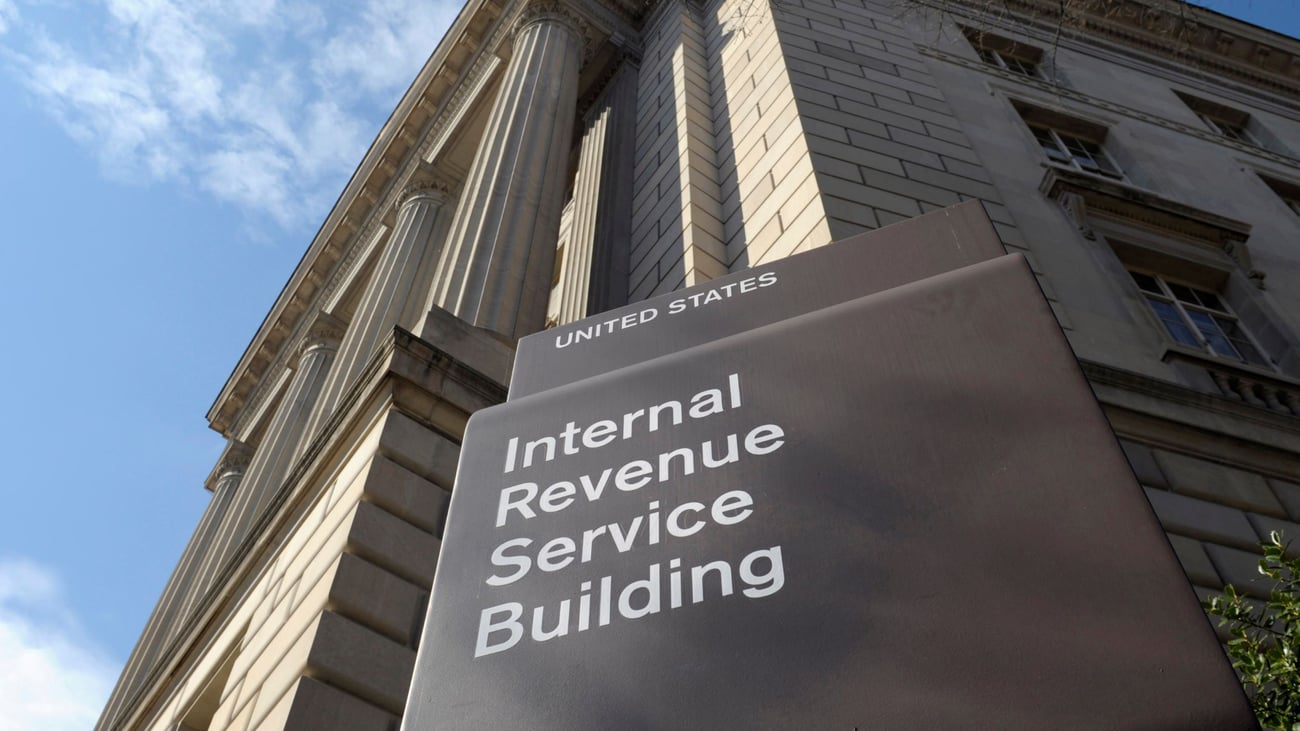
WASHINGTON (CN) — A D.C. Circuit panel on Friday rejected an effort by an ex-Internal Revenue Service contractor responsible for leaking President Donald Trump’s tax returns to the press before the 2020 election to lower his five-year prison term.
The three-judge panel rejected Charles Littlejohn’s argument that his sentence had been predetermined, finding it reasonable and based on considerable thought by U.S. District Judge Ana Reyes.
U.S. Circuit Judge Justin Walker, a Trump appointee, wrote the court’s opinion Littlejohn failed to show that Reyes had predetermined his sentence and that the record instead “reflects that the court approached its decision with an ‘open mind.’”
“It is true that the court express ‘strong feelings’ about Littlejohn’s crime and likely arrived at the sentencing hearing with a ‘preliminary idea’ about an appropriate punishment,” Walker wrote. “But that is neither unusual nor untoward, especially when the court’s words and actions indicated a ‘mind open to new facts, new arguments and new choices.’ Littlejohn’s evidence to the contrary is weak.”
Walker is joined on the panel by U.S. Circuit Judges Neomi Rao and Senior U.S. Circuit Judge Judith Rogers, appointed by Trump and Bill Clinton, respectively,
Reyes sentenced Littlejohn to five years behind bars in January 2024 after he pleaded guilty to a single felony count for the unauthorized disclosure of tax return information, which also included the returns of Elon Musk, Florida Republican Senator Rick Scott and 7,600 others.
At his sentencing, the Joe Biden appointee slammed Littlejohn’s targeting of Trump during his first term in office as “an attack on democracy,” and compared him to Jan. 6 defendants, saying both represent an apparent trend in society where people feel the need to break the law to “further their political goals.”
Littlejohn argued at oral arguments that Reyes had “predetermined” his punishment be the statutory maximum before he ever appeared in court, pointing to a series of off-the-record meetings without Littlejohn or even a court reporter present.
According to Littlejohn in a brief, Reyes emailed the parties in the days leading up to sentencing, indicating she planned to vary upward from Littlejohn’s sentencing guidelines range due to the number of returns involved and asking whether it would be unreasonable to impose a sentence outside the guidelines since Littlejohn pleaded guilty.
Reyes also received a letter from 25 members of the House’s chief tax-writing committee urging her to sentence Littlejohn to the five-year maximum, which was also off-the-record and not docketed.
Walker noted that, while those communications should have been on the record, their mere existence did not amount to evidence of a predetermined sentence. Further, he said, transcripts from the meetings show that Reyes had not made up her mind about imposing the maximum sentence, rather they showed Reyes was still undecided and had doubts about the government’s requested sentence.
Walker also rejected Littlejohn’s assertion that Reyes mistakenly believed his crime was politically motivated, in part because his actions were clearly meant to change tax policy.
Citing Littlejohn’s own words, Walker noted he wanted to show “just how easy it was for the wealthiest among us to avoid paying into our system.”
“Second, his crime was an attack on a sitting president because he wanted to inform voters about (in his words) ‘the tax returns of the sitting president before they decided how they were going to vote,’” Walker wrote. “Third, his crime was an attack on our constitutional democracy because his goal was to influence an election through illegal activity and because (in his words) his crime ‘undermined the fragile faith that we place in the impartiality of our government institutions.’”
Lastly, Littlejohn’s actions were meant to harm thousands of taxpayers because, in his own words, he “systematically violated the privacy of thousands of innocent people” to leak his targets’ tax returns, Walker wrote.
In reviewing the five-year sentence, Walker determined Littlejohn’s actions clearly warranted the maximum penalty under 18 U.S. Code Section 3553, which governs unlawful disclosures of tax records.
“Here, the offense was far more serious than most unlawful disclosures of tax records,” Walker wrote. “Littlejohn ‘target[ed] the office of the President of the United States,’ which meant he ‘target[ed[ democracy.’ Plus, he launched ‘an intolerable attack on the personal lives of thousands of Americans’ on a scale ‘unparalleled in the IRS’s history.’”
The fact that Littlejohn disclosed the tax return information for thousands more individuals to the press than the 152 that have been published about to date suggests that the harm caused “is not necessarily done or even known,” Walker wrote.
 Follow @Ryan_Knappy
Subscribe to our free newsletters
Our weekly newsletter Closing Arguments offers the latest about ongoing trials, major litigation and rulings in courthouses around the U.S. and the world, while the monthly Under the Lights dishes the legal dirt from Hollywood, sports, Big Tech and the arts.