
 Search Articles


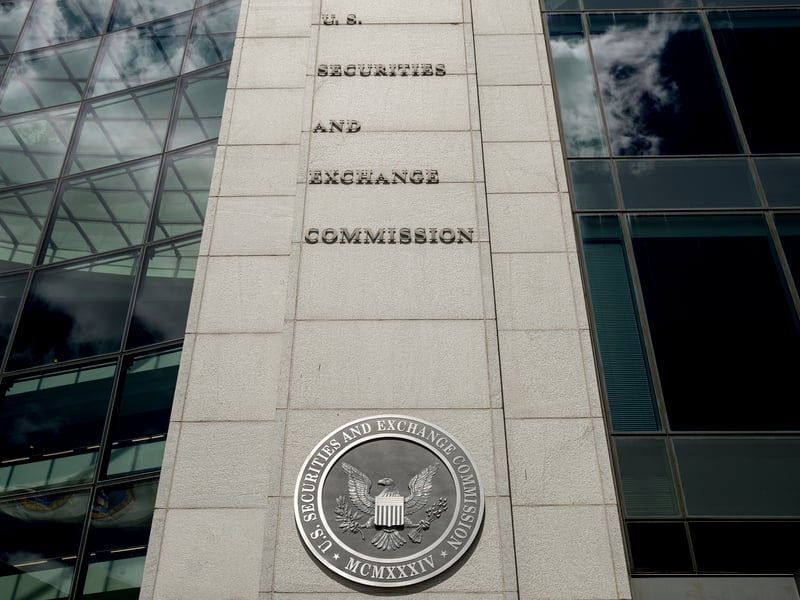
WASHINGTON (CN) — A D.C. Circuit panel expressed doubt Monday that a whistleblower could receive million-dollar awards meant to incentivize tips to the Securities and Exchange Commission if they first bring the information to the news media.
A three-judge panel heard arguments from a pseudonymous whistleblower, referred to only as John Doe, who was rejected as a claimant in an SEC investigation that resulted in two other whistleblowers receiving $12 million in awards.
According to Stephen Kohn of Kohn and Colapinto, representing Doe, the Dodd-Frank Act requires the SEC to pay whistleblowers who “voluntarily provided original information to the commission and that led to” a successful enforcement action.
Under the 2010 statute, Doe provided original information of securities violations to the press, after which the SEC opened an investigation that it later credited to two separate whistleblowers whose information helped uncover violations that “otherwise would have been difficult to detect.”
Large portions of the underlying record — from the target of the whistleblower’s complaint to the SEC’s actions against it — are redacted, leaving the primary issue before the court whether the SEC correctly applied the statute’s whistleblower provisions.
Kohn argued Congress made clear that whistleblowers who voluntarily bring information to the media should receive monetary awards if that public reporting leads to an enforcement action.
He noted that under the SEC’s apparent reading of the term “voluntary,” Doe was denied an award because the commission first contacted him to provide his information, rather than the other way around. Additionally, the SEC said Doe did not fill out a necessary form containing the provided information within 30 days of the first meeting with the commission.
Further, Doe met with the SEC as part of its wider investigation, which an investigator specifically referred to as a “voluntary interview,” before reversing course during the award process and concluding that Doe did not voluntarily provide original information to the SEC.
U.S. Circuit Judge Cornelia Pillard, a Barack Obama appointee, proposed a hypothetical where a whistleblower brought their information to a small regional newspaper whose reporting the SEC only sees six months later. She noted that the SEC’s whistleblower awards are meant to disincentivize such situations and instead incentivize direct communication with the SEC for immediate action.
Pillard acknowledged that in cases like Doe’s, “there’s an unfairness” and “kind of an irony in saying people need the awards as incentive to come forward,” considering Doe appeared before the SEC at its request, but suggested the commission’s reasoning was valid.
SEC attorney Emily Parise argued that Doe was denied an award because he did not submit his information to the commission voluntarily and thus did not satisfy the Dodd-Frank Act’s requirements.
Senior U.S. Circuit Judge Judith Rogers, a Bill Clinton appointee, expressed concern that the SEC was relying on a “magic words” position, meaning it could not provide an award to Doe unless he followed the SEC’s procedure and only brought the information to the commission first.
U.S. Circuit Judge Florence Pan, a Joe Biden appointee, followed up on Rogers’ point, noting that the SEC’s definition of “voluntary” seemed to change between its letter to Doe for an interview and its decisions regarding awards.
Several media organizations — such as The Guardian and The Associated Press, along with First Amendment advocacy groups and media publishers — filed an amicus brief urging the panel to side with Doe and uphold a claimant’s right to an award when providing information to the media first.
The media organizations argue that the press and the SEC’s missions often intersect in whistleblower cases, where “the media’s truth-seeking function” benefits the commission’s work.
“The commission’s final order turns a blind eye to those benefits; prioritizing formalism over the core principles of disclosure and transparency upon which it was founded,” the media organizations said.
“Worse, the commission’s position leaves potential whistleblowers — individuals who are typically operating with limited resources, under extremely stressful conditions, and with a constant fear of retaliation — on the horns of a dilemma: do they go to the press, which will allow them to serve the public good by having their information disseminated quickly and to the broadest possible audience, but at the expense of their personal interest?” the media organizations added. “Or do they take their information directly to the commission, which serves their personal interest, but keeps the information under wraps unless and until the commission chooses to publicize it?”
 Follow @Ryan_Knappy
Subscribe to our free newsletters
Our weekly newsletter Closing Arguments offers the latest about ongoing trials, major litigation and rulings in courthouses around the U.S. and the world, while the monthly Under the Lights dishes the legal dirt from Hollywood, sports, Big Tech and the arts.