
 Search Articles


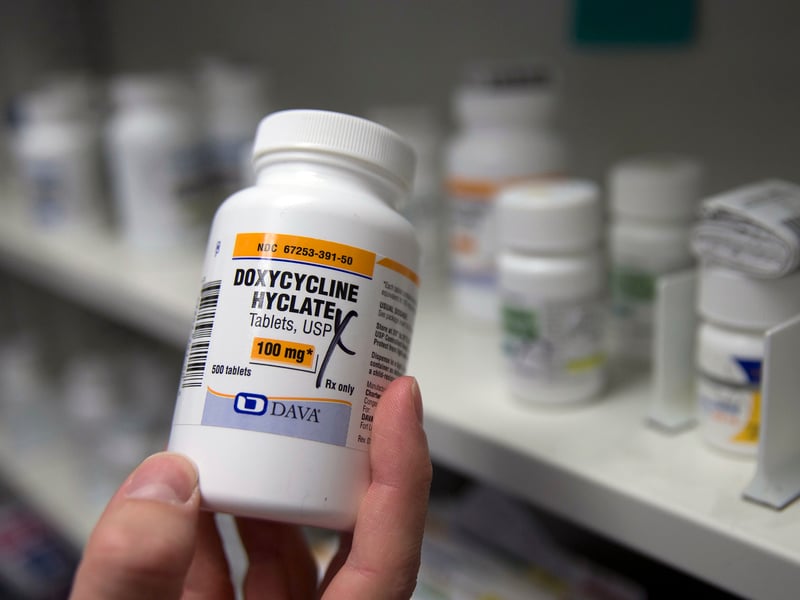
WASHINGTON (CN) — A D.C. Circuit panel ruled Tuesday that drug manufacturers can limit the sales of discounted drugs under Section 340B of the Public Health Service Act.
The three-judge panel rejected arguments made by the Justice Department and 26 attorneys general that the drugmakers’ requested restrictions violated the statute, passed in 1992 to provide discounted drugs to low-income and uninsured patients.
U.S. Circuit judges Gregory Katas, Neomi Rao and J. Michelle Childs — two Donald Trump appointees and a Joe Biden appointee, respectively — affirmed a decision by U.S. District Judge Dabney Friedrich that the statute does not prohibit drugmakers from limiting distribution through contracts.
“We hold that Section 340B does not categorically prohibit manufacturers from imposing conditions on the distribution of covered drugs to covered entities. We further hold that the conditions at issue here do not violate Section 340B on their face,” Katsas wrote in the court’s opinion.
However, Katsas added a caveat that “other, more onerous” conditions could violate the statute and that the conditions imposed in this case, by Novartis Pharmaceuticals and United Therapeutics, could amount to violations in particular circumstances.
He pointed to United Therapeutic’s condition that covered entities provide the drugmaker with claims data related to contract pharmacy orders with third-party administrators — hired to determine whether issued prescriptions are eligible for discounts after the fact — as a possible violation.
Katsas clarified that the Health Resources and Services Administration, the administrator of the program, would have to show that specific covered entities could not provide that data for some reason to prove the condition violated the statute.
Congress created the 340B Drug Pricing Program to allow covered entities such as qualifying safety-net hospitals, clinics and other providers to buy outpatient drugs at a discount from drugmakers participating in Medicaid. Health care providers also benefit through insurance reimbursements that usually exceed the discounted cost of such drugs, which they use improve other provided services.
According to a Government Accountability Office analysis, over 2,600 hospitals — approximately a third of the nation’s hospitals — participate in the 340B program.
The discounts average from 25% to 50% and allow health care providers to offer uninsured and underinsured patients free or low-cost drugs.
The distribution of the drugs is not uniform, as some contract pharmacies maintain separate inventories of Section 340B drugs, while most have a mixed inventory of discounted and nondiscounted drugs.
Pharmacies with mixed inventories determine after a drug has been dispensed whether it was eligible for the discount, outsourcing those determinations to third-party administrators who receive larger fees for every prescription deemed eligible.
The drugmakers argued to the panel in 2022 that such arrangements lead to “unlawful diversion and duplicate accounts.”
In 2020, both companies began to limit the number and kinds of contract pharmacies they would ship drugs to. Novartis planned to work only with pharmacies within 40 miles of a covered hospital, while United Therapeutics would only work with pharmacies previously used by the covered entity in the first three quarters of 2020.
The panel did not address the Novartis plan in the case as the drugmaker has since abandoned it, instead opting to follow a similar plan to United Therapeutics.
The health agency argued that the statute prohibited manufacturers from imposing any conditions on the delivery of covered drugs to covered entities.
In the 32 years since the program was established, the health agency has issued guidance adjusting the program, most significantly in 2010. That year, the agency allowed covered entities to contract with an unlimited number of outside pharmacies, even if those entities have in-house pharmacies, in order to expand patient access.
According to the GAO report, the guidance expanded the number of covered entities in the program between 2010 and 2019 from 9,700 to 13,000, and contract pharmacies participating in the program increased from 1,300 to 23,000. Covered purchases have also increased, jumping from $6.9 billion in 2012 to $24.3 billion in 2018, Katsas wrote, citing a 2019 Drug Channels article.
The program has faced legal challenges across the country in recent years, with pushback from large drugmakers like Eli Lilly and AstraZeneca.
In January 2023, the Third Circuit Court of Appeals ruled in favor of the drugmakers, finding that the drugmakers’ refusal to deliver drugs “to an unlimited number of contract pharmacies” did not violate the statute.
 Follow @Ryan_Knappy
Subscribe to our free newsletters
Our weekly newsletter Closing Arguments offers the latest about ongoing trials, major litigation and rulings in courthouses around the U.S. and the world, while the monthly Under the Lights dishes the legal dirt from Hollywood, sports, Big Tech and the arts.