
 Search Articles


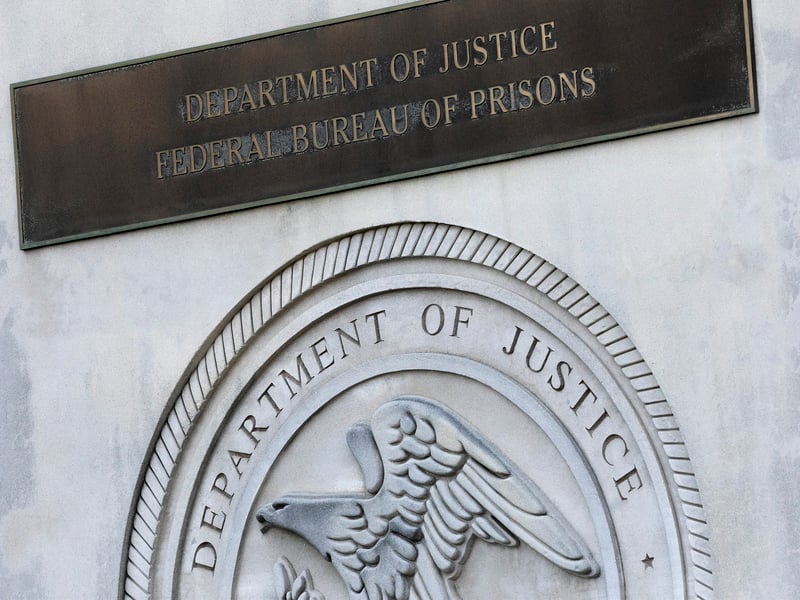
WASHINGTON (CN) — A D.C. Circuit panel appeared skeptical Friday that it should overturn several preliminary injunctions blocking President Donald Trump’s executive order requiring the transfer of 19 incarcerated transgender women to male prisons.
In one of its first cases of the 2025-2026 term, a three-judge panel heard Trump administration arguments that injunctions against its prison policy should be lifted, calling them policy judgments that harm other women in female facilities.
On Jan. 20, Trump issued an executive order titled “Defending Women from Gender Ideology Extremism and Restoring Biological Truth to the Federal Government.” It directed the Attorney General and the Secretary of Homeland Security to bar people assigned male at birth from women’s prisons and ordered the Bureau of Prisons to revise gender-affirming medical care.
Through three lawsuits, a coalition of 19 pseudonymous trans women incarcerated in women’s prisons challenged the executive order and their immediate transfer to men’s prisons, where they expressed fear of sexual assault and violence.
Senior U.S. District Judge Royce Lamberth, a Ronald Reagan appointee, granted injunctions in each case, finding its implementation would likely violate the Eighth Amendment’s prohibition on cruel and unusual punishment.
Jennifer Levi, of GLBTQ Advocates and representing the trans women, urged the panel to affirm Lamberth’s injunctions and prevent further sexual violence.
“This isn’t about some abstract questions or philosophical debates, this is about the constitutional limits on prison officials’ ability to ignore known and serious violence risks,” Levi said. “These women will face the same brutal reality that any woman would face if forced to live in prison among men, they will be sexually assaulted, raped and violently attacked. And we know this because it’s already happened to many of them.”
Levi said that two of the inmates who were briefly transferred to a male facility before receiving injunctive relief were assaulted there.
Senior U.S. Circuit Judge Raymond Randolph, a George H.W. Bush appointee, said that the Bureau of Prisons’ conduct in the case did not seem to follow the requirements set in Trump’s executive order.
“I wonder whether yanking somebody out of the women’s prison immediately is in compliance with the executive order,” Randolph said. “The way I read it, it says the Attorney General and [Homeland Security] Secretary shall ensure that males are not detained in women’s prisons, but then in subsection B of Section eight it says this order shall be implemented consistent with applicable law.”
Randolph noted that a provision of the Prison Rape Elimination Act requires the Bureau of Prisons to ensure an inmate’s safety when considering a transfer to a new prison, which did not appear to be followed in several of the plaintiffs’ cases.
Justice Department attorney Benjamin Hayes argued that Trump issued the executive order to protect the dignity, well-being and safety of women “by ensuring that males do not invade the intimate, single-sex spaces of women.”
“The Constitution indisputably allows the Bureau of Prisons to house males with males and females with females, and nothing in the Eighth Amendment requires the government to treat these plaintiffs any differently than the 1,400 plus other trans-identifying men already housed in male facilities,” Hayes said.
‘That is especially true here given the extensive efforts that the bureau has taken applying its expertise in this area to minimize the risk of harm to plaintiffs in the facilities in this area to minimize the risk of harm to plaintiffs in the facilities that have been designated for them,” Hayes added. “The Constitution requires nothing more.”
Hayes argued the court cannot review the government’s decision-making, as prison housing decisions fall under the Bureau of Prisons’ discretion. Additionally, the plaintiffs failed to fully exhaust all possible avenues for relief before bringing suit, and thus should not have received injunctive relief.
Chief U.S. Circuit Court Judge Sri Srinivasan expressed concern, noting inmates would have to pursue those remedies only after being transferred to men’s prisons — the very harm they claim violates the Eighth Amendment.
“At that point, it does seem like exhaustion, by definition, is a dead end,” the Barack Obama appointee said. “You could say, ‘there’s things that could be done at a male facility that would, in our view, alleviate the injury.’ But if the claimant says, ‘no you don’t understand, my claim is that, by definition, just being in a male facility is itself constitutional injury,’ then isn’t exhaustion a dead end?”
Hayes asserted that the inmates could obtain their desired relief through the administrative process, noting that while this may not eliminate the risks of harm entirely, it would reduce the risk from 10 to seven on a scale.
U.S. Circuit Judge Cornelia Pillard, an Obama appointee, rounded out the panel.
 Follow @Ryan_Knappy
Subscribe to our free newsletters
Our weekly newsletter Closing Arguments offers the latest about ongoing trials, major litigation and rulings in courthouses around the U.S. and the world, while the monthly Under the Lights dishes the legal dirt from Hollywood, sports, Big Tech and the arts.