
 Search Articles


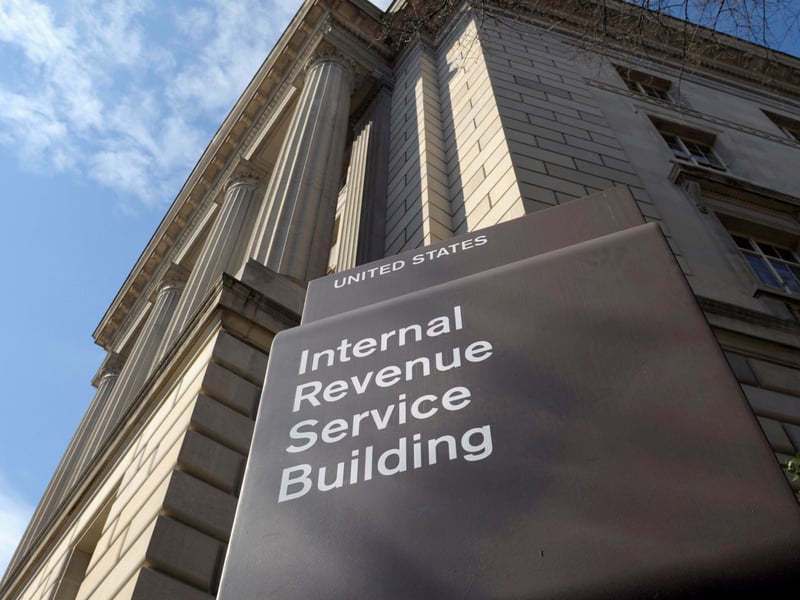
WASHINGTON (CN) — A D.C. Circuit panel on Friday expressed concern that the IRS had flouted federal law by providing troves of taxpayers’ identifiable information to the U.S. Immigration and Customs Enforcement amid the Trump administration’s mass deportation efforts.
A three-judge panel heard arguments in a case initially brought in March by a coalition of immigrant rights groups seeking to block the IRS from turning over the addresses of thousands of taxpayers despite ICE’s lack of a court order.
In the early months of Trump’s second term, ICE requested the addresses, phone numbers and email addresses of 700,000 immigrants; former IRS Commissioner Doug O’Donnell refused to comply with the request, but was quickly removed from office.
The position has since seen significant turnover — Melanie Krause served between February and April, Gary Shapely from April 16 to April 18, Michael Faulkender from April to June, Billy Long from June to August and currently Treasury Secretary Scott Bessent since August.
Since Bessent’s takeover on Aug. 8, the IRS has turned over approximately 40,000 taxpayers’ information. ICE has argued that the taxpayer data is necessary to determine whether an individual has remained in the country 90 days beyond a final removal order.
U.S. Circuit Judge Patricia Millett pressed Justice Department attorney Aaron Henricks to explain what happens when ICE is tracking down an individual with a common name — such as John Smith, or Maria Flores — and find multiple results at the same address. What protections would a U.S. citizen have if they’ve just moved into that address, or live in the same apartment building as the suspect, the Barack Obama appointee asked.
Henricks suggested that ICE, if faced with three duplicates for a John Smith, would find some way to narrow its search, and would later destroy the information for the remaining two Smiths.
“If I’m a John Smith who lives at that address now, I’m going to have law enforcement breaking down my door,” Millett said. “It seems like your answer is, if we’ve got multiple people with that name and at that address at any point in their history, you get all their return information and you leave it to them to sort it.”
Henricks sought to clarify, noting that he was not arguing there is no process to deal with such duplicates, rather that he simply did not know one way or the other.
Nandan Joshi, a Public Citizen attorney representing Centro de Trabajadores Unidos, argued that IRS code makes clear that, absent a court order, law enforcement officials may only obtain a taxpayer’s address information as part of a broader request for information obtained by third-party sources.
Further, the statute specifically forbids the IRS from complying with any requests — even from the president, DHS, ICE or a state — to share tax return information for civil immigration enforcement purposes.
The statute only allows a president to request an individual’s information via a written request specifying the taxpayer by name — an exception that prevents the president from requesting returns en masse, Joshi said.
ICE should not be allowed to exploit an apparent loophole in the statute by providing a spreadsheet of individuals and their old, incorrect addresses, and then receiving the corrected addresses, Joshi added.
U.S. Circuit Judge Harry Edwards, a Jimmy Carter appointee, questioned whether Congress would have envisioned law enforcement needing to provide the exact address of a criminal suspect in order to obtain additional tax information. Chief U.S. Circuit Judge Sri Srinivasan, another Obama appointee, also expressed doubts.
Henricks urged the panel to uphold U.S. District Judge Dabney Friedrich’s decision to deny the advocacy groups a preliminary injunction, arguing that IRS code mandates the agency disclose the requested taxpayer information.
Henricks specifically pointed to Section 6103(i)(2) of the statute, which allows the IRS to turn over information other than a taxpayer’s return information to be used in criminal probes.
Millett seemed unconvinced, noting that the section requires such requests be made either by the head of a federal agency, with the only exceptions being top officials at the Justice Department, such as members of the attorney general’s office, the FBI director, the administrator of the Drug Enforcement Administration, any U.S. attorney or special prosecutor.
ICE Director Todd Lyons made the request rather than Department of Homeland Security Secretary Kristi Noem, despite going unmentioned in the Internal Revenue Code.
“I see Congress being very careful about who can make these, these are serious requests for obvious reasons, not just for privacy interests, but the blood of the federal government is revenue,” Millett said. “It’s strange to me that, there was no argument in the brief, no analysis as to why or how ICE qualifies.”
Henricks argued that ICE had been authorized to request the information on behalf of the DHS, but Millett quickly retorted that the statute does not clearly allow for such delegation.
 Follow @Ryan_Knappy
Subscribe to our free newsletters
Our weekly newsletter Closing Arguments offers the latest about ongoing trials, major litigation and rulings in courthouses around the U.S. and the world, while the monthly Under the Lights dishes the legal dirt from Hollywood, sports, Big Tech and the arts.