
 Search Articles


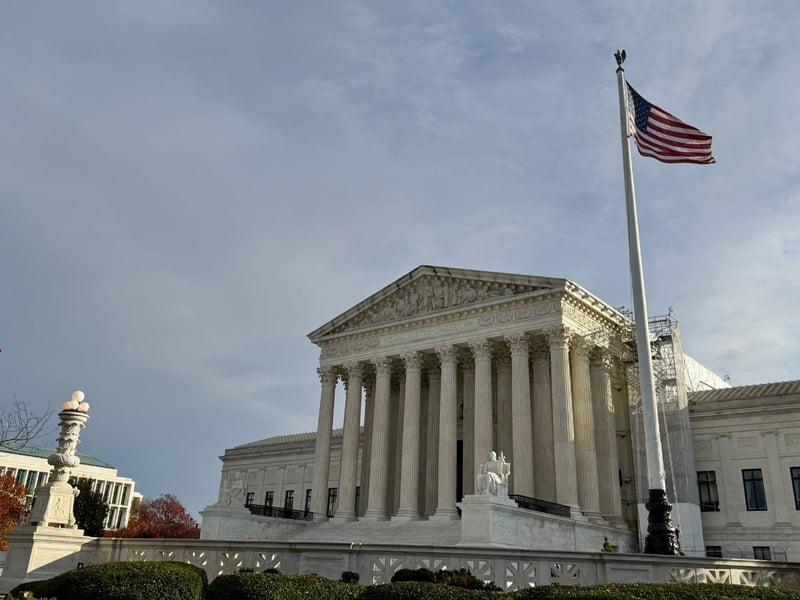
WASHINGTON (CN) — The Supreme Court’s shadow docket has stolen the spotlight, but the merits docket will come roaring back into focus this month as the justices hand down major rulings on LGBTQ+ rights, citizenship and religion.
Dozens of cases remain undecided as the justices enter June, indicating a flood of consequential rulings from the high court in a matter of weeks. This comes as the justices have been inundated with emergency requests on high-stakes issues like deportations to foreign prisons, safeguarding Americans’ sensitive data and mass layoffs of public servants.
Ben Olinsky, senior vice president of Structural Reform and Governance at the Center for American Progress, said that while emergency docket appeals have caught the public’s attention, the most important rulings from the justices are yet to come.
“As it turns out, it’s these normal cases that can really rewrite our politics, as well as alter or even remove the checks and balances that the Constitution has set out, and claw back rights that have been long cherished,” Olinksy said in a briefing.
LGBTQ+ rights
One of the most closely watched cases of the term falls in this bucket: United States v. Skrmetti , reviewing the constitutionality of Tennessee’s ban on gender affirming care for transgender minors.
Tennessee’s legislature adopted Senate Bill 1 in 2023, prohibiting health care providers from prescribing, administering or dispensing any puberty blocker or hormone aimed at helping a minor identify with a gender that is inconsistent with the minor’s sex.
Three transgender minors, their families and a Memphis-based doctor claim that the ban is unconstitutional because the law specifically targets transgender children. Minors seeking puberty blockers or other hormones to affirm their sex at birth can still receive care.
Hundreds of bills have been introduced to ban gender-affirming health care, and 27 states currently have laws similar to Tennessee’s on the books. The court’s ruling will decide what level of scrutiny is necessary when considering if bans on care are constitutional.
Sam Ames, former chief of staff at the Department of Education Office for Civil Rights, said there are three basic levels of review: strict, intermediate and rational basis. Strict scrutiny would be most advantageous to the transgender minors.
“It’s going to turn entirely on two set questions: Can they establish that discrimination against trans people is a form of sex discrimination because it bans a particular treatment for people assigned female at birth, but allows it for people assigned male at birth?” Ames said. “If so, they will get intermediate scrutiny. Or, can they establish that trans persons themselves are a new quasi-suspect class, in which case they’ll get … some kind of rational basis.”
The court’s ruling could have major consequences for transgender people across the country at a time when their rights are already under attack. While the Biden administration advocated for the transgender minors when the case was argued in December, the Trump administration says it no longer supports those arguments.
The conservative majority seemed likely to side with Tennessee during oral arguments. Since then, the justices have allowed the Trump administration to enforce its ban on transgender troops in the military.
Religion
LGBTQ+ representation is also at issue in Mahmoud v. Taylor , where the justices will decide whether religious parents can keep their children from viewing books with LGBTQ+ characters.
The Maryland County School Board barred parent opt-out requests after it became infeasible for schools to accommodate and risked exposing students interested in LGBTQ+ books to social stigma and isolation.
Religious parents argued that the prohibition violated their First Amendment rights to raise their children in their chosen faith.
The justices appeared sympathetic to this view during oral arguments in April. A ruling in the parents’ favor could open the door to a flood of parent opt-out requests for a slew of issues conflicting with religious dogma.
In Ames v. OH Dept of Youth Services , the justices will weigh in on challenges to LGBTQ+ representation. The case stems from an Ohio woman who claimed her LGBTQ+ colleagues got preferential treatment in the workplace.
“Reverse discrimination” cases could see a boon from the justices’ ruling, lowering the standard for discrimination claims from people in majority groups. The dispute comes as the Trump administration pushes anti-diversity policies throughout the federal government.
The Supreme Court’s blockbuster religion case fell flat after the justices deadlocked on the creation of the nation’s first religious charter school. OK Charter School Board v. Drummond set up a major shift on the separation of church and state, but Justice Amy Coney Barrett’s unexplained recusal left the justices split 4-4.
However, the justices are still expected to weigh in on tax breaks for religious nonprofits in Catholic Charities v. WI Labor . Catholic Charities fell short of the religious tax exemption because it functioned like a secular nonprofit.
Wisconsin argued that its qualifications for religious tax-exempt status sought to avoid government interference with church affairs. Catholic Charities had no such qualms, seeing the state’s standard as religious discrimination.
Birthright citizenship
The Supreme Court’s shadow docket won’t be completely forgotten amid merits docket rulings. In May, the justices held a special oral argument session to review President Donald Trump’s controversial executive order ending birthright citizenship for some immigrants.
Trump v. CASA became a referendum on emergency relief, however, forcing the justices to weigh in on the authority of lower court judges to block White House policies.
The court’s ruling could impact any lawsuit filed against the administration, deciding whether temporary nationwide rulings are lawful.
Everything else
Dozens of other cases remain undecided as the Supreme Court enters June, including Mexico’s gun trafficking lawsuit, task force authority over preventative health care coverage, Texas’ anti-porn law, nuclear waste storage, defunding Planned Parenthood, EPA pollution rules, Louisiana’s congressional maps, disability discrimination in education and more.
 Follow @KelseyReichmann
 Follow @kelseyreichmann.bsky.social
Subscribe to our free newsletters
Our weekly newsletter Closing Arguments offers the latest about ongoing trials, major litigation and rulings in courthouses around the U.S. and the world, while the monthly Under the Lights dishes the legal dirt from Hollywood, sports, Big Tech and the arts.