
 Search Articles


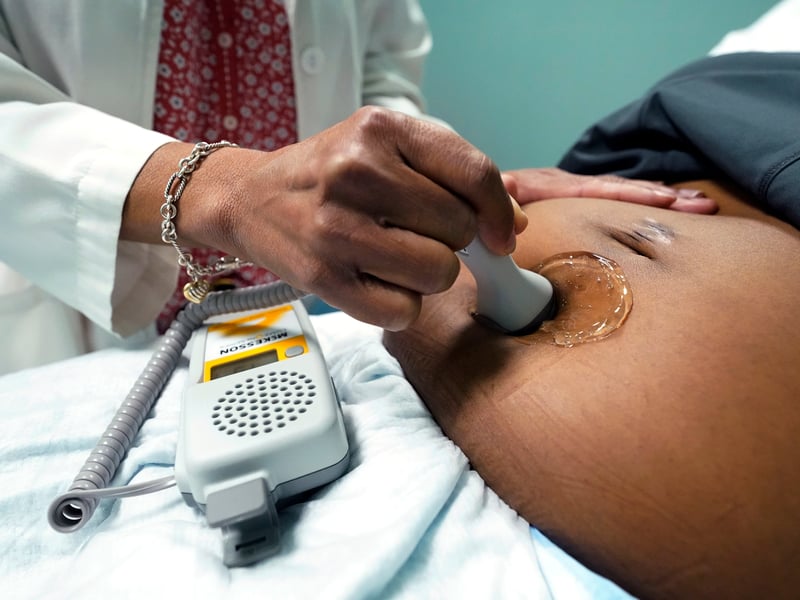
WASHINGTON (CN) — The highest number of pregnancy-related prosecutions recorded in a single year were documented after Roe v. Wade was overturned, according to a report out Tuesday detailing how turning embryos and fetuses into crime victims has normalized policing the behavior of pregnant people.
Pregnancy Justice, a legal advocacy group, found at least 210 people faced criminal charges stemming from their pregnancy between June 2022 and June 2023. The spike in charges didn’t come from abortion crime charges — of which there was only one — but by adapting existing laws for a new era.
“The apparatus of criminalizing pregnant people has already been built over time by basically reading into existing civil and criminal law this extreme ideology of fetal personhood — that an embryo or fertilized egg or a fetus is a person that is a victim of a crime, or that is a person under these laws that can apply to them,” Lourdes Rivera, president of Pregnancy Justice, said in an interview. “So charging people under abortion bans is actually not needed because the apparatus is there to do so.”
From 1973 to 2005, researchers documented 413 cases of arrests over conduct deemed harmful to their pregnancy. Leading up to the Supreme Court’s review of Roe , that number tripled to 1,396 cases.
The study was conducted under Institutional Review Board protocols used for human research and did not include references to specific cases, but a small sample of these cases has been documented by the media.
One involved a Nebraska teenager Celeste Burgess, who was sentenced to 90 days in jail in 2023 for illegally concealing human remains. Burgess took abortion pills her mother ordered online and then buried the fetal remains.
Amari Marsh, a junior at South Carolina State University, faced 20 years to life after being charged with murder by child abuse for unexpectedly miscarrying during her second trimester. She gave birth in the middle of the night in her apartment bathroom and passed out from blood loss. Police officers questioned her at the hospital when she woke up.
Pregnancy Justice represented Marsh, who was held in jail without bond for 22 days and placed on house arrest for over a year before being cleared of charges.
While more prevalent in media coverage, abortion-related charges are an outlier compared to drug charges. In 133 of the cases, substance use was the sole charge filed.
“If you are looking for criminal abortion, specifically as the crime charged, you are missing the story about abortion,” Wendy Bach, principal investigator of the report and professor at the University of Tennessee College of Law, told reporters.
In 2021, Alabama police officers arrested Ashley Caswell on charges of using drugs while pregnant. Caswell spent nearly her entire pregnancy in an Etowah County jail, eventually laboring alone for nearly 12 hours before giving birth in a jail shower. The Southern Poverty Law Center and Sullivan & Cromwell joined Pregnancy Justice in a federal lawsuit on behalf of Caswell,
Drug prosecutions of pregnant people targeted the use of methamphetamines, amphetamines, marijuana and opiates. The report found 86 cases involving taking some kind of THC during pregnancy, including legally prescribed medical marijuana.
According to the study, hospitals often drug test pregnant people during labor or delivery and then turn positive tests over to the police.
“Imagine you have a substance use disorder then you become pregnant and go to the doctor, and instead of help and treatment, you get reported and charged to the police or to the family policing system, who then reports you to the police,” Rivera said. “There is this health provider, hospital to family policing and law enforcement pipeline.”
Federal law requires providers to collect data to help in understanding what treatment a patient needs, but Rivera said people in health care are misinterpreting that requirement. She said mandatory reporting laws imposed by some states are counterproductive.
Bach said medical information is also being used as evidence of a crime. In three cases, police and prosecutors cited breastfeeding as evidence of a crime. Over a dozen other cases used failures in obtaining prenatal care as evidence.
“Pregnant people need health care and support and privacy,” Bach said. “Instead, we learn that they are being met with suspicion, surveillance, prosecution and punishment.”
The study found that pregnant women are actively avoiding situations, like doctor appointments and giving birth in a hospital, that could lead to their prosecution.
“It is no accident that some of the states with the worst maternal infant health outcomes and the most restrictive criminal abortion laws rank higher in pregnancy criminalization and pregnancy-related prosecutions,” Bach said.
Alabama and Oklahoma accounted for the overwhelming majority of prosecutions involving pregnancy. According to the Alabama Department of Public Health, the state had the third highest maternal mortality rate in the nation in 2020 at 36.4 per 100,000 live births.
The Oklahoma Maternal Health Task Force reported a maternal mortality rate of 31 per 100,000 live births from 2019-2021. In May, Oklahoma Governor Kevin Stitt signed a bill to reduce the state’s growing maternal death rate.
Most of the prosecutions reviewed in the study resulted in live births. The cases involving fetal demise resulted from pregnancies ending suddenly, people giving birth alone or people with co-occurring psychiatric disabilities and substance use disorders.
Prosecutors don’t usually have to prove a fetus is harmed to file abuse charges. Rivera said the perceived risk of substance use often overshadows any scientific evidence of harm.
“A lot of these prosecutions are being brought under stereotypes and stigma and, frankly, sexism about what good mothers look like,” Rivera said.
And while pregnant people have been exempted from prosecution in most abortion bans enacted since Dobbs , Pregnancy Justice cautioned that self-managed abortions could become a bigger target as they gain popularity. Reclassifying abortion drugs as controlled substances and tracking and surveilling pregnant people could also increase prosecutions in years to come, the report said.
 Follow @KelseyReichmann
 Follow @kelseyreichmann.bsky.social
Subscribe to our free newsletters
Our weekly newsletter Closing Arguments offers the latest about ongoing trials, major litigation and rulings in courthouses around the U.S. and the world, while the monthly Under the Lights dishes the legal dirt from Hollywood, sports, Big Tech and the arts.