
 Search Articles


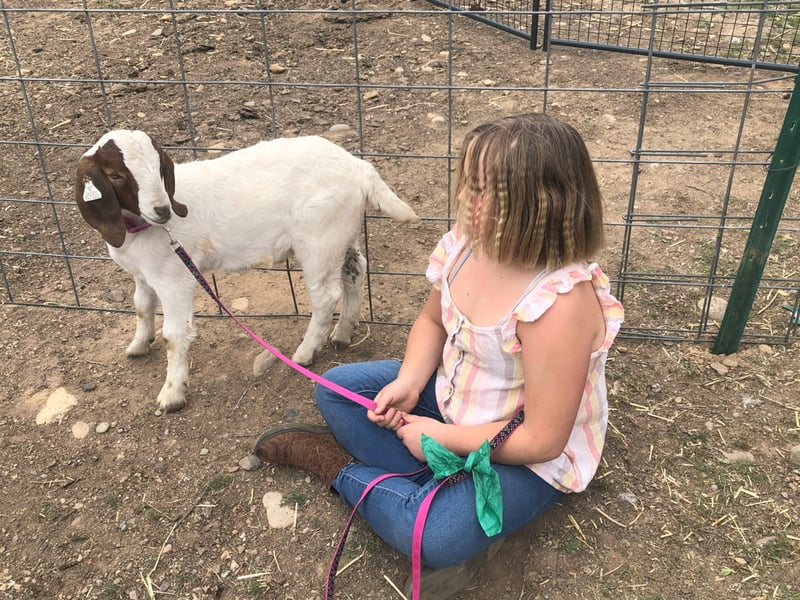
(CN) — The family whose pet goat was slaughtered by Shasta District Fair employees in 2022 won’t see any more money after a federal judge ruled on Friday that the fair, two of its employees and a woman who won the auction for the goat were entitled to immunity.
Last year, Shasta County agreed to pay Jessica Long and her young daughter $300,000 to settle claims that it had illegally seized the goat, Cedar, whose untimely death garnered widespread media attention, sparked public outrage and even spurred state legislators to author a new law, which would’ve allowed the little goat to live.
In 2021, Long entered her 9-year-old daughter — identified in court documents as E.L. — in a local 4-H program, where kids temporarily adopt and raise goats, which are then auctioned off at the Shasta District Fair in Northern California to raise money for a community barbecue. Kathie Muse, president of a trucking company and a volunteer for the barbecue, placed the winning bid of $902, intending to donate the goat to the barbecue, proceeds of which were to go to 4-H and fellow nonprofit Future Farmers of America.
But shortly after the auction, E.L. had a change of heart. She didn’t want Cedar to die.
“My daughter sobbed in her pen with her goat,” Long would later write to the Shasta fair’s manager. “The barn was mostly empty and at the last minute I decided to break the rules and take the goat that night and deal with the consequences later.”
The next day, the Longs took Cedar to a farm in Petaluma for safekeeping. Soon, Jessica Long got a phone call from the fair’s livestock manager with an ultimatum: return Cedar or face criminal prosecution. Long asked if they couldn’t just call off the sale and work something out, offering to pay for Cedar and damages. She was told no.
“Making an exception for you will only teach out [sic] youth that they do not have to abide by the rules that are set up for all participants,” the CEO of the Shasta Fair said to Long in an email. “I have spoken with the California Department of Food and Agriculture and they have informed me that for the good of all we have to stick to the State Rules. You will need to bring the goat back to the Shasta District Fair immediately.”
By then, animal rights groups had made Cedar something of a cause célèbre. The Bleating Hearts Farm in Napa had posted a photo of the white and chocolate colored goat in a bid for public sympathy. The fair was inundated with phone calls begging for clemency. But all the attention backfired — fair officials and Muse thought the Longs were making a “political statement” and didn’t want to give in.
Sheriff’s deputies executed a search warrant for the Bleating Hearts Farm. They didn’t find Cedar, but they did learn of the goat’s whereabouts, drove to Petaluma and took possession of him. For weeks, the fair’s livestock manager, B.J. MacFarlane, kept Cedar at his house. Text messages between MacFarlane and the fair’s CEO, Melanie Silva, indicate they wanted to keep Cedar’s eventual fate a secret.
“It got killed and donated to non profit if anyone asks,” MacFarlane texted.
On July 28, Cedar the goat was slaughtered by a meat company on MacFarlane’s property. He had never been paid for. He was one of 41 goats sold at the fair’s auction that year, and all were killed.
A month later, the Longs sued MacFarlane, Silva, the fair, Muse, Shasta County, the sheriff’s department and three sheriff’s deputies. Among other things, the Longs accused the defendants of unreasonable search and seizure in violation of the Fourth Amendment and negligence, arguing the government has to inform people before it seizes their property. They also accused MacFarlane and Silva of “viewpoint discrimination,” in violation of the First Amendment, on the grounds that they pushed so hard for Cedar’s death because they thought the Longs were politically motivated.
The county defendants settled in November 2024, agreeing to pay $300,000. The money will be held in a trust for six years, when E.L. turns 18.
The remaining defendants filed a motion for summary judgment. MacFarlane and Silva argued they were entitled to qualified immunity, which shields government officials from civil liability unless their conduct violates clearly established rights. The judge agreed.
“Under these highly unusual facts, the court cannot say that every reasonable livestock manager or fair supervisor would have known that they were required to provide plaintiffs with more notice and opportunity to be heard than had already been provided to them,” U.S. District Judge Dale Drozd wrote in his 47-page ruling. “Consequently, the court cannot find in these unique circumstances that the Fair defendants ‘had fair notice that [their] conduct was unlawful but still engaged in it.”
Drozd found that they were similarly shielded from the First Amendment claim, writing, “It is undisputed that defendants MacFarlane and Silva intended to slaughter Cedar before they became aware of plaintiffs’ purported protected activity, and that they continued to intend to do so afterwards.”
The judge suggested the sheriff’s deputies would not have enjoyed the same immunity, but they were no longer parties in the case.
As for Muse, the winning bidder who was sued on conspiracy claims, she argued in her motion for summary judgment that there was no evidence that she had “entered into any agreement with state actors with the goal of violating plaintiffs’ constitutional rights.” Again, Drozd agreed.
And so ends the lawsuit over Cedar the goat, gone before his time but not forgotten. Neither set of attorneys responded to emails requesting a comment on the ruling.
 Follow @hillelaron
Subscribe to our free newsletters
Our weekly newsletter Closing Arguments offers the latest about ongoing trials, major litigation and rulings in courthouses around the U.S. and the world, while the monthly Under the Lights dishes the legal dirt from Hollywood, sports, Big Tech and the arts.