
 Search Articles


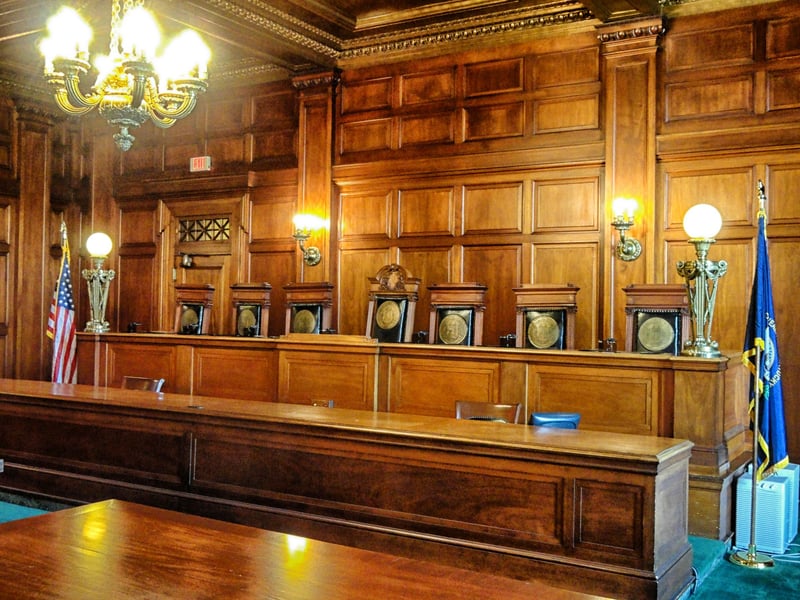
FRANKFORT, KY. (CN) — A ban on “no-knock” warrants does not implicate the employment conditions of police officers or require collective bargaining with their union, a Kentucky county government argued Thursday before the state’s high court.
The Lexington-Fayette Urban County Government defended its ban on the controversial warrants as a policy decision stemming from the political process that benefits the welfare of the general public.
Conversely, Bluegrass Lodge #4 of the Fraternal Order of Police decried the measure as a means to remove a “critical safety tool” from its officers, who can be put in dangerous situations when they are required to knock and announce before the execution of a warrant.
Police use of no-knock warrants was thrust into the spotlight in Kentucky following the shooting death of Breonna Taylor in Louisville on March 13, 2020, and the legislature passed Senate Bill 4 just over a year later to impose restrictions on their use throughout the commonwealth.
The county passed its own ordinance — which banned no-knock warrants entirely — shortly thereafter, and the police union filed a state court lawsuit when its negotiation efforts were rebuffed.
Although the trial court agreed with the county and dismissed the case, the Kentucky Court of Appeals overturned its decision, which prompted the current appeal to the Kentucky Supreme Court.
Attorney Jason Renzelmann of the Louisville firm Frost Brown Todd argued Thursday on behalf of the county government and emphasized the state law did not prohibit local governance on the issue of no-knock warrants.
Deputy Chief Justice Robert Conley disagreed with the attorney’s position and pointed out the county ordinance “makes illegal what the state law says is legal.”
Renzelmann remained adamant the state legislature did not prohibit more restrictive measures from local governments, and pointed out Breonna’s Law in Louisville — which also banned no-knock warrants entirely — was on the books at the time the state law was passed.
“The Legislature did not intend to sweep aside Breonna’s Law,” he told the court.
Attorney Nicholas Oleson from the Lexington, Kentucky firm Mattmiller Crosbie PLLC argued on behalf of the police union and focused on the FOP’s collective bargaining agreement with the county government.
“The collective bargaining agreement explicitly says the government has an obligation to protect the safety of the officers during working hours,” he told the court.
The attorney emphasized warrants directly affect the safety of officers and that cops who either request a no-knock warrant or refuse to serve a traditional warrant under the ordinance could face disciplinary action.
“Why is it more safe to use a no-knock warrant?” Justice Kelly Thompson asked.
Oleson cited the U.S. Supreme Court case United States v. Ramirez , in which a suspect known to have weapons in his house had threatened to kill any law enforcement officers who entered the property.
He said the trial court’s refusal to allow any discovery in the initial case was an error that prevented it from making an informed decision about the case.
“The trial court failed to allow the FOP to prove the extent to which its interest are affected by the ordinance,” Oleson said. “Once the record is developed, the court must then make a difficult determination, but it could not have made that determination without any evidence in the record.”
Renzelmann disputed the point during his rebuttal.
“The fact-finding they want is whether this is good policy, and circuit court judges don’t sit in judgment on matters of public policy,” he told the court.
Justice Michelle Keller took issue with the attorney’s continued use of the term “policy,” and pointed out policies can change over time with little consideration for the safety of individuals they affect.
“I don’t think you can make a blanket statement about it being a policy and shield it from review,” she said.
Renzelmann was quick to differentiate between policies created by governmental bodies and private employers.
“Public employers have a unique duty to the public,” he said. “Speed limits and gun control laws are not bargained, even though they could have an effect on officer safety. This is a dramatic departure from bargaining procedure.”
Justice Pamela Goodwine, set to be sworn in Friday as the first Black woman on the Kentucky Supreme Court, recused herself from the case and did not sit on the bench for Thursday’s arguments.
Chief Justice Debra Lambert, who was sworn in as chief justice earlier this week, said the court would work to issue a ruling “as soon as possible.”
 Follow @kkoeninger44
Subscribe to our free newsletters
Our weekly newsletter Closing Arguments offers the latest about ongoing trials, major litigation and rulings in courthouses around the U.S. and the world, while the monthly Under the Lights dishes the legal dirt from Hollywood, sports, Big Tech and the arts.