
 Search Articles


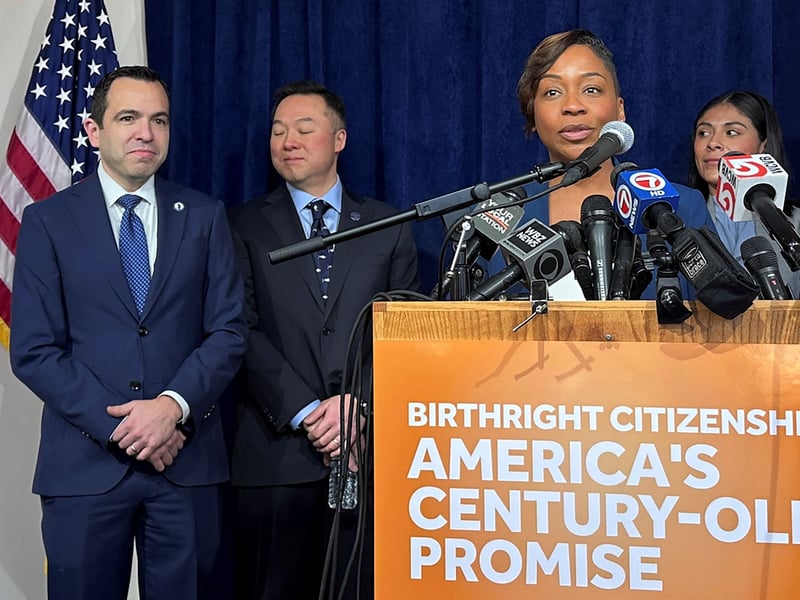
(CN) — President Donald Trump’s executive order limiting birthright citizenship has been dismissed as flatly unconstitutional by many media commentators and a handful of federal judges. But while the Supreme Court appears likely to strike it down, the case is not nearly as cut-and-dried as it’s being popularly portrayed, some legal experts believe.
Conservative legal scholars have spent years developing arguments in support of the order that are tailored to a conservative court with an originalist bent, and they have at least an outside chance of overturning decades of practice and widespread assumptions — especially with justices who have shown a willingness to defy longstanding expectations on other constitutional issues such as abortion, regulatory practice and the Second Amendment.
“The arguments are good on both sides, and it’s no slam dunk either way,” said Ilya Shapiro, a senior fellow at the Manhattan Institute who has authored hundreds of Supreme Court amicus briefs as well as a book on the politics of the court.
“Media commentaries suggesting that this is just a Trumpian fever dream are doing a disservice to the public discourse,” he said.
The executive order, which Trump signed on his first day in office, denies citizenship to children born in the U.S. if their parents were in the country illegally or on a temporary visit. The order is limited to children born after Feb. 19, 2025, so it doesn’t revoke anyone’s citizenship retroactively.
Four federal courts — in Maryland, Massachusetts, New Hampshire and Washington state — have issued injunctions preventing the order from going into effect. The administration will appeal and the matter will almost certainly go to the Supreme Court.
The key issue is the 14th Amendment, which grants citizenship to anyone who was born in the U.S. “and subject to the jurisdiction thereof.” It’s not entirely clear what “subject to the jurisdiction thereof” means.
The amendment was intended to guarantee citizenship to former slaves, and it didn’t address illegal immigrants because, when it was ratified in 1868, “there was no such thing as birth tourism or illegal entry,” Shapiro noted.
In interpreting long-ago legal provisions, it’s common to look at the historical practice in the years around when they were written. Conservative scholars cite 19th century treatises and debates leading up to the drafting of the amendment suggesting that it wasn’t intended to extend citizenship to children of mere temporary visitors.
One U.S. senator wanted language clarifying this point, while another replied that it wasn’t worth the effort because, given the realities of 19th century international travel, such a situation would arise extremely infrequently.
In 1885, the U.S. secretary of state issued a written opinion denying a passport because the applicant’s parents had been temporary visitors in the country when he was born.
The last time the Supreme Court interpreted the 14th Amendment’s citizenship language was 1898, when it held that a man named Wong Kim Ark was a U.S. citizen because his parents, although Chinese citizens, were lawful permanent residents in the U.S.
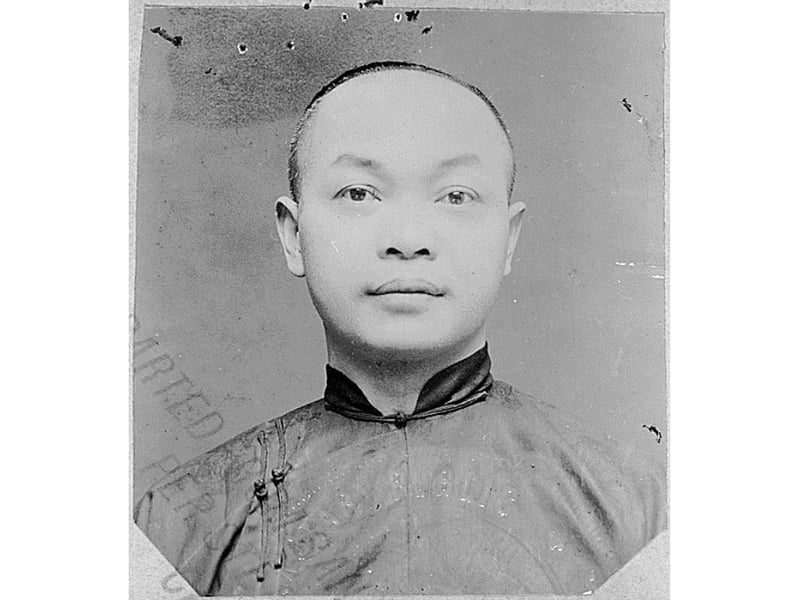
The Ark decision was limited to lawful permanent residents and didn’t discuss people in the country illegally or temporary visitors. However, it suggested that “subject to the jurisdiction” of the U.S. was akin to owing “allegiance” to the U.S., and it said that “every citizen or subject of another country, while domiciled here, is within the allegiance … of the United States.”
The court in Ark described only three exceptions to this rule: parents who are foreign diplomats, invaders occupying U.S. territory, or Native Americans, all of whom owe allegiance to another country or tribe. Native Americans were eventually granted citizenship by Congress in 1924.
After Ark , it was widely assumed that anyone born in the U.S. who didn’t meet one of the three exceptions had “birthright citizenship.”
But conservative scholars argue that Ark didn’t include an exception for parents who are in the country illegally or transients because the issue simply didn’t come up — and if it had, the court would have held that they don’t owe “allegiance” to the U.S.
“Permanent resident aliens are a far cry from aliens illegally in the country,” said Hans von Spakovsky, a senior legal fellow at the Heritage Foundation who was a member of the Federal Election Commission and worked in the Justice Department’s civil rights division.
“Subject to the jurisdiction” in the 14th Amendment means subject to complete jurisdiction, he emphasized: “A German tourist is subject to our territorial jurisdiction — he can’t just rob a bank in Boston. But he’s not to subject to our complete jurisdiction; he can’t be called for jury duty and he can’t be drafted into the military.”
However, Gerard Magliocca, a law professor at Indiana University, disagreed. “‘Allegiance’ isn’t in the text; it’s a made-up concept,” he argued, and conservatives are “using it to mean something different from what jurisdiction would ordinarily mean.”
“Subject to the jurisdiction” is “just about whether you’re subject to the law,” he added. “The words are being used in their ordinary sense. There’s no secret ‘Da Vinci Code’ meaning behind them.”
Conservatives also point to the language in Ark about being “domiciled” here and suggest that there’s no citizenship if the parents don’t have a lawful U.S. domicile.
But Magliocca thinks that’s also a red herring. “Legal domicile wasn’t a concept back then. It just meant where you live. ‘Domicile’ only became relevant with modern tax law,” he said.
The Supreme Court has never held that a child of immigrants without permanent legal status — or temporary visitors — is a citizen, but it has come close. In 1982 it held that children of immigrants in the U.S. illegally were covered by the equal protection clause of the 14th Amendment, and in a footnote it analogized the equal protection clause to the citizenship clause. And in 1985 the court commented in passing that an immigrant without legal residence had a child “who, born in the United States, was a citizen of this country.”
Neither of those cases directly concerned the citizenship clause and the comments about citizenship have no precedential value. However, if the court were to uphold Trump’s executive order, it would have to overturn more than a century of common understanding and practice.
That’s happened before. In 2008 the Supreme Court found that the Second Amendment protected an individual’s right to own a gun, overturning a century of practice and common interpretation by focusing on the original language of a constitutional amendment and the understanding at the time it was adopted.
The birthright citizenship issue is “extremely similar,” said von Spakovsky. And the current justices have shown a willingness to overturn longstanding assumptions about other constitutional issues.
Nevertheless, even most conservative analysts are willing to admit that the Trump executive order is a long shot.
“I can 100% guarantee” that the court’s three liberals — Kagan, Sotomayor and Jackson — will vote against it, von Spakovsky said.
The justices most likely to uphold it are Thomas and Alito, according to Shapiro, because they care more about original meaning and less about practical consequences.
“Roberts and Kavanaugh were creatures of the executive branch before they joined the court,” Shapiro said, and “they’re generally solicitous of executive branch authority.” However, he thinks that they and Barrett have a more pragmatic bent. “They’ll wrestle with this. We’ve had birthright citizenship for a century or so. Is it too radical a departure without legislation?”
Von Spakovsky hesitated to make predictions about the chief justice. “I frankly just don’t know what Roberts would do with this case,” he said. “Sometimes he’s so concerned about the court not looking political that he arrives at a decision that ends up making it look political.”
It’s possible the justices could simply duck the constitutional issue. For instance, they could hold that, under the “major questions” doctrine, the executive branch can’t make a sweeping change to citizenship rules without Congress’ approval, said Magliocca.
The cases attacking the executive order have all been brought by states, not parents, and the justices could also conclude that the states don’t have standing, Magliocca added. “They might say, ‘Gee, if we don’t decide, some other president will revoke the executive order and then we don’t have to do anything.’”
If the court rules on the merits, Magliocca thinks that no more than one or two justices will support the executive order because there is “very strong practice and no strong originalist argument.”
Shapiro said, “More likely than not, the court won’t want to disturb the settled understanding of decades of practice and they’ll find some way to preserve the status quo.
“But,” he added, “I wouldn’t go to Vegas and put money on it.”
Subscribe to our free newsletters
Our weekly newsletter Closing Arguments offers the latest about ongoing trials, major litigation and rulings in courthouses around the U.S. and the world, while the monthly Under the Lights dishes the legal dirt from Hollywood, sports, Big Tech and the arts.