
 Search Articles


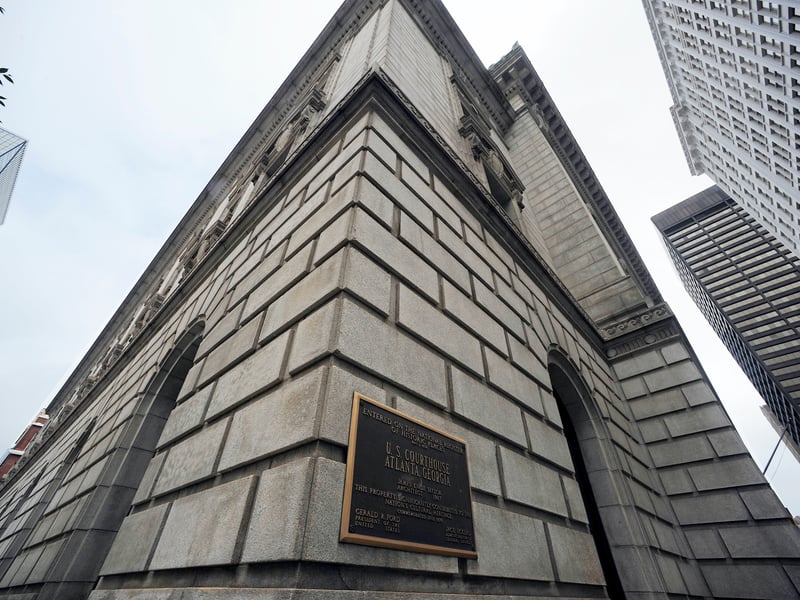
ATLANTA (CN) — Attorneys for the Georgia Power Company and Honeywell International asked an 11th Circuit panel on Monday to return a lawsuit accusing them of continuing to contaminate coastal marshlands with hazardous waste to federal court.
The 2022 lawsuit filed by the city of Brunswick, Georgia, seeks damages for continuing trespass and nuisance. The city claims the companies’ failure to prevent mercury and poly-chlorinated byphenals (PCBs) from escaping a Superfund site has interfered with the city’s enjoyment of its nearby property.
Describing birds “shaking with tremors from the mercury poisoning” and dolphins poisoned with chemicals, an attorney for the city painted a picture for the three-judge panel of toxic pollution spreading throughout Georgia and Florida.
The defendants released approximately 1 million pounds of mercury and dumped hundreds of tons of PCBs into the environment from a now-defunct chemical plant and a coal-fired electric plant beginning in the 1950s, according to the city. The U.S. Environmental Protection Agency classifies PCBs as probable human carcinogens.
A 2016 consent decree requires the companies to conduct a $29 million cleanup effort at a 760-acre saltwater marsh site. But the city claims the defendants have not done enough to permanently remove their pollution from city property, which is outside the Superfund site.
On Monday, the defendants asked the panel of Donald Trump appointees to find that their undertaking of the remediation work means they are entitled to have the case heard in federal court under the federal officer removal statute, which gives federal officials a forum in which to raise defenses arising from their official duties.
Honeywell International attorney Elisabeth Theodore of Arnold & Porter Kaye Scholer said the case should not be heard in state court because the environmental remediation work is directed by the EPA, a federal agency.
A Georgia federal judge last September grantedthe city’s motion to send the case to Glynn County Superior Court, finding there was no basis for federal subject matter jurisdiction.
Theodore argued the companies’ hands are tied, telling the panel her client cannot legally take action on city property outside the terms of the federally controlled consent decree.
“Literally the only thing Honeywell has been doing at this site for the past 30 years is engaging in this EPA-ordered abatement and remedial process,” Theodore said, adding the city’s claim that her client is not doing enough to clean up the pollution is a direct challenge to the sufficiency of the EPA’s cleanup remedy.
But the city’s attorney, John Bell Jr. of the Bell Firm, argued the challenge before the court is not to the consent decree. The city is merely objecting to the harm to its property, he said.
“Ordering a wrongdoer to take steps to mitigate his wrongdoing is not carrying out the duties of EPA,” Bell said. “They aren’t on EPA’s team working for EPA to help EPA do EPA’s work. They’re carrying out obligations imposed upon them by order of the United States District Court for the Southern District of Georgia.”
U.S. Circuit Judges Robert Luck and Elizabeth Branch questioned whether the city can challenge the efficacy of the Superfund site cleanup efforts.
“You say Honeywell’s activities at the plant site continue to cause toxic mercury and PCBs to be spilled,” Branch said. “The EPA says we’ve got to clean up the site, we know it’s going to take a significant amount of time, but if [defendant Honeywell] does it everything is good. And you’re saying no it’s not because it’s affecting our property. How is that not running into the consent decree?”
Bell told the panel the consent decree does not “expressly” bar the city’s lawsuit.
Attorneys for the defendants have also argued that the lawsuit was filed outside the four-year statute of limitations, telling the panel the city could have sued over ongoing pollution decades ago.
Branch questioned when the city should have known the coal plant, which last burned coal in1972, was polluting the environment with mercury.
“It took some time for the science to catch up and everybody to realize that coal plants were depositing mercury on property,” Branch said.
Attorney Benjamin Brewton of Balch & Bingham, who represents Georgia Power, told the panel that knowledge of the pollution was “widespread” in the four years before the lawsuit was filed.
“This is not something new,” Brewton said. “Even if it is an abatable nuisance, it wasn’t filed in time.”
U.S. Circuit Judge Barbara Lagoa rounded out the panel, which did not indicate when it will issue a decision in the case.
 Follow @KaylaGoggin_CNS
Subscribe to our free newsletters
Our weekly newsletter Closing Arguments offers the latest about ongoing trials, major litigation and rulings in courthouses around the U.S. and the world, while the monthly Under the Lights dishes the legal dirt from Hollywood, sports, Big Tech and the arts.