
 Search Articles


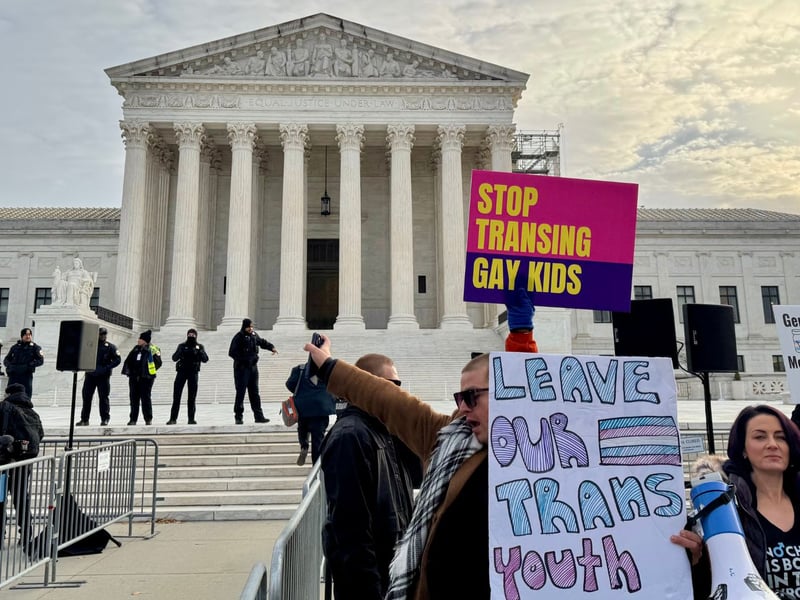
WASHINGTON (CN) — The Supreme Court took up a challenge to Colorado’s ban on conversion therapy for LGBTQ+ children on Monday.
Over 20 states bar health care providers from efforts to change a child’s sexual orientation or gender identity. Colorado says its Minor Conversion Therapy Law prohibits the practice because it has been found to be harmful and ineffective.
After rejecting previous challenges, the high court agreed to review the constitutionality of state and local regulations on the practice. In keeping with the court’s custom, the justices did not explain their order.
Kaley Childes, a Christian counselor in Colorado, claims that restrictions on conversion therapy violate the First Amendment. According to Childes, the prohibitions prevent counselors from providing care their patients need and want.
“Such restrictions have ‘left some clinical staff fearful’ of ‘providing professional support’ to young people at all,” Childes wrote in her petition. “That result leaves detransitioners — those who adopted a transgender identity but now identify with their biological sex — with no counseling support whatsoever in much of the United States.”
Childes cites a controversial report from a British pediatrician about the potential harms of gender-affirming care for children. Transgender activists and research scientists have criticized the report, but it became a lightning rod for several justices during the high court’s review of Tennessee’s ban on gender-affirming care for teens earlier this term.
Childes is represented by the Alliance for Defending Freedom — a conservative legal advocacy group at the center of multiple Supreme Court victories for Christian plaintiffs.
Following the high court’s order, the group’s CEO, president and general counsel Kristen Waggoner said there was a growing consensus that children experiencing gender dysphoria needed love and the opportunity to talk through their struggles and feelings.
“Colorado’s law prohibits what’s best for these children and sends a clear message: The only option for children struggling with these issues is to give them dangerous and experimental drugs and surgery that will make them lifelong patients,” Waggoner said in a statement. “We are eager to defend Kaley’s First Amendment rights and ensure that government officials may not impose their ideology on private conversations between counselors and clients.”
Colorado said Childes failed to provide expert declarations or affidavits demonstrating evidence of such harms. The state characterized Childes’ citations as unvetted and irrelevant to the case. The state says at least a dozen research studies demonstrate the harms of conversion therapy, and the American Psychological Association, and other professional health care providers’ groups recommend against the use of conversion therapy because of evidence it harms young people.
“States have long regulated medical practices to protect patients from harmful professional conduct,” the state’s attorney general’s office said in a statement following the order. “Colorado’s law protecting young people from unscientific and cruel gay conversion therapy practices is human, smart and appropriate and we’re committed to defending it at the Supreme Court.”
In 2019, Colorado joined dozens of other states to ban conversion therapy after finding evidence that connects the practice to increased depression, anxiety, suicidal thoughts and suicide attempts. The state says its law regulates professional conduct to protect patients from substandard treatment.
Health care professionals who violate the law can face discipline ranging from letters of admonition to revocation of their licenses. The law does not apply to religious ministers or life coaches.
Colorado says that licensed mental health professionals provide fundamentally different care than that of a layperson.
“Unlike laypersons, those who choose to practice as health professionals are required, among various other responsibilities, to provide treatment to their patients consistent with their field’s standard of care,” the state wrote. “Petitioner’s claim would undercut states’ longstanding ability to protect patients and clients from harmful professional conduct.”
In December 2023, the Supreme Court refused to hear a similar case challenging Washington state’s conversion therapy law. Justices Clarence Thomas, a George H.W. Bush appointee, and Samuel Alito, a George W. Bush appointee, publicly dissented from the court’s rejection of the petition.
Thomas claimed that Washington’s law censored one side of the public debate over how to help minors with gender dysphoria.
“‘If there is any fixed star in our constitutional constellation, it is that no official, high or petty, can prescribe what shall be orthodox in politics, nationalism, religion, or other matters of opinion or force citizens to confess by word or act their faith therein,’” Thomas wrote.
The Supreme Court will likely hear the case next term.
 Follow @KelseyReichmann
 Follow @kelseyreichmann.bsky.social
Subscribe to our free newsletters
Our weekly newsletter Closing Arguments offers the latest about ongoing trials, major litigation and rulings in courthouses around the U.S. and the world, while the monthly Under the Lights dishes the legal dirt from Hollywood, sports, Big Tech and the arts.