
 Search Articles


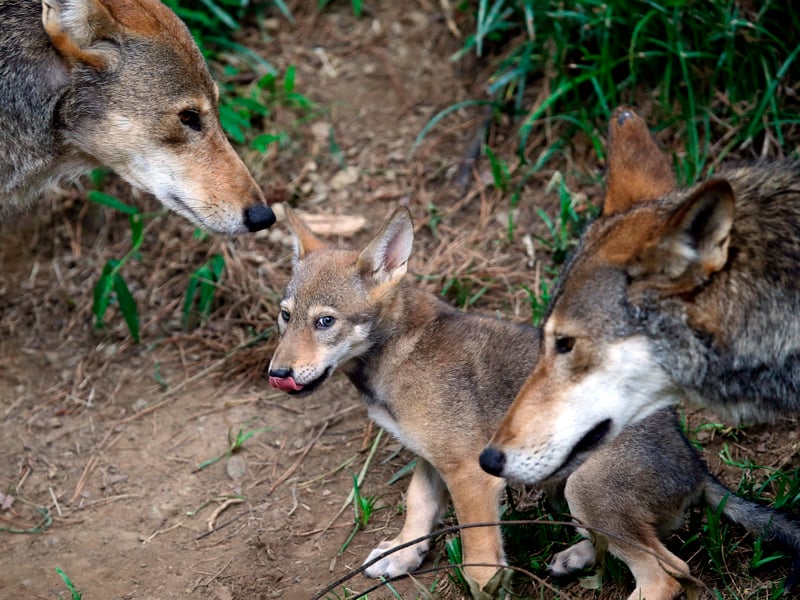
RALEIGH, N.C. (CN) — The U.S. Fish and Wildlife Service unlawfully refused to increase protections for critically endangered red wolves, the Center for Biological Diversity argued in Raleigh federal court Wednesday afternoon.
The federal agency has classified the wolves as a “nonessential” population, which means they have fewer habitat protections compared to “essential” species.
The wildlife advocacy group submitted a petition requesting reclassification in 2016, which the service denied in January 2023. The center then filed suit in October 2023, arguing that the Fish and Wildlife Service wrongly denied its petition in violation of the Administrative Procedure Act and asking the court to revise an existing rule allowing land owners to kill the wolves.
“Red wolves deserve the protections the ESA (Endangered Species Act) affords to essential populations and must not be needlessly shot by private landowners,” the center said in its suit. “The center therefore seeks an order from the court declaring that the service’s denial of the center’s petition was arbitrary and capricious.”
In court Wednesday, U.S. District Judge Terrence Boyle seemed empathetic to the center’s case. He has presided over litigation involving red wolves since the 1990s, and is familiar with their situation, he told the court.
“The goal of the court and perhaps America, is to preserve the wolves,” the Ronald Reagan appointee said.
The wild population is “distinctly and uniquely crucial to the survival of the species,” Center for Biological Diversity attorney Perrin de Jong told the court, regardless of the size of the captive population, which is over 200 wolves. Captive wolves lack the same skills as wild wolves, he said. The wolves are hard-hit by human interference in their habitat, with their leading causes of death being car collisions and gunshots.
“How does essentiality (designation) matter?” Boyle asked de Jong.
“An essentiality designation can make a life-or-death difference for the remaining population,” de Jong said. The designation means tighter limitations on changes nearby that could impact the wolves’ habitat, including adjustments to nearby roads and highways. Wildlife bridges to help the wolves travel safety within their five-county habitat are planned to be built in 2026.
Boyle grilled counsel for the Fish and Wildlife Service and U.S. Department of the Interior defendants, asking why they wouldn’t want to strengthen measures protecting the experimental population — which is managed to help conserve the species — and why no one has been prosecuted for shooting red wolves in recent decades.
In response, attorney Bonnie Ballard said the wild population of the wolves has grown in the past few months, to 18 collared wolves and an estimated 24 wild wolves in total. Sixteen pups have been born this year, she said, facing a 50% survival rate. The last reported number was 16 wolves in February 2025.
“The service has been working extremely hard to get this result,” she said, saying that it has been introducing foster pups from captive parents to the dens of wild wolves, established new breeding pairs and releasing more captive wolves. Just because the species is classified as nonessential does not mean that the population is not important to the service, she said.
The service does not want to reclassify the species because doing so would reduce management flexibility, she said, and the center’s suit brings up new information that was not raised in their 2016 petition.
“The service should not be expected to respond here to any future issues that plaintiff may raise that they did not raise in the first place,” Ballard said.
The Fish and Wildlife Service reasonably declined to reclassify the wolves, the defendants argued in their memorandum for summary judgement, and the center is instead attempting to challenge a 1986 rule that allows private landowners to shoot the wolves if federal attempts to capture the wolves have been abandoned.
The service’s recent proactive efforts are largely spurred by previous court decisions, de Jong claimed, and while the conservation group is happy to see the population increasing, it wants more robust conservation efforts. The service knows it can revisit changing the wolves’ designation to essential, he said, and it is failing to recognize the need to ensure the survivability of the species in the wild — not just the captive population.
Red wolves, which are the only wolf solely native to the U.S., have become one of the most endangered species on Earth, the center argued, after the population began facing intensive predator control programs and habitat alteration.
Red wolves were first designated as an endangered species in 1967. In the 1970s, the Fish and Wildlife Service captured red wolves to create a breeding program before releasing an experimental population of red wolves into the Alligator River National Wildlife Refuge in 1986. Their population was estimated to be 120 wolves in 2012 and has largely declined since.
North Carolina’s northeastern red wolf population is the only wild population in the species, barring a rumored ghost population in Galveston, Texas, where the first captive population was caught in the 1970s.
“We are very fortunate to have a judge who has such a deep understanding and history of the case,” de Jong told Courthouse News after the hearing.
Should the center find success on their request to reclassify the wolves, it would set a precedent in reclassifying experimental populations, he said. Other experimental populations exist across the U.S., including the black footed ferret and grey and Mexican wolves, but the red wolves’ population is the most threatened.
“If the red wolf population can’t be considered essential, then none can,” de Jong said.
Ballard declined to comment.
 Follow @SKHaulenbeek
 Follow @shaulenbeek.bsky.social
Subscribe to our free newsletters
Our weekly newsletter Closing Arguments offers the latest about ongoing trials, major litigation and rulings in courthouses around the U.S. and the world, while the monthly Under the Lights dishes the legal dirt from Hollywood, sports, Big Tech and the arts.