
 Search Articles


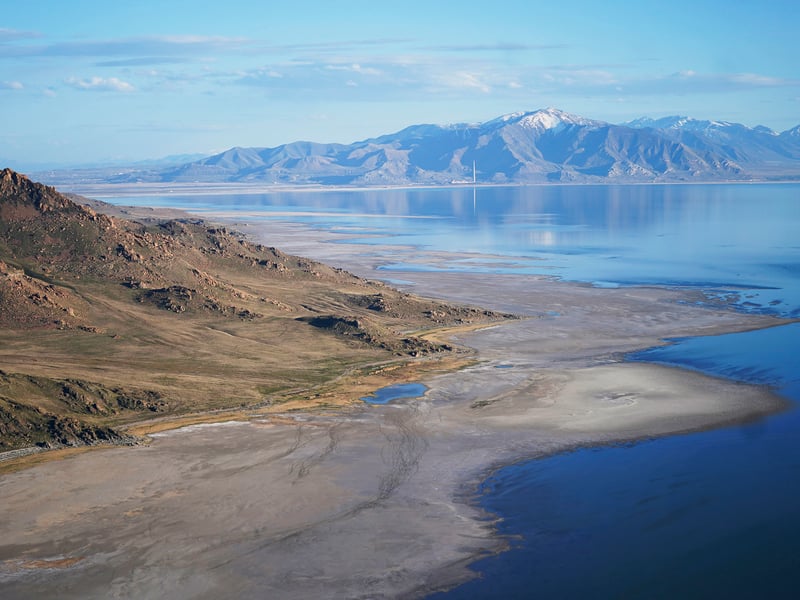
(CN) — Conservationists and community organizations won a ruling Thursday allowing them to proceed with their lawsuit to force Utah to do more to protect the Great Salt Lake, which they say faces a complete ecosystem collapse.
Judge Laura Scott of Utah’s Third Judicial District Court largely denied the motions by Utah government agencies and local water districts to dismiss the lawsuit.
The judge agreed with the plaintiffs that Utah, under the state’s public trust doctrine, has ongoing fiduciary duties to protect and preserve the waters of the Great Salt Lake from substantial impairment so that these waters can be used for the “trust purposes” of navigation, commerce, fishing and recreation.
The exact parameters of the state’s duties as a trustee, she said, will need to be developed through additional briefing or further litigation.
The judge also agreed that the plaintiffs had met their burden to state a claim for breach of the state’s trustee duties, that is, that Utah has failed or refused to take feasible steps to protect the waters of the Great Salt Lake and to preserve them for trust purposes.
“Of course, at the motion to dismiss stage, the court is not ruling that the state has, in fact, breached its duties as trustee of the public trust,” Scott added. “This aspect of plaintiffs’ claim requires further litigation.”
However, she agreed with the defendants that she can’t issue an order directing Utah to “review, and where necessary, modify upstream diversions to protect and preserve the public trust.”
While it may be true that upstream water diversions are by far the most significant cause of the Great Salt Lake’s precipitous decline, the judge said, she wasn’t persuaded that these upstream diversions fell under the public trust or that mandatory modifications of perfected water rights were feasible given Utah’s prior appropriation system.
The plaintiffs, which include Utah Physicians for a Healthy Environment, the American Bird Conservancy, the Center for Biological Diversity, the Sierra Club, and the Utah Rivers Council, welcomed the ruling and called a step in the right direction toward holding the state accountable.
“As this lawsuit has proceeded, it has become ever clearer that Utah state officials are not taking effective action to address the overwhelming cause of the Great Salt Lake’s decline, which is excessive water diversions upstream of the lake,” Stu Gillespie, an attorney with Earthjustice who represents the plaintiffs, said in a statement. “We look forward to continuing to fight for meaningful solutions that will provide enough water to the lake for the people and wildlife that depend on it.”
The environmental organizations [sued](http://to force the state to limit the upstream diversion of water that otherwise would flow into the Great Salt Lake, which they say faces a complete ecosystem collapse. “The baby steps Utah has taken at the Great Salt Lake are woefully inadequate to sustain the American West’s largest wetland ecosystem and we need the state to stop ignoring the upstream water diversions that are spiraling the lake and its wildlife into oblivion,” Zach Frankel, executive director of the Utah Rivers Council, said in a statement. Since 2020, according to the complaint filed in Utah state court, the lake has suffered a water deficit of more than a million acre-feet of water per year, and the lake’s elevation has dropped to a level near 4,188 feet above sea level. That is 10 feet below the minimum healthy elevation identified by experts, the Utah Physicians for a Healthy Environment, American Bird Conservancy and other groups claim. This situation only threatens to get worse, they say, and scientists have predicted that the ecological integrity of the lake could collapse entirely within five years, which would cause the state to lose billions of dollars each year, as well as thousands of jobs.) the state in 2003, to force it to limit the upstream diversion of water that otherwise would flow into the Great Salt Lake.
“The baby steps Utah has taken at the Great Salt Lake are woefully inadequate to sustain the American West’s largest wetland ecosystem and we need the state to stop ignoring the upstream water diversions that are spiraling the lake and its wildlife into oblivion,” Zach Frankel, executive director of the Utah Rivers Council, said at the time.
Since 2020, according to the complaint filed in Utah state court, the lake has suffered a water deficit of more than a million acre-feet of water per year, and the lake’s elevation has dropped to a level near 4,188 feet above sea level. That is 10 feet below the minimum healthy elevation identified by experts.
This situation only threatens to get worse, they say, and scientists have predicted that the ecological integrity of the lake could collapse entirely within five years, which would cause the state to lose billions of dollars each year, as well as thousands of jobs.
“Utah remains unwavering in its commitment to maintaining the health of the Great Salt Lake. Today’s decision wasn’t all we hoped for, but we still ultimately believe Utah’s collaborative approach will prevail in court as this case continues, because it is critical in getting the lake to a healthier range for generations to come,” a representative for the Utah Department of Natural Resources, the Utah Division of Forestry, Fire and State Lands, and the Utah Division of Water Rights said in an email.
 Follow @edpettersson
Subscribe to our free newsletters
Our weekly newsletter Closing Arguments offers the latest about ongoing trials, major litigation and rulings in courthouses around the U.S. and the world, while the monthly Under the Lights dishes the legal dirt from Hollywood, sports, Big Tech and the arts.