
 Search Articles


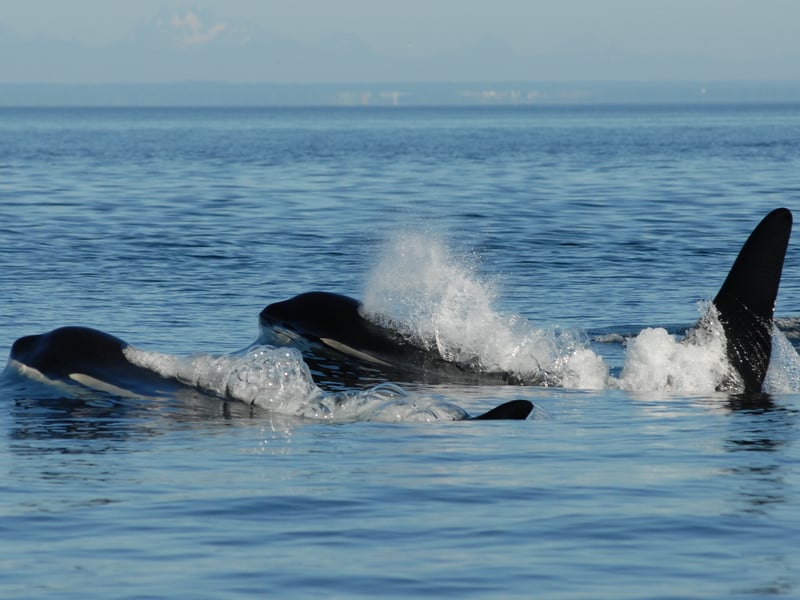
WASHINGTON (CN) — The Trump administration’s proposal to redefine the term “harm” under the Endangered Species Act would threaten several vulnerable marine species, the Center for Biological Diversity warned in a lawsuit filed Tuesday.
According to the environmental group’s Freedom of Information suit, brought in the U.S. District Court for the District of Columbia, the Department of Commerce’s National Marine Fisheries Service proposed the change on April 17, suggesting the current definition for harm does not match “the single, best meaning of the statute.”
The environmental group asked U.S. District Judge Timothy Kelly, a Donald Trump appointee, to order the fisheries service to turn over documents and communication records that mention, discuss or document the development of the proposal.
“If finalized, the services’ recession of the regulatory definition of ‘harm’ could upend the sensible approach they have utilized for decades to require reasonably prudent measures or alternatives to avoid habitat destruction that may otherwise lead to extinction,” the environmental group wrote. “The center is unaware of any scientific or regulatory need for the recission.”
When Congress passed the Endangered Species Act in 1973, it prohibited any actions that purposefully or incidentally “take” endangered species, meaning “to harass, harm, pursue, hunt, shoot, wound, kill, trap, capture, or collect, or to attempt to engage in any such conduct.”
Following its passage, the Fish and Wildlife Service passed regulations in 1975 and later clarified in 1981 that defined “harm” as any act that “actually kills or injures wildlife,” which could include “significant habitat modification or degradation.”
That definition was upheld 6-3 by the Supreme Court in the 1995 case Babbitt v. Sweet Home Chapter of Communities for a Greater Oregon, ruling that it “naturally encompasses habitat modification that results in actual injury or death” to endangered species.
The high court, led by former Justice John Paul Stevens, a Gerald Ford appointee, further held that the definition aligned with the Endangered Species Act’s conservation mission and was supported by a later congressional amendment to permit incidental take, including habitat modification.
Since 1999, the National Marine Fisheries Service has adhered to that definition for marine species.
According to the lawsuit, the fisheries service drew heavily from former Justice Antonin Scalia’s dissent in Babbitt v. Sweet Home — joined by Justice Clarence Thomas and former Chief Justice William Rehnquist.
“The court’s holding that the hunting and killing prohibition incidentally preserves habitat on private lands imposes unfairness to the point of financial ruin — not just upon the rich, but upon the simplest farmer who finds his land constricted to national zoological use,” the Ronald Reagan appointee wrote.
“The ESA itself defines ‘take,’ and further elaborating on one subcomponent of that definition — ‘harm’ — is unnecessary in light of the comprehensive statutory definition,” the government wrote in its proposal.
David Derrick, staff attorney at the Center for Biological Diversity, decried the administration’s proposal in a statement Tuesday and warned that several beloved marine species that make the nation’s coastal waters their home would be put at risk.
“The public has a right to know who’s attacking protections for endangered whales and sea turtles,” Derrick said. “Marine animals already suffer from warming oceans and constant ship traffic in their habitat. If Trump strips away one of the most important safeguards these vulnerable ocean species have, many more of these beautiful animals will die.”
According to the environmental group, weakening the “harm” definition would undermine federal agencies’ obligation to ensure their actions do not destroy or adversely modify critical habitat, thus making it harder to protect such essential areas.
The environmental group asserts that the Endangered Species Act has a success rate over 99% at preventing extinction, according to a pair of studies in 2012 and 2016. The studies found that the statute helped 90% of 110 species meet the projected recovery rates in federal recovery plans, stabilized or increased 85% of bird populations in the U.S. and increased the average bird population by 624%.
In the first 21 years of the Endangered Species Act — between its passage and the Supreme Court’s 1995 ruling — 108 species went extinct, which the environmental group argued was due to a “grave failure” in federal management of the statute rather than a failure of the statute itself.
Over 150,000 people submitted public comments opposing the proposed rollback, with scientific organizations and legal scholars arguing the proposal should be withdrawn or else risk impairing conservation efforts amid a global extinction crisis, the environmental group added.
“Marine animals obviously cannot survive without healthy oceans and intact habitats,” Derrick said. “It’s nonsensical to think you can destroy a species’ home and expect it to be okay, but that’s what this Orwellian definition change implies. We won’t let Trump’s attempted rollback happen in the dark.”
 Follow @Ryan_Knappy
Subscribe to our free newsletters
Our weekly newsletter Closing Arguments offers the latest about ongoing trials, major litigation and rulings in courthouses around the U.S. and the world, while the monthly Under the Lights dishes the legal dirt from Hollywood, sports, Big Tech and the arts.