
 Search Articles


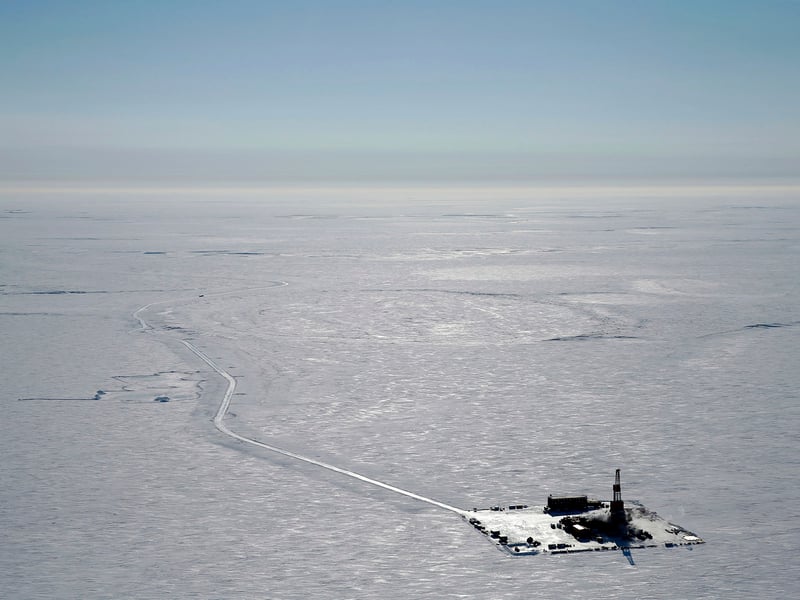
(CN) — A Ninth Circuit panel on Friday upheld most of the federal approvals for ConocoPhillips’ Willow Project in Alaska, dealing a blow to environmental groups who argued the oil development violated environmental law. The court found only a single procedural misstep, insufficient to derail the multibillion-dollar effort.
“The disruptive consequences of vacating Willow’s approval would be severe,” U.S. Circuit Judge Ryan Nelson, a Donald Trump appointee, wrote on behalf of the majority, which included fellow Trump appointee U.S. Circuit Judge Danielle Forrest, in a 96-page opinion.
The Bureau of Land Management approved the Willow Project in 2020, granting ConocoPhillips permission to build infrastructure for oil and gas extraction in Alaska’s National Petroleum Reserve, an approximately 23.5-million-acre block of public land on Alaska’s North Slope.
A federal court later vacated the approval, ruling the agency violated the National Environmental Policy Act by assuming ConocoPhillips had the right to extract all possible oil and gas from its leases without exploring reasonable alternatives.
In response, the agency issued a supplemental environmental impact statement, but maintained that any approved plan must allow for “full development” of the oil field to avoid stranding resources.
The agency ultimately approved a scaled-down version of the Willow Project, eliminating some drill pads while allowing others, claiming it “strikes a balance” between reducing environmental harm and honoring lease obligations. The Interior Department framed the plan as a compromise, though critics argued the project, expected to emit at least 263 million tons of greenhouse gases, remains environmentally damaging.
Two environmental coalitions filed lawsuits challenging the approval. U.S. District Judge Sharon Gleason dismissed both in late 2023, ruling the agency had corrected its previous missteps. The environmental groups appealed; however, the Ninth Circuit later upheld most of that decision after more than a year of deliberation.
Both the Center for Biological Diversity and the Sovereign Iñupiat for a Living Arctic raised similar claims, accusing the Bureau of Land Management of violating the National Environmental Policy Act by proposing alternative plans using the “full field” developmental standard.
The majority disagreed. However, it was persuaded by the environmental groups’ argument that the agency had disregarded its own standard when it chose an alternative that didn’t comply with full field development.
Essentially, the agency suggested that proposals should take advantage of the full oil field without leaving any “economically viable” patches out.
“The problem for [Bureau of Land Management] is that it never explained in the [record of decision] how its chosen alternative complied with full field development,” Nelson wrote.
Before the court, the agency explained that it had changed its position on the necessity of full field development. Due to that lack of explanation, which falls short of what is required by the National Environmental Policy Act, the approval of the project was arbitrary and capricious under the Administrative Procedure Act, the court found.
Rather than vacating the agency’s approval of the project, the court ordered the agency to explain “whether and how its approved alternative strands economically viable oil” despite having maintained that it would only consider alternatives that would take advantage of the entire oil field.
“[Bureau of Land Management’s] lone error is at heart a procedural, not a substantive violation,” Nelson wrote
Vacating the approval entirely would be far too disruptive for the minor error, Nelson wrote. The billion-dollar project is expected to employ over 1,000 people. Additionally, it will bring local benefits, including the creation of gravel roads and boat ramps to access subsistence resources, as well as the implementation of long-term mitigation measures for caribou herds.
“Willow’s benefits for the communities most affected by the project weigh strongly against vacatur here,” Nelson wrote.
The procedural error is the one win the environmental groups secured, as the majority otherwise agreed with Gleason.
The Center for Biological Diversity had argued the agency violated NEPA by not separately estimating downstream emissions from future oil development. But the court found those emissions were sufficiently addressed as cumulative impacts and didn’t need to be categorized as indirect effects of hypothetical future activity.
“It is inconceivable that the public and policymakers would find it informative to separate out this single piece of information from a 441-page [supplemental environmental impact statement] with over 20 supporting documents,” Nelson wrote.
Both the environmental groups also raised claims under the Reserves Act, which again failed.
“The Reserves Act grants broad discretion to the Secretary to determine the specifics of how to protect surface resources in the [National Petroleum Reserve-Alaska],” Nelson wrote. The agency provided enough explanation behind its decisions to satisfy the law.
As for the Sovereign Iñupiat for a Living Arctic argument that the agency violated the Alaska National Interest Lands Conservation Act by overlooking alternative proposals that would lessen the impacts to subsistence uses, the court wasn’t convinced.
While the agency must consider alternatives, nothing forces them to choose those alternatives.
The last argument, raised by the Center for Biological Diversity, asserted that the increase in greenhouse gas emissions would threaten Endangered Species Act-protected species and their critical habitat. The appeals court agreed with the lower court’s dismissal of this claim as well.
“At bottom, each agency ‘rationally explain[ed] why it did what it did,’” Nelson wrote.
Had panel member U.S. Circuit Judge Gabriel Sanchez decided the case alone, the environmental groups would have prevailed. In his dissent, Sanchez characterized the agency’s errors as “more fundamental” than simply procedural.
“The agency’s unexplained decision constitutes a manifest abuse of discretion and requires vacatur,” Sanchez wrote.
Subscribe to our free newsletters
Our weekly newsletter Closing Arguments offers the latest about ongoing trials, major litigation and rulings in courthouses around the U.S. and the world, while the monthly Under the Lights dishes the legal dirt from Hollywood, sports, Big Tech and the arts.