
 Search Articles


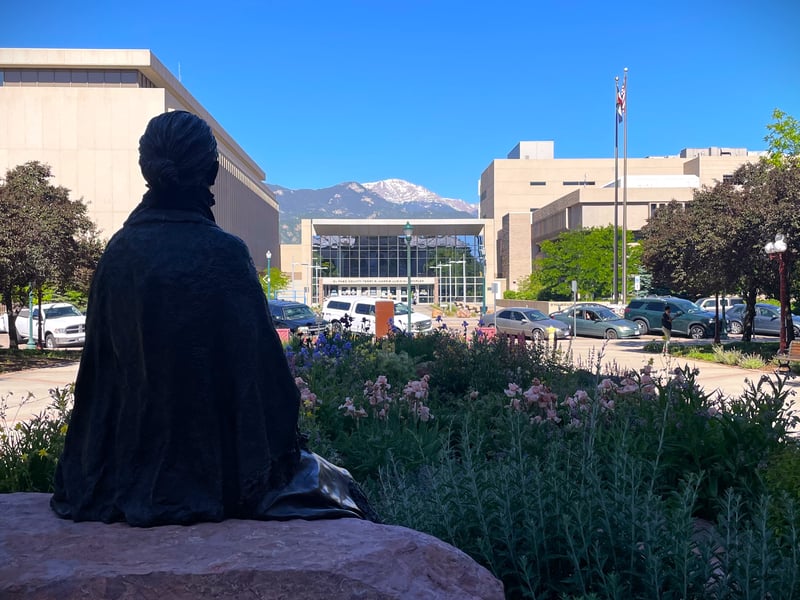
COLORADO SPRINGS (CN) — It has been 22 years since Deborah Nicholls’ children tragically perished in a house fire and 17 years since she was convicted of their murder.
Jay was 11 years old, Sophia 5 and Sierra just 3. Nicholls, who lit candles on March 7, 2003, after cleaning the house, maintains her innocence and says the fire was an accident.
Prosecutors nevertheless secured triple-murder convictions against Nicholls in 2008 and her husband, Tim, in 2007, arguing the couple conspired to douse the furniture in cleaners, torch the house and collect insurance proceeds to pay off drug debt — a sinister story corroborated by a single jailhouse informant who testified to hearing Tim confess.
Tim and Deborah are both serving life sentences and lost their initial appeals. The 2023 revelation of a 2007 report from a Colorado Bureau of Investigation analyst, however, supported the Nicholls’ defense and is prompting Deborah’s Brady motion for a new trial.
Deborah Nicholls entered the carpeted, wood-paneled courtroom on Monday with a small smile that grew across her face when she greeted attorney Janene McCabe. A streak of pink highlighted the auburn braid that hung over the shoulder of Nicholl’s orange DOC jumpsuit. “The jail is a nightmare,” Nicholls whispered to McCabe as she prepared to take notes with her hands cuffed together.
“There’s a special hearing today specifically regarding evidence that the prosecution did not turn over to the defense, that deprived Ms. Nicholls of a fair trial,” McCabe told the court. McCabe practices at the Korey Wise Innocence Project at the University of Colorado Boulder.
Following the 2003 fire in Colorado Springs, investigators collected materials identified by a police dog looking for evidence of arson. In 2003, two analysts, one state and one private, issued reports identifying xylenes, which prosecutors postulated came from Goof Off cleaner sprayed on the furniture.
In 2006, Nicholls’ defense consulted with a third expert, John Lentini, who found no evidence of ignitable liquids and argued that the state’s evidence had been contaminated.
The Lentini report in hand, prosecutors consulted with a fourth expert at the Colorado Bureau of Investigation, Tom Griffin, whose findings corroborated the Lentini report, developing exculpatory materials that were never disclosed to Nicholls’ trial team.
The notes were ultimately uncovered by CBI fire analyst Dana Greely, who conducted a fifth analysis in 2023 based on modern standards, issuing a new report aligning with both Lentini and Griffin in finding indications of evidence contamination but not fire fuel.
After learning about Griffin’s notes, Nicholls’ defense team filed a motion for a Brady hearing last year. The 1963 U.S. Supreme Court case Brady v. Maryland found that prosecutors must disclose all evidence favorable to the accused and material to guilt.
“Ultimately, this Brady information would have changed the course of the entire trial; it might have changed whether they chose to proceed in prosecution against her,” McCabe argued.
Attorneys from the Fourth Judicial District Attorney’s office, however, stand by the conviction, countering that Griffin provided notes meant to prepare prosecutors for trial and did not amount to a new report that warranted disclosure to the defense.
Chief Deputy District Attorney Jennifer Viehman argued Greely’s recent findings were irrelevant and asked the judge to focus on whether Griffin’s 2006 notes warranted disclosure to the defense.
“It’s about Tom Griffin’s notes, which in my opinion are being miscategorized by the defense,” Viehman argued. Viehman said Griffin’s document reveals that trial prosecutors consulted with an expert to understand and counter the defense’s report.
“This is what prosecutors and defense attorneys are supposed to do; when you receive a report, you should review it with experts,” Viehman said.
Following brief opening arguments, McCabe called Greeley to the stand to talk about finding Griffin’s notes as well as the analysis she performed under revised standards. Defense attorneys also called Griffin over WebEx to walk through his work from nearly two decades ago.
Senior District Judge R. Michael Mullins will decide whether prosecutors’ failure to disclose Griffin’s report amounts to trial research or a Brady violation. The hearing is scheduled to run through next week.
 Follow @bright_lamp
Subscribe to our free newsletters
Our weekly newsletter Closing Arguments offers the latest about ongoing trials, major litigation and rulings in courthouses around the U.S. and the world, while the monthly Under the Lights dishes the legal dirt from Hollywood, sports, Big Tech and the arts.