
 Search Articles


DENVER (CN) — Two Colorado Springs police officers on Wednesday asked a 10th Circuit panel to grant them qualified immunity against excessive force claims brought by the family of a man who died after being tased eight times in 90 seconds during a 2018 investigation.
On April 26, 2018, Colorado Springs Police Officers Daniel Patterson and Joshua Archer were investigating a reported disturbance at an apartment building after midnight. The tenant let officers in and said he had fought with his homeboys earlier, but they had left. Patterson and Archer found a 16-year-old girl hanging out and were telling her she needed to get picked up when a new person arrived on the scene: Jeffrey Melvin.
Officer Patterson met Melvin in the hall and asked if he was going to the apartment. Melvin said no, ran to the door and tried to lock Patterson out, only to find Archer inside. The two officers ordered Melvin to put his hands behind his back. Melvin resisted and the officers grappled with him for seven minutes, eventually deploying their tasers a collective eight times in 90 seconds.
Melvin ran outside, where officers pinned him to the ground.
“You’re killing me,” Melvin told them. “I can’t breathe. I’ve honestly got asthma.”
Melvin collapsed and died six days later at the hospital “as a result of complications of sickle cell trait and extreme exertion during confrontation with police and associated taser deployment.” The coroner marked Melvin’s death a homicide. He was 27 years old and left behind four children.
His family sued the city and officers on April 8, 2020. On March 8, 2023, District of Colorado Senior U.S. Judge Christine Arguello denied the officers’ request for qualified immunity. The George W. Bush appointee found that deploying a taser eight times in 90 seconds was clearly excessive and violated Melvin’s Fourth Amendment rights.
During the officers’ appeal, Colorado Springs attorney Anne Turner questioned Arguello’s certainty at this limit and expressed concern that this kind of restriction required officers to look at their stopwatches instead of suspects.
The three-judge panel pored over whether Melvin’s arrest was indeed lawful and the amount of force was appropriate.
U.S. Circuit Judge Carolyn McHugh, appointed by Barack Obama, drilled into the officers’ quick succession of tases.
“There is a concept that if they resist, I can use force,” McHugh said. “But do they have to pause and assess before issuing more force?”
In response, Turner recalled the time lapses between the tases — ranging from four to 20 seconds — and emphasized that instead of complying, Melvin resisted and called out to the other people in the apartment for help.
“He had plenty of time to stop resisting,” Turner said.
Senior U.S. Circuit Judge Mary Beck Briscoe tested the idea that Melvin had obstructed the officers and so an arrest was warranted.
“Your point is as long as he continued to resist, officers could keep using force until he was subdued?” asked Briscoe, a Bill Clinton appointee.
Turner confirmed this was her view. Briscoe then pressed Darold Killmer, the Melvin family’s attorney, on whether he obstructed the officers’ investigation.
Killmer told the panel a jury could find the arrest wasn’t lawful in the first place. Had Melvin been charged with the crime, Killmer said, “even then, you have truly the lowest crime in jurisprudence, and the force wasn’t warranted.”
Killmer practices with the Denver civil rights firm Killmer Lane.
Obama-appointed U.S. Circuit Judge Robert Bacharach rounded out the panel.
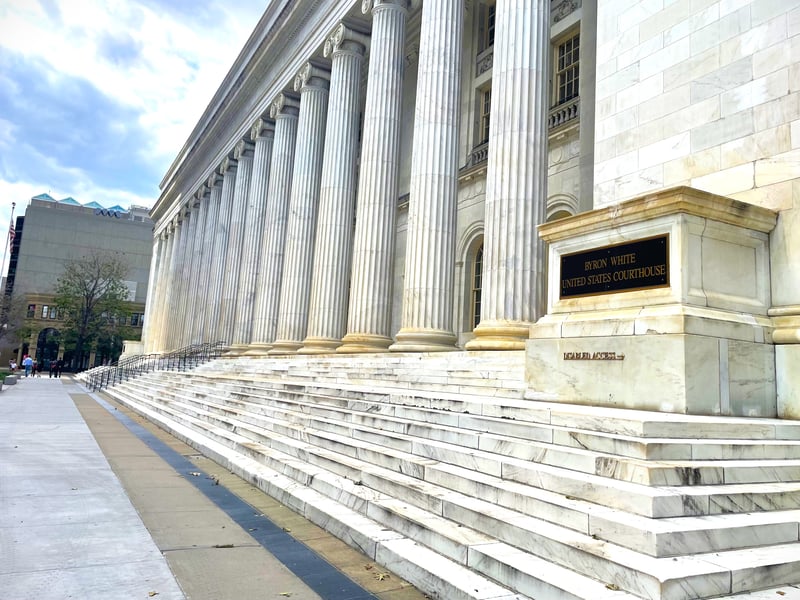
The hearing was held in courtroom one at the neo-classical Byron White U.S. Courthouse in downtown Denver. The judges did not indicate when or how they would decide the case.
 Follow @bright_lamp
Subscribe to our free newsletters
Our weekly newsletter Closing Arguments offers the latest about ongoing trials, major litigation and rulings in courthouses around the U.S. and the world, while the monthly Under the Lights dishes the legal dirt from Hollywood, sports, Big Tech and the arts.