
 Search Articles


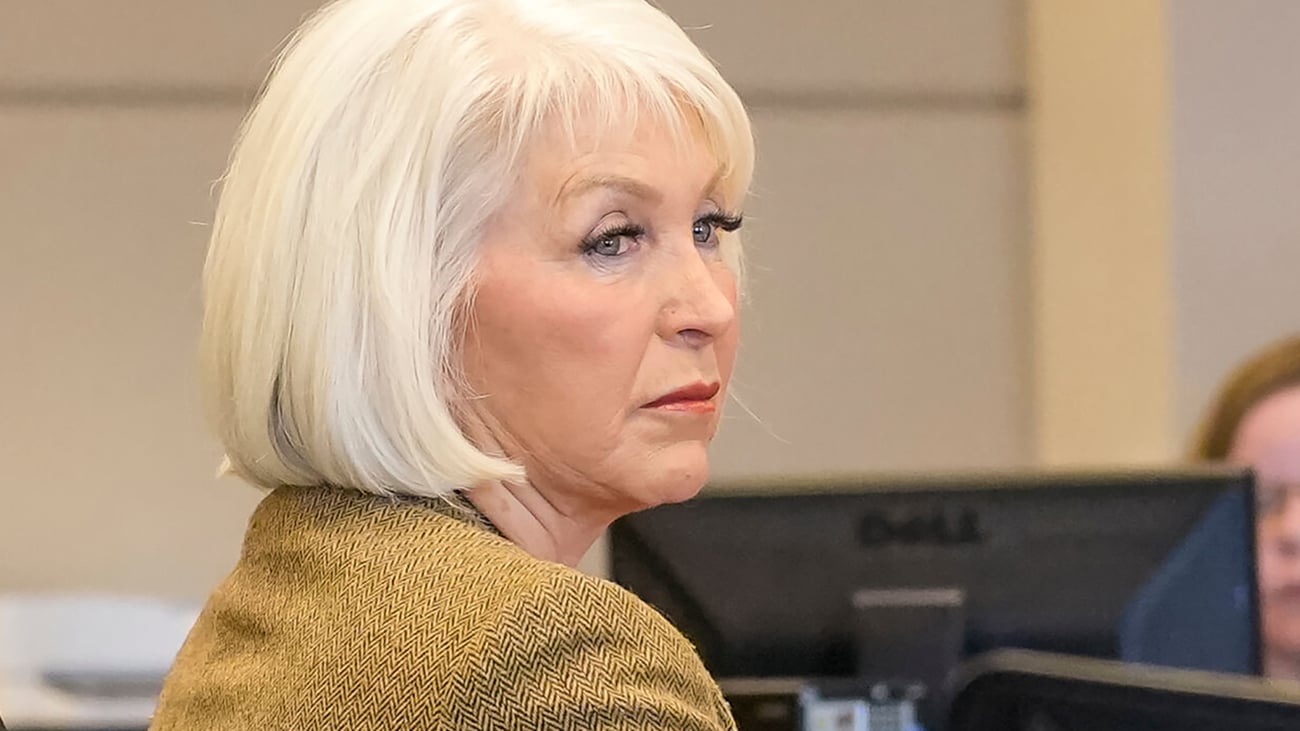
GRAND JUNCTION, Colo. (CN) — The Colorado judge who presided over Tina Peters’ 2024 trial declined to disqualify himself from her case after the state Court of Appeals vacated the 9-year prison sentence imposed after finding he improperly used her speech against her.
“All my comments were made during the proceedings based on information I learned during the proceedings,” 21st Judicial District Judge Matthew Barrett wrote in a 16-page opinion dated Monday. “I am not biased against defendant and there are no grounds to believe that my impartiality might reasonably be questioned.”
As Mesa County clerk and recorder in 2021, Peters heard from constituents who questioned the integrity of the Grand Junction municipal election, prompting her to record a voting machine update — which wasn’t illegal at the time. It was illegal, however, to falsify the identity of the associate Peters brought in to observe the process by her side.
The ruse became national news when the videos were leaked onto the social media platform Telegram, prompting an investigation.
An appointee of Democratic Governor Jared Polis, Barrett initially presided over proceedings for Peters’ deputy clerk, Belinda Knisley, in February 2022. During Knisley’s proceedings, the district attorney’s office filed a charge of contempt against Peters believing she had recorded a hearing on her iPad in violation of Barrett’s order — an accusation she denies to this day.
Barrett recused himself from the contempt proceedings, allowing another judge from another district to find Peters guilty of the offense in 2023 and fine her $1,500. In December 2024 however, the state Court of Appeals found insufficient evidence to support the conviction and overturned it.
In March 2022, prosecutors pursued charges against Peters related to the 2021 election data leak, landing her back in Barrett’s court. Peters first filed to have Barrett taken off her case in August 2022, a request he denied.
Following a 10-day trial in August 2024, a jury found Peters guilty of three felony counts of attempting to influence a public servant and one felony count of conspiracy to commit impersonation, plus misdemeanor counts of official misconduct, violating her duties and failing to comply with the secretary of state’s requirements.
Peters appealed, arguing the underlying prosecution and resulting sentence were both driven by her speaking out about election integrity.
This month, the Colorado Court of Appeals affirmed the jury’s conviction but vacated the sentence, finding Barrett’s comments about Peters’ beliefs were improper.
“Here the trial court’s comments about Peters’ belief in the existence of 2020 election fraud went beyond relevant consideration of her sentencing,” wrote Colorado Court of Appeals Judge Ted Tow in the opinion. “Her offense was not her belief, however misguided the trial court deemed it to be, in the existence of such election fraud; it was her deceitful actions in her attempt to gather evidence of such fraud.”
Even after criticizing Barrett’s sentencing editorialization, the appellate court denied Peters’ request to assign the case to a different judge. The appellate court also denied Peters’ request for a new hearing last week.
Peters’ relentless attorney, John Case, asked Barrett to be disqualified from the case, arguing he treated her with animosity and wrongly considered the evidence supporting her belief in voter fraud “irrelevant.”
“Accepting defendant’s factual assertions supported by affidavit as true, the perception that I was angry and that I used harsh language regarding defendant, and the Court of Appeals’ conclusion that some of my sentencing comments were erroneously aimed at defendant’s beliefs in election fraud do not merit my disqualification,” Barrett concluded.
Case did not immediately respond to an inquiry for comment. Over email, 21st Judicial District Attorney Dan Rubinstein called Barrett’s order “well-reasoned.”
“The allegation of bias has no support in the record,” wrote Rubinstein, who is a Republican. “The motion and her claim of bias is baseless, so denial was expected.”
This past December, President Donald Trump attempted to pardon the 70-year-old Peters. While it’s been commonly understood that the president does not have the power to overturn state convictions, Polis said he is reviewing Peters case in light of her age and declining health.
This month, Barrett uploaded a letter he wrote to Polis in January regarding Peters’ request for clemency. In the letter, Barrett said he respects the separation of powers and has no opinion on whether the governor should use his powers to free Peters.
 Follow @bright_lamp
Subscribe to our free newsletters
Our weekly newsletter Closing Arguments offers the latest about ongoing trials, major litigation and rulings in courthouses around the U.S. and the world, while the monthly Under the Lights dishes the legal dirt from Hollywood, sports, Big Tech and the arts.
Additional Reads

 Novel congressional map challenge fails in Wisconsin April 28, 2026

