
 Search Articles


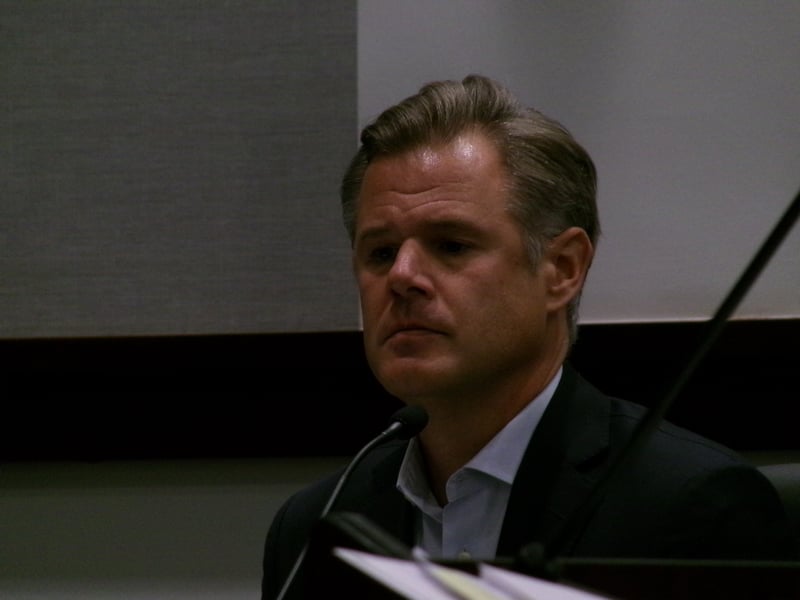
PANAMA CITY, Fla. (CN) — The chief national security correspondent for CNN, who wrote a 2021 story on private contractors charging Afghans as they fled a Taliban takeover, took the witness stand Monday to defend his reporting that’s the crux of a defamation case against the news network.
“I reported the facts," Alexander Marquardt said. “I reported what I found. Everything in there was factual, accurate and I believe fair.”
Zachary Young — a U.S. Navy veteran who had previously worked for military contractors Blackwater and Dyncorp International — sued CNN over a segment aired on Nov. 11, 2021, which described the woes of Afghans trying to flee their country during the United States’ hasty withdrawal from Afghanistan. The segment — reported by Marquardt and appearing during “The Lead with Jake Tapper” — included interviews with Afghans who claimed some private contractors were charging up to $14,000 for “black market” evacuations.
Young was the only private contractor named in the story, prompting his lawsuit accusing the network of ruining his reputation and business, Nemex Enterprises. Young, 49, has maintained he never accepted money from individual Afghans and instead relied on sponsorships from corporations and nongovernmental organizations to help rescue those fleeing the country. Prior to the trial, 14th Judicial Circuit Court Judge William Henry ruled that there is no evidence that Young did anything illegal.
From the outset, Young’s attorney Devin Freedman tried to paint Marquardt as a reporter looking to uncover a scam.
“This was early enough on in the reporting process when I’m doing the research that I’m allowing for the possibility that this was indeed a scam, this was corruption,” Marquardt said. “At the end of the day, that’s not what we found. We didn’t accuse Mr. Young of corruption or of scamming.”
Marquardt added that is part of the “reporting process.”
“You start with an idea, something you think might be happening, and you don’t find the evidence for that and that’s not the story you end up doing,” he said.
Through questioning throughout the day, Marquardt laid out the timeline of his reporting on the Nov. 11 segment, with Young’s attorney including colorful messages between the reporter and others at CNN.
In messages with Marquardt, his fellow reporter Katie Bo Lillis called Young a “shitbag” and an “asshole.” Fuzz Hogan, a senior editor at CNN, called Young a “shit” in one email thread. While reviewing the story, producer Michael Conte said Young had a “punchable face.” Marquardt responded, “Right?”
“Everyone at CNN hated Mr. Young, correct?” Freedman asked Marquardt.
“There was no personal animus towards him,” the reporter said.
From the beginning of opening arguments last week, Young’s attorneys have tried to paint Marquardt’s story as theater. Freedman leaned into that accusation on Monday.
At one point in the CNN segment at issue, Marquardt attempts to call Young while standing in CNN’s production studios. The camera shows Marquardt with his phone in hand waiting for someone to answer while it rings. There is no answer.
Freedman played for the court behind-the-scenes footage that shows Marquardt reenacting calling Young, so the cameraperson can get a better shot.
“You’re pretending to make a call, aren’t you?” Freedman asked.
“I was holding my phone like I was making a phone call after having made the phone call,” Marquardt responded. “What you are getting at is very basic TV production.”
Freedman interjected, “You mean theater.”
“No, production,” Marquardt said. “Oftentimes we get shots that we know we will need to edit into the base.”
Freedman then plays the rest of the footage, in which Marquardt sighs and says in a mock English accent, “Theater!”
By presenting screenshots of Signal messages between Marquardt and Young, Freedman also accused the reporter of never actually making that call, because it did not show up in the subpoenaed messages. However, in deposition, Young himself “did not doubt” that Marquardt made the call.
When Marquardt finally heard back from Young hours before the story aired, messages to his editor showed an exasperated reporter.
“FFS,” Young wrote. “Fucking Young just texted.”
Marquardt also defended the use of the phrase “black markets” that appeared on a banner on the bottom of the segment, even though the reporter never used the phrase in his actual reporting.
“This is an example of someone operating in a black market,” he said.
Young’s attorney also focused on Marquardt’s extensive experience reporting in war zones, insinuating that the reporter and Young were more alike than not.
“You were both paid by corporations for operations in war zones, isn’t that true?” Freedman asked Marquardt.
“Technically correct,” Marquardt responded.
Marquardt’s contacts with some Afghans also garnered criticism from Young’s attorney. Freedman brought up messages between Marquardt and an Afghan looking for help leaving the country. Marquardt said he could not help the man but could tell his story.
“Nothing you could do, but exploit his story, correct?” Freedman asked. “There is no difference between you and my client except that he saved lives, correct?”
“No,” Marquardt said. “Journalists don’t make money from war.”
The trial is expected to end this week.
 Follow @alexbpickett
Subscribe to our free newsletters
Our weekly newsletter Closing Arguments offers the latest about ongoing trials, major litigation and rulings in courthouses around the U.S. and the world, while the monthly Under the Lights dishes the legal dirt from Hollywood, sports, Big Tech and the arts.