
 Search Articles


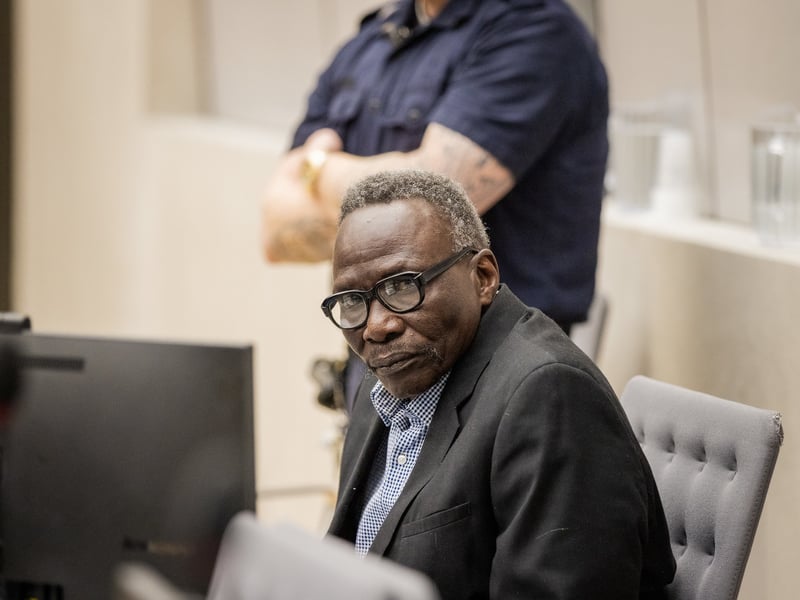
THE HAGUE, Netherlands (CN) — The International Criminal Court’s chief prosecutor called Wednesday a “critically important day” as he gave his closing address in the trial of a man accused of murder, pillaging, rape and torture.
Ali Muhammad Ali Abd-Al-Rahman, also known as Ali Kushayb, has been charged with 31 counts of war crimes and crimes against humanity for recruiting and organizing the Janjaweed militia, which engaged in an ethnic cleansing program in Sudan more than 20 years ago.
“And so we reach this critically important day, the first trial concluding, from the first ever referral by the Security Council of the United Nations to this court,” Karim Khan told The Hague-based court.
Sudan is not a party to the Rome Statute, which created The Hague-based court in 2002. However, on March 31, 2005, the United Nations Security Council passed Resolution 1593, which referred the matter to the ICC, compelling Sudan to cooperate with the investigation. It was the first time the Security Council had used this power.
The 75-year old has denied the charges against him. Rather than helping to lead a militia, Ali Kushayb claims he operated a small pharmacy in a market in a remote Sudanese village and was too insignificant to play a role in the conflict.
Ali Kushayb’s case is the first to reach trial as the conflict in Sudan continues to rage on. At least 24,000 people have been killed and millions more have been driven from their homes since fighting erupted again in April.
He turned himself in to authorities in the Central African Republic in 2020, 13 years after a warrant was first issued for his arrest.
Fighting first erupted in the Darfur region of Sudan in 2003, when ethnic Africans rebelled against Khartoum’s Arab-led government. Then-President Omar al-Bashir responded by sending the Janjaweed, a group of mostly Arab nomads known for riding horses or camels, to put down the uprising. According to the United Nations, the conflict left some 300,000 people dead and displaced 2.5 million.
“And whilst the government of Sudan and others were arming the Janjaweed ostensibly to deal with a rebellion, the stark reality is the targets in this case were not rebels, but civilians. They were targeted. They have suffered. They’ve lost their lives. They’ve been scarred physically and emotionally in myriad different ways,” Khan said.
During the previous 18 months, 56 witnesses have testified against Ali Kushayb, many claiming he personally participated in some of the atrocities.
Ali Kushayb is the fourth person to appear before the ICC on charges related to the Sudanese conflict but the first to be brought to trial. The court has also issued an arrest warrant for al-Bashir, but the current government in Khartoum has refused to turn him over to the court.
Two of al-Bashir’s senior officials, Ahmad Harun and Abdel Raheem Muhammad Hussein, also remain in custody in Sudan.
Charges against another man, Bahr Idriss Abu Garda, were not confirmed in 2010. Charges were confirmed against two other men — Saleh Mohammed Jerbom, who was killed in the conflict in 2013, and Abdallah Banda Abakaer Nourain, who voluntarily appeared before the court in 2010 but is now missing.
 Follow @mollyquell
Subscribe to our free newsletters
Our weekly newsletter Closing Arguments offers the latest about ongoing trials, major litigation and rulings in courthouses around the U.S. and the world, while the monthly Under the Lights dishes the legal dirt from Hollywood, sports, Big Tech and the arts.