
 Search Articles


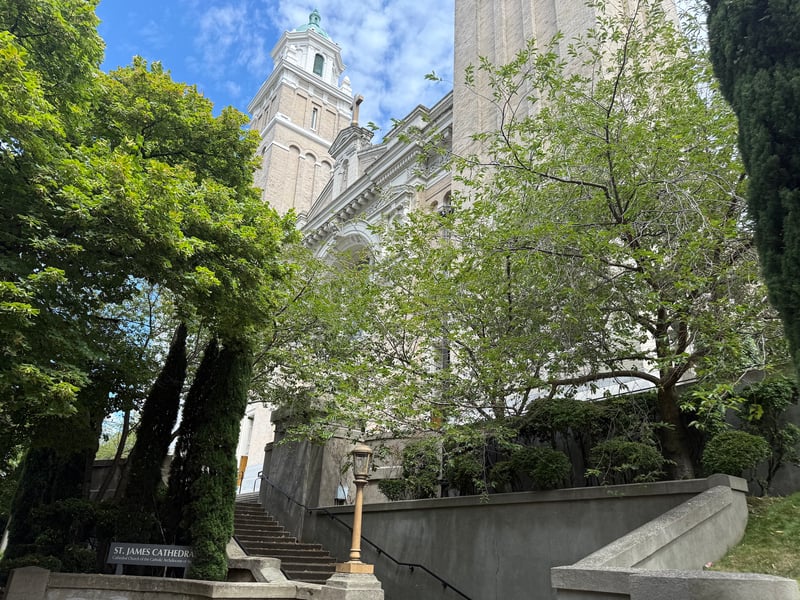
TACOMA, Wash. (CN) — With a Washington state law requiring clergy members to report child abuse disclosures made in sacramental confession set to take effect in just under two weeks, Catholic bishops and the federal government on Monday urged a federal judge to block the law.
“Confession is a religious practice that goes back 2,000 years — it has been embedded in canon law for thousands of years, long before the United States or the State of Washington,” said Michael Gates, a Justice Department attorney representing the United States. “Sitting in confessional and inviting a penitent to come in and confess their sins is to stand in for Christ per the church. To hear the sins and absolve them is a religious practice, and it is something the state of Washington is targeting."
Senate Bill 5375 — signed into law by Washington Governor Bob Ferguson in early May — makes members of the clergy mandatory reporters of child neglect and abuse, requiring them to report suspected child abuse. Under the law, religious leaders will still be protected from being forced to testify about the disclosures in court proceedings. The law is set to take effect on July 27.
The Catholic bishops sued the state in federal court at the end of May, accusing the state of unfairly targeting clergy, and “selectively putting plaintiffs to a choice between eternal damnation or criminal prosecution.” The United States intervened, pushing the federal court to block the state from enacting the law.
Before U.S. District Judge David Estudillo, the state argued that the law is only asking for clergy members to report information that gives reasonable cause that a child is being abused, not to solicit otherwise confidential information. The state further argued that the law wouldn’t require clergy to become arms of the state.
“There is no serious question that this is a general and applicable statute that is used on a number of trusted professions across the state who are likely to receive reports of child abuse,” argued Alicia Young, attorney with the Washington State Attorney General’s Office.
Estudillo questioned why the state recently designated certain college-employed attorneys as mandatory reporters, yet exempted them from reporting child abuse or neglect when it is connected to their legal representation of a client.
To the state, the answer is nuanced. Attorneys are not mandated reporters unless they meet certain conditions, like working for a nonprofit. Even still, they are required to report abuse if they represent a child client.
The clergy members argued that the law is unfair because they are the only group not to retain privileges and be obligated to report abuse under all circumstances.
Plus the law will hinder Archbishop Paul Etienne, one of 11 plaintiffs in the case, and other religious leaders’ abilities to make sure priests are available for confession if those priests can face prosecution. The statute violates church autonomy and free exercise, the clergy argued.
It was a point reiterated by the federal government, which intervened to represent all religious interests under the seal of confidentiality. Estudillo questioned the government’s standing.
“If the U.S. has no standing in this case, it renders the statute completely useless,” Gates said.
Estudillo noted that Congress didn’t give the government complete freedom to enforce the equal protection clause and noted the restrictions it faces in initiating actions, though said he didn’t doubt the government could intervene.
The state, however, was less convinced and noted that the government’s separate motion for a preliminary injunction was unlikely to provide more complete relief than that requested by the clergy.
Estudillo said the clergy presented a strong case for the statute violating free exercise, but was still undecided on the merits of the church autonomy claim. He indicated he would have a decision by the end of the week before the statute goes into effect.
Mark Rienzi, president and CEO of the Becket Fund for Religious Liberty, one of the firms representing the clergy members, hoped Estudillo would find in their favor.
“Washington wants to force Catholic priests into an impossible choice between betraying their ancient faith practices or facing jail time,” Rienzi said in a statement. “In a free nation like ours, no one should have to make that choice. We’re hopeful the court will block this draconian law and protect the sacredness of confession.”
Subscribe to our free newsletters
Our weekly newsletter Closing Arguments offers the latest about ongoing trials, major litigation and rulings in courthouses around the U.S. and the world, while the monthly Under the Lights dishes the legal dirt from Hollywood, sports, Big Tech and the arts.