
 Search Articles


(CN) — A federal judge on Monday dismissed some plaintiffs from a class action against Apple concerning whether its AirTag product allows stalkers to track their victims.
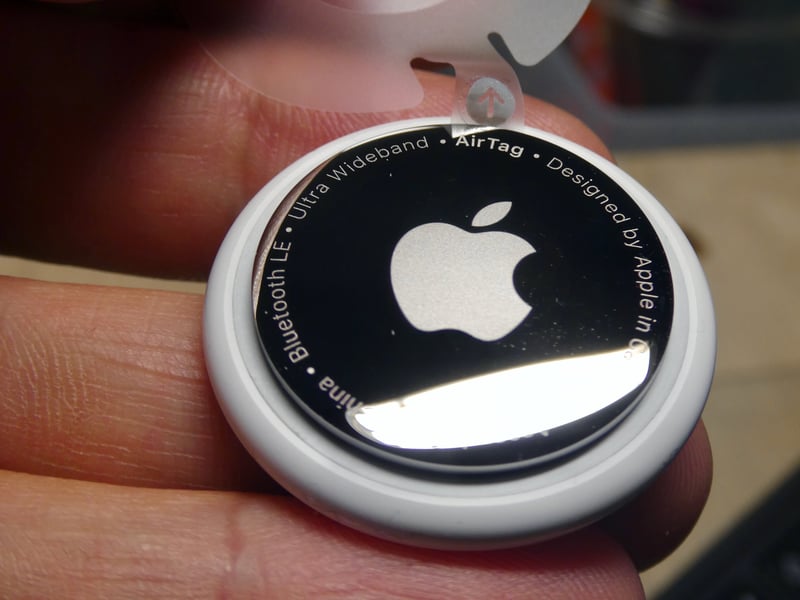
AirTags are little discs, about one-and-a-quarter inches in diameter, that can be tracked by Apple devices like iPhones, iPads and laptops via Bluetooth. The $29 devices released in 2021 are designed to be attached to items like keys, wallets and luggage, to help people find them when they’re lost.
But in a 2022 lawsuit, dozens of people say AirTags can also be used for stalking. The plaintiffs say in their complaint that “at least two reported murders have occurred in which the murderer used an AirTag to track the victim.”
Apple has made some attempts to make AirTags “stalker proof,” safeguarding users from having their whereabouts tracked by others. For example, Apple software now detects AirTags, and periodically sends users notifications about the devices. But the plaintiffs say those warnings come too late, or that they aren’t always clear. Others say the AirTags don’t beep loud enough, making it difficult to find them.
The plaintiffs say their claims against the technology giant are governed by Apple’s iOS Software License Agreement, which contains a California choice of law provision. U.S. District Judge Vince Chhabria concluded in an 11-page ruling Monday that the plaintiffs who don’t have Apple iOS devices and who don’t live in California should be dismissed from the case.
Chhabria, a Barack Obama appointee, said he was amenable to dismissing plaintiffs who live in California and don’t have iOS devices, too, if Apple can “precisely detail the differences between each state’s and California’s laws and explain why they are material.” So far, “Apple has not met its burden of displacing California law with regard to these other claims and plaintiffs.”
Roughly half the class members have Android phones, an attorney for the plaintiffs said at a hearing in September. Even if they all get dismissed from this case, they could still file a new class action using a different legal argument.
The plaintiffs who do have iPhones appear likely to remain. For example, Pamela Laun got a notification about an AirTag once, on her phone, but didn’t understand what it meant, having never purchased an AirTag herself. It was two months before she discovered the unwanted AirTag in her car.
“It is reasonable to infer that her injuries were caused, at least in part, by the alleged defects which allowed her stalker to track her for two months before she found the AirTag,” Chhabria wrote. Laun’s claim had been dismissed on an earlier motion, but is now reinstated.
Apple had argued that many of the plaintiffs’ claims should be thrown out because they knew their stalkers beforehand, or because “some of their injuries arose from negative experiences with police after they discovered the AirTag,” as Chhabria summarized. But that, the judge said, doesn’t shield Apple from its own liability.
“As previously explained, the extent to which the AirTag defects caused the plaintiffs’ injuries will be a significant and heavily fact-bound inquiry for the later stages of this litigation,” the judge wrote.
The judge did remove one additional plaintiff from the suit: Marissa Maginnis, who claimed that her ex-husband used an AirTag to track her after they saw each other for a court hearing. She got an alert on her phone that same day, searched the car, found the tracking device and disabled it. She later received another notification, and found a second AirTag in her son’s pencil bag.
“From these allegations, it seems like all the safety features worked for her to quickly locate and disable the AirTag,” the judge wrote.
In a written statement, plaintiffs’ attorney Gillian Wade of Wade Kilpela Slade called the ruling “thoughtful and nuanced,” adding: “We’re grateful for the opportunity to continue litigating this case on behalf of all of our clients, as well as the untold number of others out there whose lives have been affected by AirTag-enabled stalking and abuse. Today, Apple was told that it cannot continue to ignore the suffering it has caused.”
 Follow @hillelaron
Subscribe to our free newsletters
Our weekly newsletter Closing Arguments offers the latest about ongoing trials, major litigation and rulings in courthouses around the U.S. and the world, while the monthly Under the Lights dishes the legal dirt from Hollywood, sports, Big Tech and the arts.