
 Search Articles


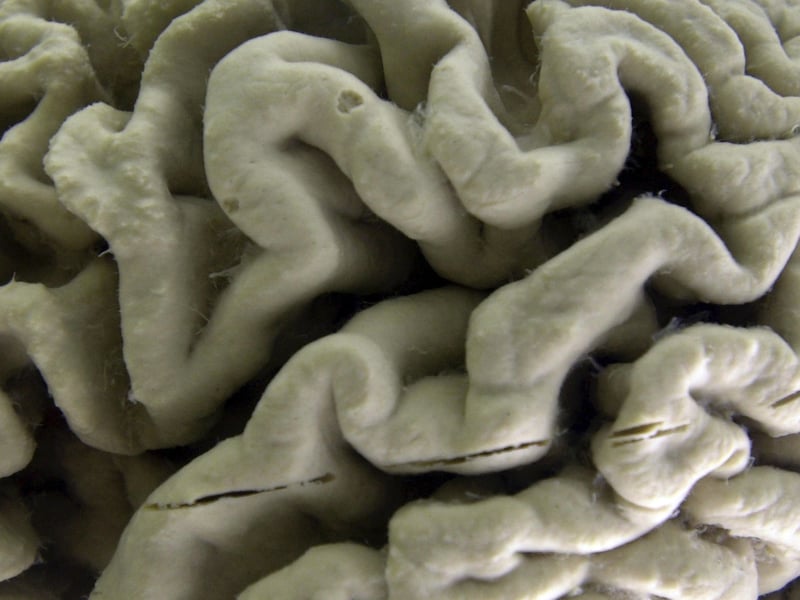
(CN) — A 24-hour long study into the brains of mice has revealed Alzheimer’s disease doesn’t just mess with the daily rhythms of those it afflicts, but also the circadian rhythms of essential waste-clearing brain cells, resulting in a more rapid spread through the brain.
A form of dementia affecting more than 55 million people worldwide, Alzheimer’s has long been closely linked to the circadian system, or the body’s internal clock that manages sleep cycles.
Being unable to sleep at night or frequently napping during the day are common first signs of the disease, while sundowning is a well-known symptom of late stage Alzheimer’s, in which patients become increasingly confused as the day latens into afternoon or evening.
In a study published Thursday in Nature Neuroscience, Washington University School of Medicine neurology professor Erik Musiek, singled out a specific gene: YKL-40, one of 82 genes that are associated with Alzheimer’s disease risk.
“Knowing that a lot of these Alzheimer’s genes are being regulated by the circadian rhythm gives us the opportunity to find ways to identify therapeutic treatments to manipulate them and prevent the progression of the disease,” Musiek said in a statement.
While half of those genes are activated according to the body’s circadian rhythm, showing a clear connection to sleep, YKL-40 was different in that it also regulates production of amyloid, a protein that is commonly seen in excess in brains of Alzheimer’s patients.
That means too much YKL-40, and you’ve got amyloid build-up, a “hallmark” of the disease. As it was clear that excessive production of the circadian rhythm-related protein was likely key in explaining Alzheimer’s, Musiek now just needed to now put his theory to the test on rodents in his St. Louis lab.
Both mice with excessive amyloid proteins in their brains and mice with generally healthy brains were monitored over a 24-hour period, or complete circadian cycle, as tissue was collected from their brains every two hours. After each collection, the tissue was quickly analyzed to determine what genes were active during what phases of the circadian cycle.
For the mice with amyloid build-up, hundreds of genes and brain cells were thrown off their schedule. One of the largest disruptions was seen in microglia and astrocytes, cells specifically designed to clear the brain of waste materials like amyloid.
Instead of properly managing immune responses where amyloid was overrunning the brain, their synchronicity was significantly degraded, resulting in only further growth of amyloid. Amyloid presence even seemed to create entirely new rhythms in genes unrelated to circadian patterns, such as those involved in infection response.
Gene patterns were left seriously altered, and even more so as the amyloid build-up progressed over the 24-hour period.
Musiek notes that the research suggests correcting circadian rhythms could potentially treat Alzheimer’s.
“We have a lot of things we still need to understand, but where the rubber meets the road is trying to manipulate the clock in some way, make it stronger, make it weaker, or turn it off in certain cell types,” said Musiek said in statement. “Ultimately, we hope to learn how to optimize the circadian system to prevent amyloid accumulation and other aspects of Alzheimer’s disease.”
Musiek, who specializes in aging and dementia research, previously found that sleep pattern changes can be seen in patients years before serious symptoms start, and that these disruptions likely contribute to an accelerated progression of the disease.
Subscribe to our free newsletters
Our weekly newsletter Closing Arguments offers the latest about ongoing trials, major litigation and rulings in courthouses around the U.S. and the world, while the monthly Under the Lights dishes the legal dirt from Hollywood, sports, Big Tech and the arts.