
 Search Articles


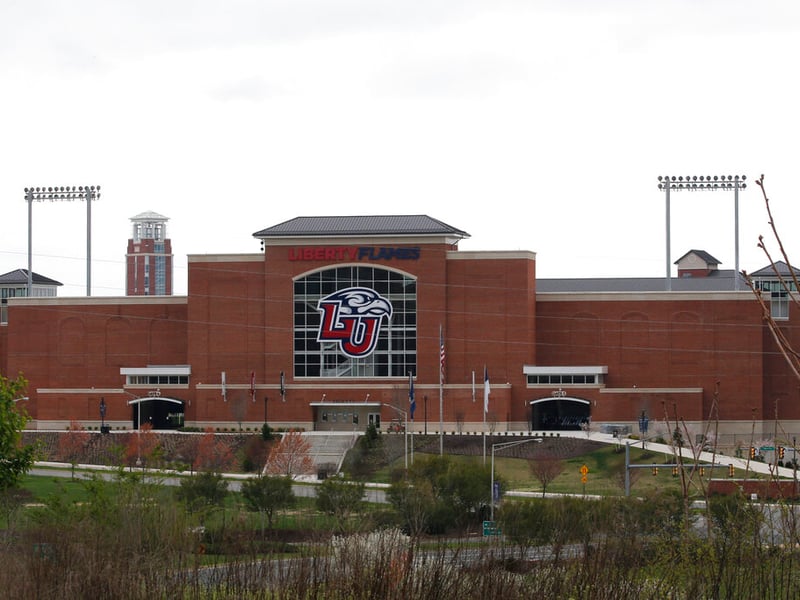
RICHMOND, Va. (CN) —Three college students filed a lawsuit against Virginia on Wednesday, claiming that the state’s exclusion of theological majors from tuition aid eligibility is unconstitutional.
“Students can pursue myriad different secular programs and even some religious programs in college while remaining eligible for both the State Tuition Assistance and National Guard Grants—but the one thing they cannot pursue are programs that government officials deem to be for religious training or theological education,” the students wrote in their complaint.
The students challenge provisions of the Virginia Tuition Assistance Grant Program and the National Guard Tuition Assistance Grant Program, which are administered by the State Council of Higher Education and the Virginia Department of Military Affairs, respectively. State officials did not respond to requests for comment.
“The First Amendment prohibits the government from excluding students from otherwise available grants solely because they picked religious programs that they believe God has called them to pursue,” said Jacob Reed, an attorney with Alliance Defending Freedom, in a press release. His group is representing the students.
The plaintiffs include incoming Liberty University first-year students Cameron Johnson and Luke Thomas, as well as current student Virginia Army National Guard Private First Class Trace Stevens, who all claim to be eligible for tuition assistance.
“These policies treat Cameron Johnson, Luke Thomas, and Trace Stevens as second-class citizens and have no place in our laws,” Reed said.
Tuition assistance fluctuates based on funding allocated by the state General Assembly. The tuition assistance grant is available to over 25 private, non-profit colleges or universities and will award $5,250 to an undergraduate student for the 2025–2026 school year. The grant awarded to National Guard servicemembers can reach up to $20,000 per year.
The students argue that the law only bars aid to schools whose sole purpose is religious or theological training, such as seminaries. However, they contend that the state has extended this restriction to students at broadly religious schools like Liberty University and Eastern Mennonite University, based on their chosen fields of study.
Johnson plans to major in pastoral leadership, Thomas is pursuing a degree in music and worship and Stevens is studying Religion.
“Cameron selected Pastoral Leadership because he believes God called him to pursue it and because it will develop his leadership skills, give him a foundation if he decides to further his education in graduate school, and can help prepare him if he does decide to one day go into vocational ministry,” the students wrote in their complaint.
Degrees in Philosophy and Religious Studies, meanwhile, are not excluded from the grants, despite some institutions describing the religious studies degree they offer as training for a career in Christian ministry. Similarly, secular music programs are also eligible for grant assistance.
“Trace applied for—and was denied—a National Guard Grant because the Department arbitrarily decided his program was for ‘religious training or theological education’ and thus ineligible,” the students said. “To make matters worse, Trace joined the National Guard mainly because a recruiter told him that he would be able to use the National Guard Grant to help him pay for a religiously-oriented college degree.”
The students highlighted that the federal government is already providing tuition assistance through the United States Army to Trace.
Reed and the students rely on a trio of recent Supreme Court decisions to strengthen their argument.
The Supreme Court ruled in Trinity Lutheran Church of Columbia, Inc. v. Comer in 2017 that Missouri had violated the Free Exercise Clause of the First Amendment when it denied a religious school’s grant application to resurface its playground while providing grants to similarly situated non-religious groups.
Three years later, the majority ruled in Espinoza v. Montana Department of Revenue that Montana’s refusal to provide tuition assistance for parents seeking to send their children to religious private schools violated the Free Exercise Clause. In the 2021 decision in Carson v. Makin , the justices held that Maine’s nonsectarian requirement for tuition assistance payments was unconstitutional.
“The U.S. Supreme Court has ruled three times in the last eight years that otherwise available public benefits cannot be withheld from people because of their religious character, exercise, and use of the benefits,” Reed said. “We are urging the court to uphold the First Amendment and allow students in Virginia to pursue their goals without fear that their religion will create financial barriers for their education.”
Subscribe to our free newsletters
Our weekly newsletter Closing Arguments offers the latest about ongoing trials, major litigation and rulings in courthouses around the U.S. and the world, while the monthly Under the Lights dishes the legal dirt from Hollywood, sports, Big Tech and the arts.