
 Search Articles


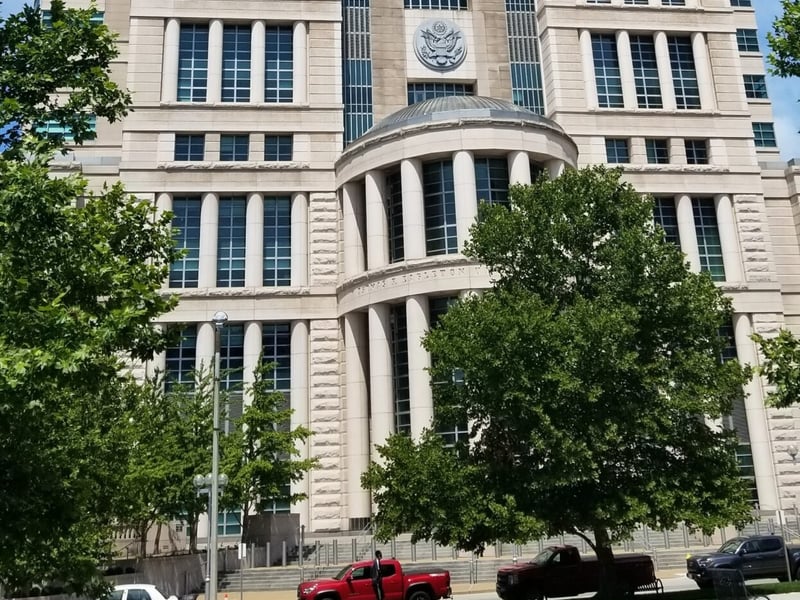
ST. LOUIS (CN) — A Christian organization on Tuesday asked the Eighth Circuit to revive its claims that Missouri’s licensing requirements for youth residential care facilities violate its constitutional rights.
At issue is a 2021 law, the Residential Care Facility Notification Act, which requires state boarding schools to notify the state of their existence, conduct background checks on employees and comply with health and safety inspections.
Several months after lawmakers passed the new rules, CNS International Ministries, also known as Heartland, sued Missouri Department of Social Services Director Jessica Bax. In its lawsuit, the group claims the law is government overreach that violates religious freedom and expressive association, as well as numerous constitutional rights of faculty, staff and residents.
“Expressive association isn’t dependent on ministerial status,” plaintiff attorney Timothy Belz told the three-judge panel. “Expressive association includes janitors. It includes all kinds of employees.”
In March 2025, U.S. District Judge Henry Autrey dismissed Heartland’s lawsuit due to lack of standing, prompting the appeal.
“This case really starts with appellant’s misunderstanding of the scope of the definition of [a] licensed-exempt residential care facility,” Missouri Solicitor General Louis J. Capozzi III said.
The state argues that Heartland incorrectly filled out an application listing a cafeteria worker and a janitor, both convicted felons, as working in the residential care facility, which then prompted the state to declare them ineligible to work. But Capozzi says they actually work in the school in a capacity not involving students and that the state has allowed them to continue their employment because of that distinction.
U.S. Circuit Judge Raymond W. Gruender questioned the state’s culpability in creating the conflict if it was as simple as filling out an application incorrectly.
“It seems to me that this misunderstanding could so easily be resolved without hundreds of pages of briefing and several courts’ attention,” Gruender, a George W. Bush appointee, said. “It just doesn’t make any sense to me.”
Belz argued that the Eighth Circuit in 2005 found that Heartland was exempt in an earlier challenge to state regulations.
“What [the district court] and this court found was that Heartland is an educational, social, religious, cultural, even economic organization, which speaks of association rights under the First Amendment, which leads directly to strict scrutiny, which it is almost impossible for the state to win, according to the Supreme Court,” Belz said.
Capozzi pushed back on that argument in his closing statements.
“They want an order that it is unconstitutional for Missouri to exclude two former felons from supervising vulnerable children,” Capozzi said.
Heartland argued in its brief that it carefully vets its staff.
“To Heartland’s knowledge, there is no listing in Missouri’s Central Registry for Abuse and Neglect resulting from any incident between an adult and a child in Heartland’s recovery programs in the past 20 years, and no felony or misdemeanor convictions resulting from such interactions in the entire history of Heartland, going back to the mid-1990s,” the group states.
Missouri pushed back on that argument in its brief.
“This case concerns whether Missouri’s measures designed to protect children from convicted felons violate liberty interests protected by the First and Fourteenth Amendments to the U.S. Constitution,” Missouri states in its brief. “They do not — the summary-judgment record here does not demonstrate that application of the State’s background-check regulations to janitorial or cafeteria staff generate core church-autonomy, expressive-association or due-process concerns.”
A bipartisan law, the Residential Care Facility Notification Act passed amid an outcry from child advocates, former students and lawmakers who claimed oversight was needed. It was designed to provide oversight to faith-based reform schools, which under a 1982 law were allowed to claim an exemption from Missouri’s licensing requirement.
That lack of oversight allowed Missouri to become a safe harbor for unlicensed facilities — some which have been investigated or shut down in other states. The facilities often settle in rural and secluded parts of the state, where critics say they can operate under the radar.
Heartland is no stranger to controversy — nor to challenging state oversight.
Its founder is Charles Sharpe, a prominent Republican who made his fortune with the Kansas City-based Ozark National Life Insurance Company. Its school for troubled youth sits on thousands of acres of farmland and pasture in rural northeast Missouri.
Sharpe and the school drew national attention in 2001 after a call to the state hotline reported students were being forced to stand in ankle- to chest-deep cow manure as a punishment. Several months later, after two more allegations of abuse were lodged against the facility, authorities raided the school and removed 115 children.
The raid prompted a series of lawsuits and challenges that took years to wind through the courts. Eventually, felony child abuse charges against five employees were either dropped or resulted in acquittals. Sharpe and Heartland were cleared of any wrongdoing, and the state settled, agreeing to pay extensive attorney fees and court costs.
U.S. Circuit Judges James B. Loken and Morris S. Arnold, both George H. W. Bush appointees, joined Gruender on the panel, which took the case under advisement. There is no timetable for a ruling.
 Follow @joeharris_stl
Subscribe to our free newsletters
Our weekly newsletter Closing Arguments offers the latest about ongoing trials, major litigation and rulings in courthouses around the U.S. and the world, while the monthly Under the Lights dishes the legal dirt from Hollywood, sports, Big Tech and the arts.