
 Search Articles


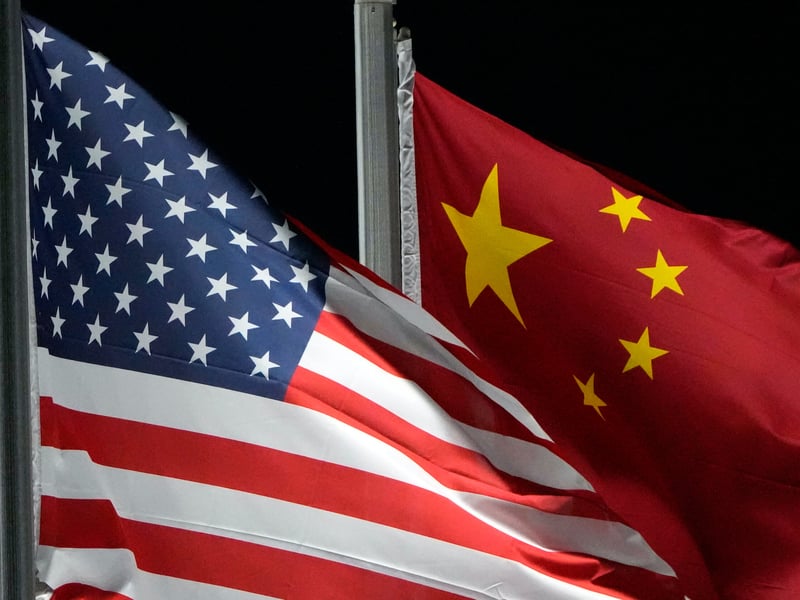
(CN) — Lawyers from the Texas Attorney General’s Office and a Chinese American advocacy group argued before a Fifth Circuit panel Tuesday over whether a new state law preventing people from adversarial nations like China from buying property in the state applies to Chinese citizens living in the U.S.
Texas is one of several states in recent years that have adopted legislation that critics refer to as modern-day “alien land laws” — a reference to early 20th-century state laws that limited the land-owning ability of immigrants ineligible for U.S. citizenship, which primarily targeted Asian immigrants.
Texas Governor Greg Abbott signed Senate Bill 17 into law in June, and it took effect Sept. 1. The law prohibits people, other than U.S. citizens and legal permanent residents, who are “domiciled” in countries deemed national security risks from purchasing property in the state or obtaining leases of a year or longer. China, Russia, Iran and North Korea are currently covered by the law, though the list is subject to change. The law also applies to citizens of those countries who are domiciled outside of the United States.
The legislation faced vigorous pushback from the Asian American community, who feared it would prevent Chinese immigrants from buying or renting property in the state. But when the Chinese American Legal Defense Alliance brought a putative class action challenging SB 17 on behalf of several Chinese citizens living in Texas, the Texas Attorney General’s Office, which is tasked with enforcing the law, insisted SB 17 doesn’t apply to citizens of China who intend to live permanently in the U.S.
U.S. District Judge Charles Eskridge dismissed the lawsuit, finding the Chinese citizens lacked standing to challenge the law. The ban wouldn’t apply to those individuals, the Donald Trump appointee ruled, as they aren’t domiciled in China under the law’s definition of domicile, which is “having established a place as an individual’s true, fixed, and permanent home and principal residence to which the individual intends to return whenever absent.”
Two of the three plaintiffs have since dismissed themselves from the case. But the remaining plaintiff, Peng Wang, argues he still has a credible fear that the law will be enforced against him, as although the current attorney general has said he will not enforce the law against Wang, such a disclaimer is not binding on him or any future attorney general.
Chinese American Legal Defense Alliance attorney Justin Sadowsky asked the Fifth Circuit panel Tuesday to reinstate the lawsuit, saying his client, who lives in Texas on an F-1 student visa, is arguably covered by the law. He pointed out that Texas does not consider people with such visas to be domiciled in Texas for the purposes of in-state tuition and that when Wang obtained his visa, he had to agree that he would return to China after completing his studies.
But Texas Assistant Solicitor General Benjamin Wallace Mendelson told the panel that Wang — a seminary student who has lived in Texas for more than 16 years and has said he aims to continue living in the United States and work as a pastor after he graduates — is “of course” domiciled in the United States. He argued that the use of domicile in other areas of Texas law, such as in-state tuition, is distinct from how domicile is used in SB 17.
U.S. Circuit Judge Andrew Oldham asked Sadowsky whether the attorney general’s statements that he won’t enforce SB 17 against Wang give the attorney general sovereign immunity from the lawsuit.
“Why is that not the end of the case?” the Trump appointee asked.
Sadowsky responded that for sovereign immunity, what matters is whether the attorney general intends to enforce the law at all.
“He does plan on enforcing the statute; he does plan on putting forth procedures for prosecuting the statute,” Sadowsky said. “The fact that he won’t prosecute it against our client is not the test.”
U.S. Circuit Judge Kurt Engelhardt, also a Trump appointee, and Senior U.S. Circuit Judge Jacques Wiener, a George H. W. Bush appointee, joined Oldham on the panel.
A parallel case is playing out in Florida, with an 11th Circuit panel ruling 2-1 Tuesday that a group of Chinese immigrants and a real estate firm lack standing to challenge the law, with the majority similarly finding that Florida’s law doesn’t apply to Chinese citizens who intend to live permanently in the U.S.
Subscribe to our free newsletters
Our weekly newsletter Closing Arguments offers the latest about ongoing trials, major litigation and rulings in courthouses around the U.S. and the world, while the monthly Under the Lights dishes the legal dirt from Hollywood, sports, Big Tech and the arts.