
 Search Articles


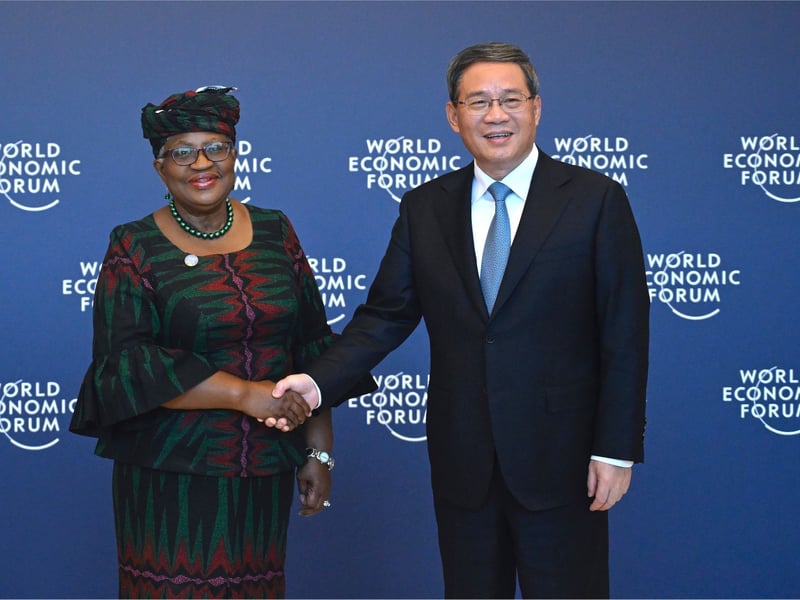
SHANGHAI (AP) — China has said it would no longer seek the special treatment given to developing countries in World Trade Organization agreements — a change long demanded by the United States.
Commerce Ministry officials said Wednesday the move was an attempt to boost the global trading system at a time when it is under threat from tariff wars and protectionist moves by individual countries to restrict imports.
It was not clear whether the announcement would lead to greater access for foreign goods to China’s vast market. The U.S. and many European countries have long complained about barriers to their exports. The change affects only ongoing and future negotiations, not existing agreements.
Chinese Premier Li Qiang announced the change in a speech in New York on Tuesday to a China-organized development forum at the annual meeting of the U.N. General Assembly.
Chinese officials said Beijing’s decision was voluntary and not meant to suggest that other developing countries should follow suit.
“It’s China’s own decision,” China’s top envoy to the WTO, Li Yihong, told reporters in Geneva.
The WTO’s “special and differential treatment” provisions give some developing countries longer time spans to implement trade agreements, can lead to technical assistance from abroad and offer exceptions to some rules that richer countries abide by.
China is a middle-income country, and government officials emphasized that it remains part of the developing world. The U.S. has long argued China should give up the developing-country status because it is the world’s second-largest economy.
China “will always be a developing country,” Li said. “It’s very clear that the issue of developing member status and the special and differential treatment are related but distinct.”
Increasingly, though, China has become a source of loans and technical assistance to other countries seeking to build roads, railways, dams and other major projects, often undertaken by major Chinese state-owned companies.
The WTO says it doesn’t officially distinguish between developed and developing countries, but some nations self-identify as developing.
Chinese officials, in their statements, did not mention the United States by name or President Donald Trump’s imposition of tariffs on many other countries this year, including China.
The WTO, which counts 166 countries as members, provides a forum for global trade talks and enforces agreements but has become less effective, prompting calls for reform.
The head of the Geneva-based organization described the Chinese move as “major news key to WTO reform” and applauded and thanked the country’s leaders in a post on X.
“This is a culmination of many years of hard work,” wrote Ngozi Okonjo-Iweala, the WTO director-general.
By KEN MORITSUGU and JAMEY KEATEN Associated Press
Keaten reported from Geneva.
Subscribe to our free newsletters
Our weekly newsletter Closing Arguments offers the latest about ongoing trials, major litigation and rulings in courthouses around the U.S. and the world, while the monthly Under the Lights dishes the legal dirt from Hollywood, sports, Big Tech and the arts.