
 Search Articles


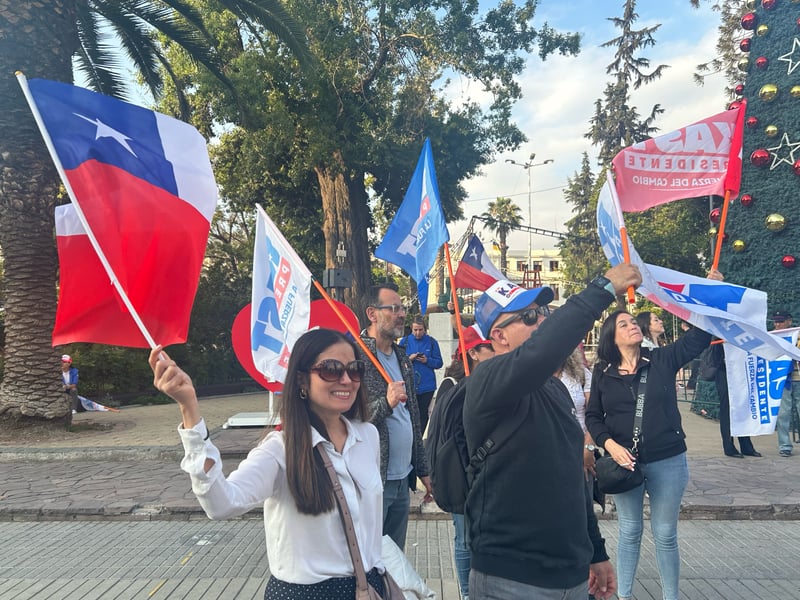
SANTIAGO DE CHILE (CNS) — Chile — the South American nation that elected one of the world’s youngest presidents, leftist Gabriel Boric, after what seemed like an unstoppable, irreversible social revolt — is likely to pick a far-right candidate on Sunday, in its first compulsory election in over a decade.
Republican Party José Antonio Kast, 59, is leading all polls in the runoffs for the presidency, where he will face communist Jeanette Jara, 51, in a polarized election where both ends of the dispute struggle to capture the social discontent derived from the Boric administration.
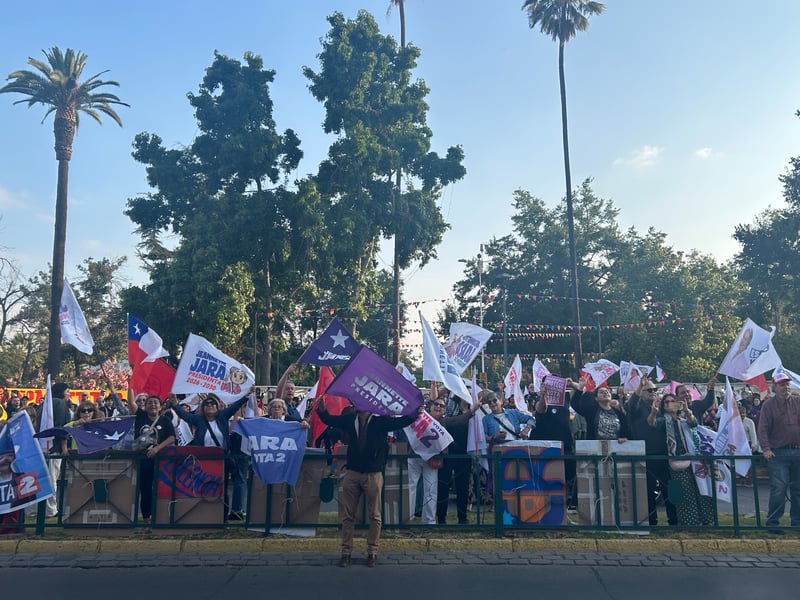
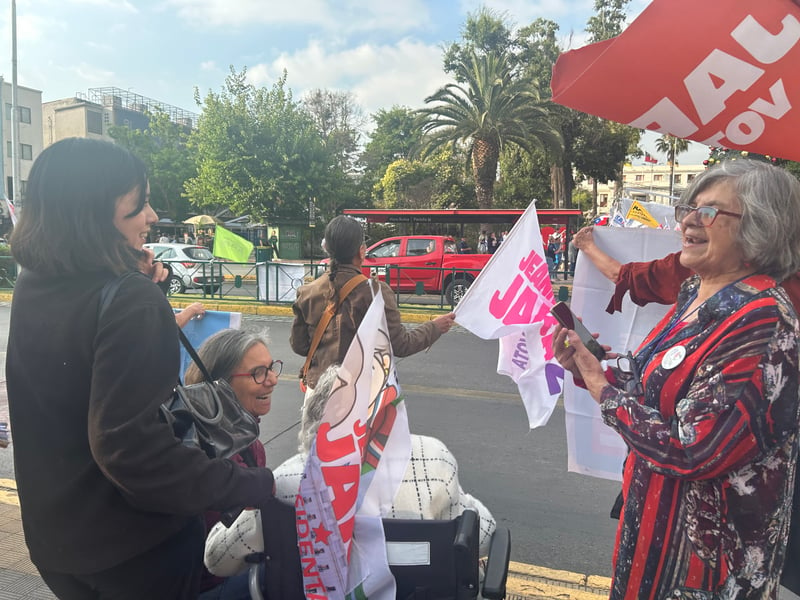
On Thursday afternoon, as both candidates held their closing events outside Santiago, supporters of confronted each other Thursday on opposite sides of an avenue in a progressive, mid-upper-class neighborhood.
Francisca Guzmán, 26, a doctor, stood on the Jara side watching across the street with despair. “It feels like we’re going backwards with all of the advances we’ve made,” she said.
As an active participant of the 2019 social uprising, Guzmán saw young progressive Boric as an opportunity for her country to change, but his efforts fell short in the face of large media groups dominating the conversation and spreading fear, Guzmán said.
Boric, 39, made his way from student leader to president and pledged to reform the country entirely, starting from a constitutional reform that meant to overturn the one passed during the Augusto Pinochet dictatorship that started in 1973.
But the proposal was widely rejected in 2022, spawning a decline his administration struggled to recover from. His presidency was also shaken by an early spike in crime — with 63% of Chileans worried about crime, per local research — congressional gridlock and divisions inside his own coalition, weakening his capacity to drive a transformative agenda.
Right-wing candidates capitalized on the discontent, leading the majority to now opt for its biggest antagonist — a pro-privatizing, conservative, pro-austerity candidate who pledges to restore all that was lost to the leftist experiment.
Now, conversations about public health and education, the vindication of indigenous communities, a gender-based political agenda and social welfare have been drastically replaced by a demand for tough-on-crime policies and the comeback of economic neoliberalism.
Javier Ahumada, head of foreign relations for left-wing party Frente Amplio, said voter’s main worries in the last election were inequality, human rights and access to justice.
“Now, they’re security, immigration, economy,” said Ahumada. “This is not a dispute about the administration per se — but about what narrative is built around it.”
Boric’s disapproval rate stands above 60%, with criticism from left-leaning voters who where hopeful his government would deliver more.
And while Jara has tried to distance herself from the current administration, her party is a part of the coalition that brought Boric to power. While her discourse has centered in proposing policies to advance social security for Chileans, Kast has controlled the narrative by handling discontent and rage, said Alberto Mayol, a local political analyst.
Kast has promised expanded police powers, military support at the borders and a crackdown on organized crime, framing the election as a choice between order and further chaos.
“It’s like the 2019 uprising, but electorally,” said Mayol. “Social unrest is very intense, and that leads voters to the person who is promising to wreck the most.”
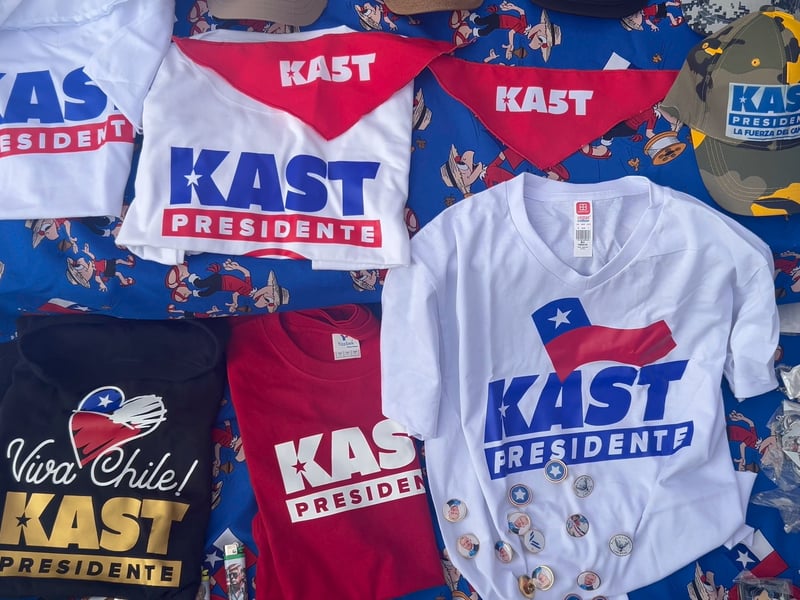
Karen Monti, 51, an entrepreneur, waved a Kast flag Thursday. As the daughter of a former dictatorship victim, she said she believed the Pinochet coup was “pretty good”, human rights violations set aside.
“My priority is for my country to be developed economically, for investments to arrive,” she said.
Kast, brother of a former minister during the Pinochet dictatorship, has praised parts of its legacy.
The U.S.-backed 17-year military dictatorship dismantled Chile’s democracy, imposed sweeping free-market overhauls and carried out a campaign of repression in which more than 3,000 people were killed or disappeared and tens of thousands were tortured.
Guzmán, the doctor, said she worries about political repression with an uptick if Kast wins the presidency. “He has defended human rights violations in the past,” she said. “I worry what he’ll do when protests against his policies start.”
During the 2019 uprising, security forces under President Sebastián Piñera were accused of widespread abuses, with Chile’s human rights institute documenting thousands of injuries, including hundreds of people blinded or partially blinded by police projectiles.
Kast, at the time, dismissed the reports as exaggerated, insisting that “in Chile there are no human rights violations” by security forces and later deleting a tweet implying that rights must yield to “order.”
Kast has pledged a menu of policies ranging from deportations to voluntary self-expulsion programs. His campaign has repeatedly tied rising insecurity to irregular border crossings, echoing months of media coverage that highlighted crimes attributed — often loosely — to foreign gangs.
The current political storm is rooted in a demographic transformation for which progressive political leaders have lost control of the narrative — the foreign-born population in Chile has quadrupled in the last 15 years, mostly dominated by the Venezuelan crisis, which sparked the arrival of hundreds of thousands into the country.
But the increase in irregular immigration, a core criticism in the Kast campaign, is not merely a matter of border security, but a deep diplomatic deadlock that functionally traps hundreds of thousands of migrants in legal limbo.
Without access to their own embassy or consulates, Venezuelan citizens — who make up over 40% of the country’s 1.6 million foreign-born residents — cannot obtain crucial documents like renewed passports or certificates of good conduct required by Chilean law to secure a legal visa. Efforts by Chile to negotiate repatriation flights or identity verification with Caracas have stalled repeatedly, leaving both governments accusing each other of bad faith.
“He won’t be able to expel 350,000 foreigners, as he promised,” said Rodrigo Sandoval, an immigration expert. “It would take him 253 years.”
However, just like in the U.S., a part of the deterrent job is done, as Chile has become a paradox for migrants who find more stability than at home, but face an uneven mix of solidarity, bureaucracy and increasing political hostility.
Alexandre Narvaez, 48, a Venezuelan business administrator, said he will vote for Kast because the country’s top priority is to run “an emergency government.” Security, education and economic growth stand amid his main worries as a migrant living in Chile, he said, noting he arrived in the country over seven years ago, and is registered to vote.
Not all his compatriots had that privilege, as policies got tougher after the increase in migrant influx and the growing tensions between Chile and Venezuela.
Narvaez said he believed those migrants should return home and re-enter the country after, if Kast gains office. Experts note that for most Venezuelans such a round trip is practically impossible, given the cost, lack of documentation and political constraints imposed by the Maduro government.
Migrants in Chile make up for 8.8% of the population, and only 5.3 of the incarcerated in the country are foreign-born. Polls and surveys show a growing proportion of Chileans see such irregular immigration as a key cause of delinquency, even though experts and judicial reports find little direct causal relationship between migration and crime levels.
That perception has been fueled by weeks of headlines linking high-profile crimes to foreign nationals and by political messaging that frames migration as a security emergency.
Chileans, regardless of the election outcome, have too embraced the anti-immigration rhetoric that has spread over the region during the past years, propelled by the recent Trump policies involving claims of invasion and demanding mass deportations.
Across Latin America, governments from Argentina to Peru have toughened border rules or blamed foreign gangs for spiraling violence, creating a regional climate that Chilean politicians have tapped into.
Jara has sought to chart a middle path in the debate, calling for “orderly and safe” migration, tighter border enforcement and a temporary biometric registration of migrants, rejecting mass deportation proposals from Kast.
Her message has centered on restoring state capacity without scapegoating migrants, though her campaign has struggled to compete with Kast’s simpler, more punitive narrative. A more humane approach that has struggled to gain territory, experts said, as fear and anger have dominated the public conversation over the topic for the past few months.
Lucía Cholakian Herrera is a Courthouse News correspondent based in Buenos Aires, Argentina.
 Follow @luciacholakian
Subscribe to our free newsletters
Our weekly newsletter Closing Arguments offers the latest about ongoing trials, major litigation and rulings in courthouses around the U.S. and the world, while the monthly Under the Lights dishes the legal dirt from Hollywood, sports, Big Tech and the arts.