
 Search Articles


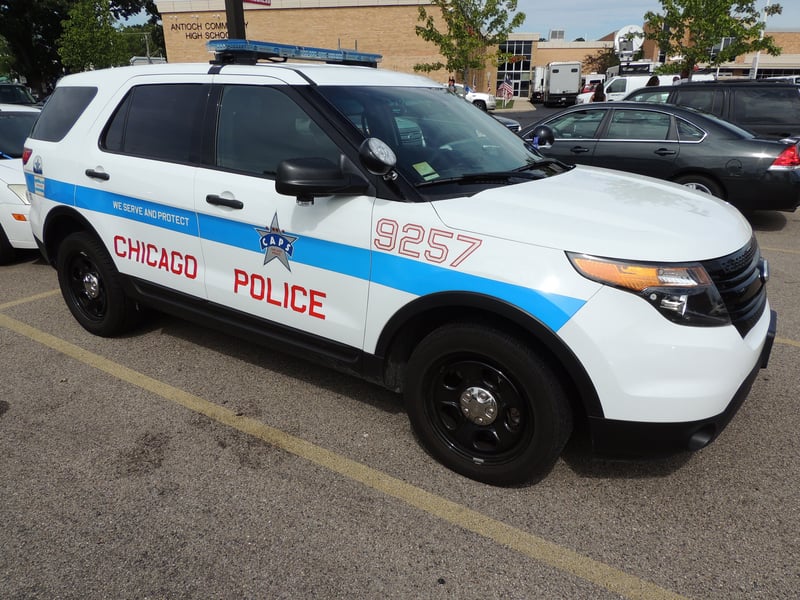
CHICAGO (CN) — The Office of the Inspector General in Chicago put out a report Tuesday, calling for the city’s police department to take another look at eight officers’ ties to the Oath Keepers, a violent right-wing group.
The police department’s Bureau of Internal Affairs investigated the eight officers — Alberto Retamozo, Matthew Bracken, Anthony Keany, Michael Nowacki, Dennis Mack, Alexander Kim, John Nicezyporuk and Bienvenido Acevedo — beginning this past October, following investigative stories by WBEZ and the Chicago Sun-Times on their potential Oath Keeper connections. During the subsequent investigation, all of the accused officers were found to have some association with the group. Though none said they were current Oath Keepers members, three of the officers acknowledged having been members “at some point,” five were found to have signed Oath Keepers documents between 2008 and 2012, and seven recalled signing documents “related” to the group.
Internal Affairs nevertheless did not recommend disciplinary action against any of the officers when it concluded its investigation this past April. The Inspector General’s Office’s report rebuked this conclusion, finding Internal Affairs’ investigation “suffer[ed] from deficiencies materially affecting its outcome.”
“Specifically, Bureau of Internal Affairs conducted deficient interviews, failed to conduct an additional investigative step, and failed to document an analysis of whether association with or membership in the Oath Keepers may have brought discredit upon the department or failed to promote the department’s efforts to implement its policy or accomplish its goals, in violation of CPD’s rules of conduct,” the Inspector General’s Office wrote.
The office noted instances during interviews with two of the officers — Mack and Keany — wherein the officers’ attorneys audibly whisper to them, which the office said was the attorneys feeding the officers answers to interviewers’ questions. The office also said there are still unanswered questions related to over 150 pages of emails Nowacki — a police sergeant — received from the Oath Keepers. Inspector General Deborah Witzburg further said Internal Affairs’ decision to close the matter was inconsistent with prior cases involving police officers’ potential ties to violent groups.
Her office’s report pointed to an August 2023 incident where a Black recruit was fired just two weeks after reportedly invoking the name of a Chicago street gang, despite the recruit denying he had ever done so. In another instance, several officers were fired following a 1968 investigation which found they had ties to the Ku Klux Klan.
In both cases the offending officers were found in violation of Rule 2 of the Chicago Police Department’s rules of conduct, which prohibits “any action or conduct which impedes the department’s efforts to achieve its policy and goals or brings discredit upon the department.”
“From my perspective, if it’s good enough for the Ku Klux Klan, it’s good enough for the Oath Keepers,” Witzburg said in a phone interview.
The Bureau of Internal Affairs, however, flatly refused to reopen investigations into the eight Oath Keepers-associated officers. It did not respond for a request for comment on the issue by press time, but in a written response to the Inspector General’s Office, waved off the problems the office outlined. The bureau claimed those problems did not materially impact the outcome of its investigation.
Regarding Mack and Keany’s interviews, the bureau said it is at the investigator’s discretion to determine whether an attorney is interfering with an interview. The police investigator overseeing the case did not make that determination regarding Mack and Keany. The same investigator, Sgt. John Bartuch, concluded the emails Nowacki received from the Oath Keepers “contained general information and nothing specific to Nowacki.”
The bureau also argued that simply having some form of contact with the Oath Keepers isn’t enough to warrant a Rule 2 violation. It claimed the officers only had association with the Oath Keepers because they thought it was primarily a Second Amendment advocacy group.
“None of the accused members stated that they had knowledge that the Oath Keepers were a violent extremist group nor did they state that they had intentions of joining a violent extremist group,” the bureau wrote. “Most importantly, none of the accused members were actively participating or had previously participated in the group. Spam email notifications do not warrant a violation of Rule 2 of the rules and regulations of the Chicago Police Department.”
Witzburg said she disagreed.
“From my perspective, this kind of behavior by police officers dishonors the badge,” she said.
The Oath Keepers have gained notoriety in the years since Jan. 6, 2021, when its members participated in the attempted right-wing takeover of the U.S. Capitol building. The incident, along with the 2020 Black Lives Matter protests, also brought police ties to the Oath Keepers and other right-wing groups like the Proud Boys into new focus. This past October, the Chicago Sun-Times found 27 current and former Chicago police were listed as Oath Keepers members in a leaked roster.
Policing as an institution in the U.S. has an even older connection to racist and reactionary sentiment, being in part descended from 18th and 19th century slave-catching patrols. The Chicago Police Department in particular has a dark history of racism and civil rights violations, which in 2019 led to the implementation of a federal consent decree meant to curb its worst behavior.
Activists have since accused the department of slow-walking the court-ordered reforms, and Witzburg said Chicago is falling behind other U.S. cities in combatting right-wing extremism among the ranks.
“There are efforts by other law enforcement agencies across the country with which Chicago has not kept pace,” she said.
She and her office pointed out that Chicago was not a signatory to a 2021 statement condemning extremism issued by the Major Cities Chiefs Association, a professional organization of police executives from the largest cities in the U.S. and Canada. Cities that did sign the statement include Los Angeles, Seattle, Houston and Baltimore.
“I believe in the good police,” Witzburg said. “We owe it to the people of Chicago to build a police force they can trust.”
 Follow @djbyrnes1
Subscribe to our free newsletters
Our weekly newsletter Closing Arguments offers the latest about ongoing trials, major litigation and rulings in courthouses around the U.S. and the world, while the monthly Under the Lights dishes the legal dirt from Hollywood, sports, Big Tech and the arts.