
 Search Articles


BEVERLY HILLS, Calif. (CN) — Charlie Watts, debonaire late drummer of the Rolling Stones, could sometimes seem an unlikely partner to Mick Jagger and Keith Richards, his flamboyant and theatrical bandmates. Instead, Watts could give the impression he’d rather be doing something more refined, like playing in a jazz ensemble.
That’s in part because Watts, who died two years ago at the age of 80, had an enthusiasm for pursuits far beyond the rock star lifestyle. Fans got a reminder of this fact in July, when his collection of rare books and jazz memorabilia went on display at Christie’s Los Angeles in Beverly Hills.
The main auction, which will feature items collected by the rock star over his life, is slated for Christie’s London headquarters on September 28. That’s in addition to further public exhibits in both London and New York, plus an online auction that runs from September 15 to 29.
More than 500 lots will be offered, with estimates ranging from about $1,000 to $380,000. It’s all part of an “astonishing” collection, David Green, a jazz musician and longtime friend of Watts, said in a statement from Christie’s announcing the auction.
“Charlie was my dearest old friend since early childhood, and in our early teens we both developed a lifelong love of jazz," Green added in the statement. Watt’s collection, he said, “reflects his enduring love of [jazz] music and the musicians who made it.”
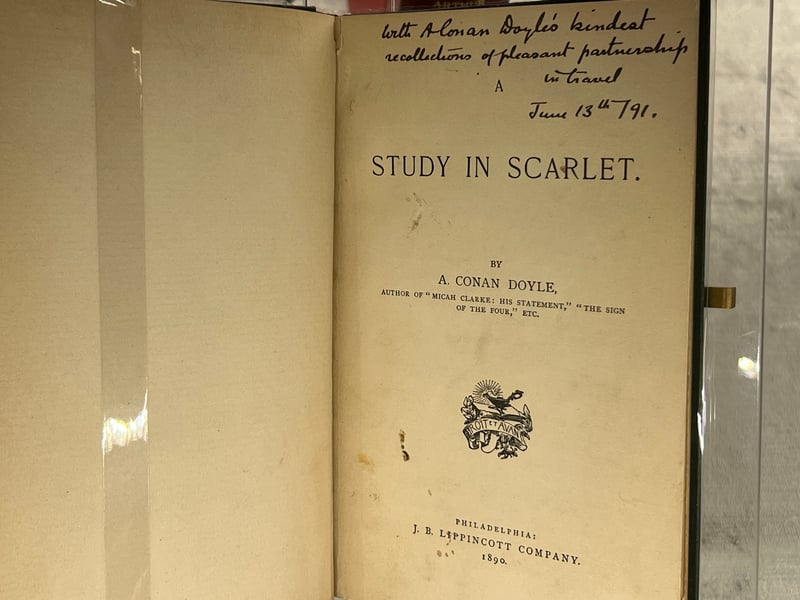
Besides jazz, Watts also evidently enjoyed a good detective story. His literary collection focuses mostly on books from the late 19th and middle 20th centuries and includes first editions of works by Agatha Christie, Dashiell Hammett and Arthur Conan Doyle, creator of the Sherlock Holmes mysteries.
There are also more cerebral literary works. Given Watts’ love of jazz music, it’s perhaps no surprise that he sought out first editions of works by F. Scott Fitzgerald, whose novels and stories encapsulate the spirit of the so-called Jazz Age of the 1920s.
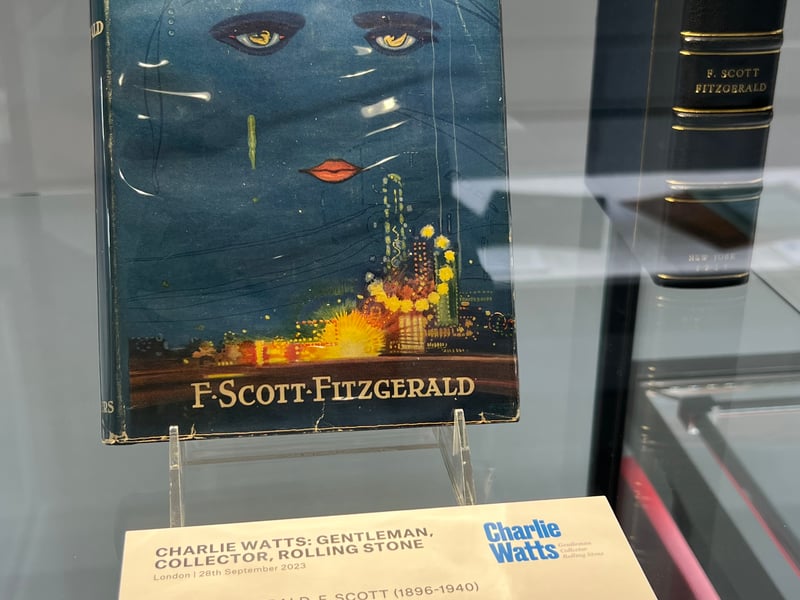
Arguably one of the most precious works — one that deep-pocketed collectors will surely bid top-dollar for — is a 1925 first edition and first printing of Fitzgerald’s masterpiece “The Great Gatsby.” Christie’s estimates that the book will fetch between $130,000 and $190,000. The dust jacket, illustrated by the Spanish artist Francis Cugat, features hypnotic eyes beaming through the dark sky. (Adding to the charm is a typo on the back of the dust jacket. The main character’s name of “jay Gatsby,” misspelled with a lowercase “j,” is hand-corrected to instead have a capital letter.)
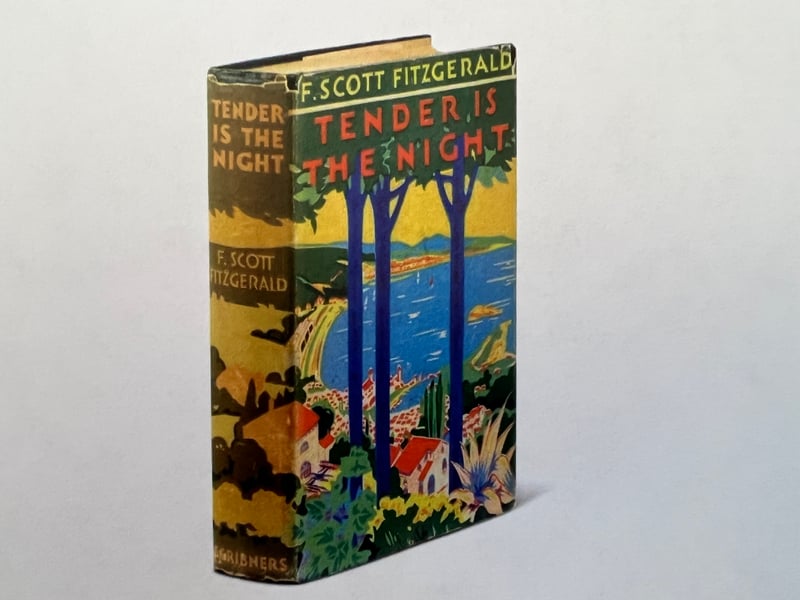
Also among the collection is a first edition, presentation copy of Fitzgerald’s final novel “Tender is the Night” from 1934, with an inscription from the author to “Archie & Ada.” The note is to American poet Archibald MacLeish and his wife Ada, who along with Fitzgerald and his own wife were part of the bohemian expatriate community in Paris in the 1920s.
For lovers of more challenging literature, there’s also a 1936 edition of James Joyce’s “Ulysses.” It’s one of only 100 copies that were part of the first British edition, issued in deluxe format on mould-made paper and bound in vellum.
Joyce signed the copy, which Christie’s estimates will fetch between $20,000 and $32,000. That’s not quite the bargain the original buyer got in 1936. An invoice inside the book shows that buyer paid four guineas for his purchase — two guineas less than the advertised price on the label. (The guinea, worth about the equivalent of a British pound, was long obsolete as a currency by the 1930s but was still used at the time to list prices for luxury items.)
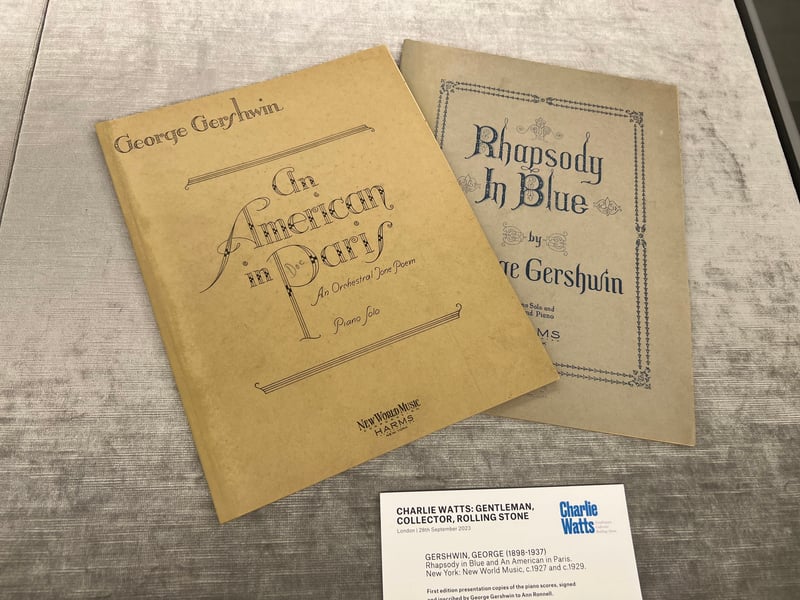
Then, of course, there’s the music. Highlights from the collection include a number of rare musical scores, including presentation copies of Irving Berlin’s “Top Hat” from 1935 and “Follow the Fleet” from 1936. Both are signed by the composer and dedicated to Ginger Rogers. There are also signed first edition presentation copies of George Gershwin’s “Rhapsody in Blue” from 1927 and “An American in Paris” from 1929, both accompanied by pencil annotations, rewrites and other markings by Gershwin.
Still, the collection would hardly be complete were it not for the jazz music — Watt’s true musical love in life. Watts was a fan of the genre from an early age, and his first ventures as a drummer were in a jazz band in his native London in the late 1950s. It wasn’t until the early ‘60s, when Watts was working by day as a graphic designer, that he transitioned to playing more rhythm and blues.
He was recruited in early 1963 by the Rolling Stones, which had just formed the previous year. Watts was used to getting paid for gigs — but according to band lore, the Rolling Stones at first couldn’t afford to hire Watts. He reportedly only agreed to join after he was offered five pounds a week, beginning a rock star adventure that lasted almost 60 years.
Outside the Stones, Watts shunned the limelight and the trappings of rock ’n roll stardom. He stayed married to his first wife, Shirley Shepherd, whom he met before joining the band. He bred Arabian horses at his farm in rural England.
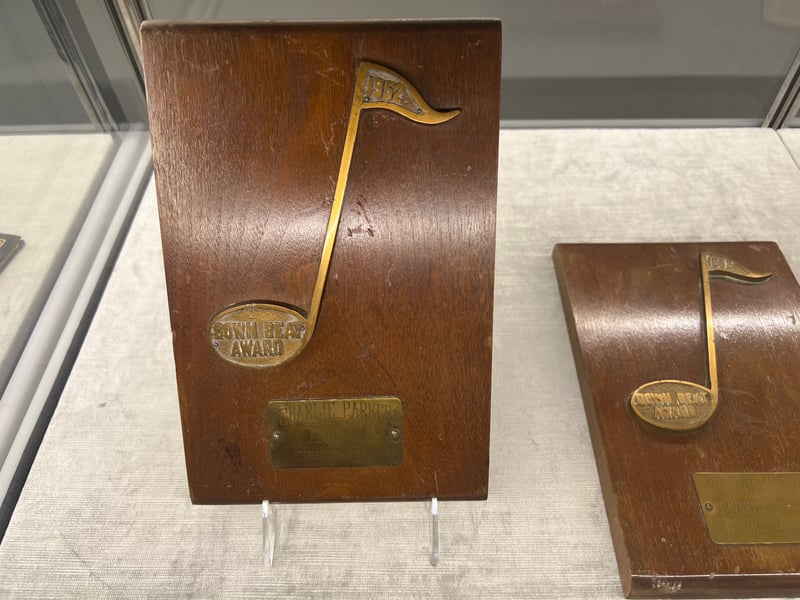
In the 1990s, he turned his focus back to jazz, forming his own quintet. That group, known as the Charlie Watts Quintet, was partially formed as a tribute to bebop great Charlie “Bird” Parker. His lifelong affection for the jazz saxophonist is evidenced in the auction collection, which features two mahogany and brass Down Beat awards won by Parker in 1953. Christie’s expects those items will catch bids between $13,000 and $19,000.
 Follow @edpettersson
Subscribe to our free newsletters
Our weekly newsletter Closing Arguments offers the latest about ongoing trials, major litigation and rulings in courthouses around the U.S. and the world, while the monthly Under the Lights dishes the legal dirt from Hollywood, sports, Big Tech and the arts.