
 Search Articles


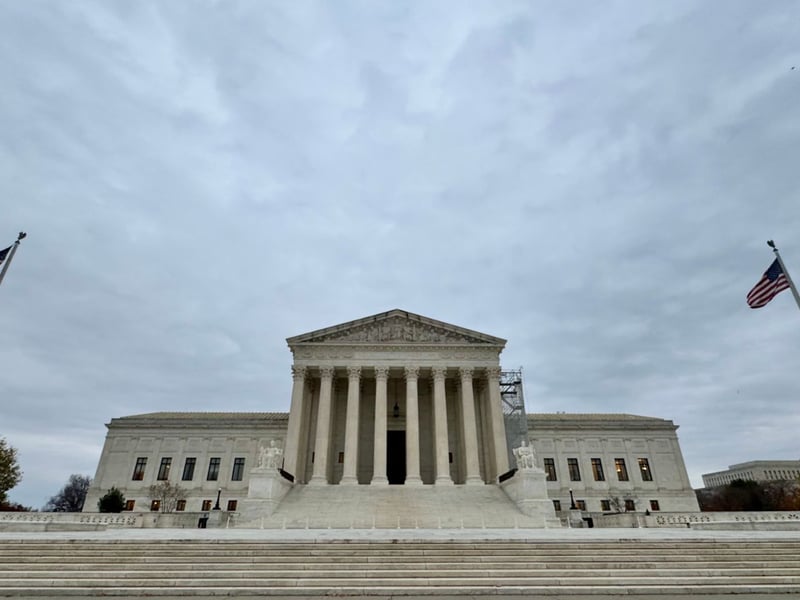
WASHINGTON (CN) — The U.S. Supreme Court agreed Friday to review whether a Catholic nonprofit umbrella organization should be exempt from Wisconsin’s unemployment insurance tax.
The Wisconsin Supreme Court ruled that subordinate businesses operated by the Catholic Charities Bureau had to pay unemployment taxes because they didn’t operate primarily for religious purposes.
At the Supreme Court, the case sets up a consequential battle over church and state relations by allowing governments to interfere with an organization’s religious mission.
“Wisconsin is trying to make sure no good deed goes unpunished,” Eric Rassbach, vice president and senior counsel at the Becket Fund for Religious Liberty who is representing the group, said in a statement. “Penalizing Catholic Charities for serving Catholics and non-Catholics alike is ridiculous and wrong. We are confident the Supreme Court will reject the Wisconsin Supreme Court’s absurd ruling.”
Catholic Charities says it serves the poor and disadvantaged through several separately incorporated organizations. The entities — Barron County Developmental Services, Black River Industries, Diversified Services and Headwaters — all provide daily living and job training for people with disabilities.
The entities don’t receive funding from the Catholic diocese, provide religious training or attempt to inculcate the faith.
A trial court determined that a separate organization linked to the charities was eligible for the religious exemption. However, when Catholic Charities asked the Wisconsin Department of Workforce Development to do the same for the entities in this case, the agency refused.
While they’re affiliated with the church, the Wisconsin Supreme Court determined that the entities’ work was primarily secular. Catholic Charities said the ruling stereotypes religious activities.
“By penalizing Catholic Charities for engaging in critical parts of its ministry (like serving those in need without proselytizing), Wisconsin did not treat Catholic Charities with religious neutrality,” the group wrote. “Instead, the state denied Catholic Charities an exemption precisely because its religious beliefs and exercise differed from what the Wisconsin Supreme Court thought were ‘typical’ religious activities.”
The high court also agreed Friday to hear an environmental battle between fuel producers and the Environmental Protection Agency. Led by Diamond Alternative Energy, a Delaware-based biofuel manufacturer, the fuel producers claim that the federal government let California act as a “junior-varsity EPA” by establishing its own vehicle-emission standards to tackle climate change.
California’s standards have been adopted in the District of Columbia and 17 states, or over 40% of the county’s new vehicle market. The fuel producers say the decrease in fuel demand will injure them financially and blame the EPA for allowing California to lead the charge.
“Without this court’s immediate review, California’s unlawful standards will continue to dictate the composition of the Nation’s automobile market,” the fuel producers wrote.
While Diamond Alternative Energy asked the justices to review whether the waiver was unlawful, the high court only agreed to decide if the fuel producers had standing to bring their case.
Per the court’s custom, the justices did not explain their decisions to hear either case.
 Follow @KelseyReichmann
 Follow @kelseyreichmann.bsky.social
Subscribe to our free newsletters
Our weekly newsletter Closing Arguments offers the latest about ongoing trials, major litigation and rulings in courthouses around the U.S. and the world, while the monthly Under the Lights dishes the legal dirt from Hollywood, sports, Big Tech and the arts.