
 Search Articles


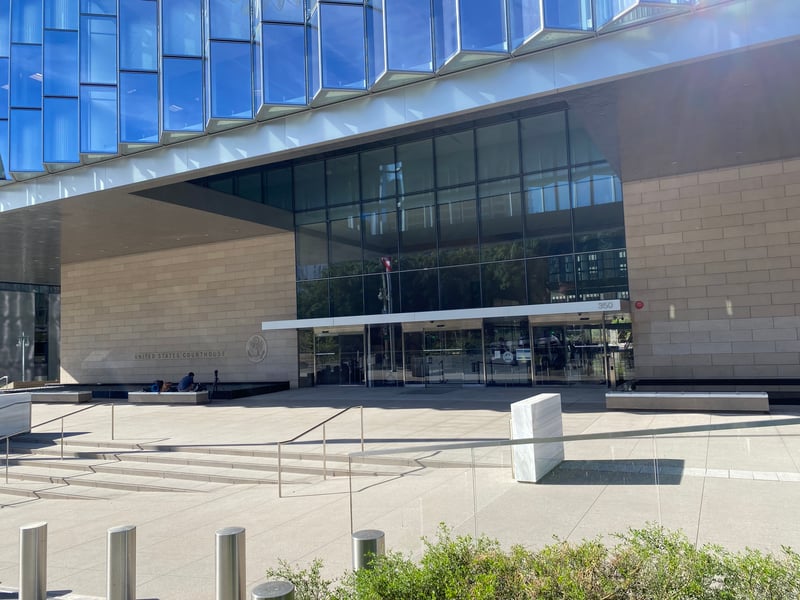
LOS ANGELES (CN) — A federal judge on Tuesday rebuffed the U.S. Chamber of Commerce’s bid to get a quick win in its First Amendment challenge to California laws requiring large businesses to disclose their greenhouse gas emissions and report their climate-related financial risk.
U.S. District Judge Otis Wright II in Los Angeles denied the chamber’s motion for summary judgment on its claim that the California laws amount to compelled speech and as such are unconstitutional.
The problem, the judge said, is that at this early stage of the litigation, before either side has provided him with any evidence or testimony, he doesn’t have enough information to determine what level of scrutiny the California laws require to evaluate whether they tread on the constitutional rights of the corporations affected by them.
“Indeed, plaintiffs chose to litigate this case as a facial challenge, and that decision comes at a cost,” the judge wrote.
In a facial challenge, a plaintiff argues that a statute is invalid as written and can’t be enforced at all — whereas an as-applied challenge is typically narrower and may only seek to limit the statute’s enforcement.
On their face, the judge said, the two laws apply to all companies that meet the relevant revenue thresholds and that do business in California, but he still would have to decide which of their applications violate the First Amendment and weigh the constitutional against the unconstitutional applications.
In this regard, Wright noted that the chamber and the other business organizations that brought the lawsuit admit that the bills were designed in part to prevent companies from making potentially misleading statements in advertising their businesses as “green” or adhering to “net zero emissions goals.”
The California laws may be seen as regulating commercial speech and therefore requiring less than strict scrutiny. “But they also may not,” Wright said.
“To determine which level of scrutiny to apply, the court needs a record on whether SB 253 and 261 regulate a substantial number of companies that do not make potentially misleading environmental claims.”
Representatives of the U.S. Chamber of Commerce didn’t immediate respond to a request for comment on the ruling.
The chamber in January sued the California Air Resources Board, the agency tasked with enforcing Senate Bills 253 and 261, which were signed into law by Governor Gavin Newsom in October.
“This lawsuit challenges two novel California laws that unlawfully attempt to regulate speech related to climate change,” the chamber said in the complaint filed in Los Angeles federal court. They “impermissibly compel thousands of businesses to make costly, burdensome, and politically fraught statements about their operations, not just in California, but around the world, in order to stigmatize those companies and shape their behavior.”
California’s so-called Climate Accountability Package imposes unprecedented reporting requirements on large U.S. public and private companies doing business in the state, attorneys with Sidley Austin observed last year, and it has the potential to reach “every part of a company’s value chain.”
Both laws, according to the Chamber of Commerce, unconstitutionally compel speech in violation of the First Amendment and seek to regulate an area that is outside California’s jurisdiction and exclusively subject to federal control per Clean Air Act.
SB 253, known as the Climate Corporate Data Accountability Act, requires businesses with more than $1 billion in annual review to disclose their greenhouse gas emissions to a reporting organization. SB 261 requires that businesses with more than $500 million in annual revenue report their climate-related financial risk biannually.
The laws attempt to promote accountability through what the chamber said is an unconstitutional mechanism in the form of regulation of speech. SB 261 requires businesses to prepare a detailed report on the risks of climate change and to post that report on their websites.
SB 253 requires them to estimate and publicly disclose their greenhouse gas emissions, including the emissions of others that it does business with, such as customers, suppliers and contractors.
“The purpose of these speech compulsions is to ’encourage’ companies to conform their behavior to the policy preferences of the state,” the plaintiffs say in their complaint.
Newsom, in signing the two bills last year, noted the deadlines for implementation likely weren’t feasible and that they could result in inconsistent reporting by businesses. The governor was also concerned about the costs for businesses to comply with the statutes and instructed the California Air Resources Board to closely monitor the financial impact.
 Follow @edpettersson
Subscribe to our free newsletters
Our weekly newsletter Closing Arguments offers the latest about ongoing trials, major litigation and rulings in courthouses around the U.S. and the world, while the monthly Under the Lights dishes the legal dirt from Hollywood, sports, Big Tech and the arts.