
 Search Articles


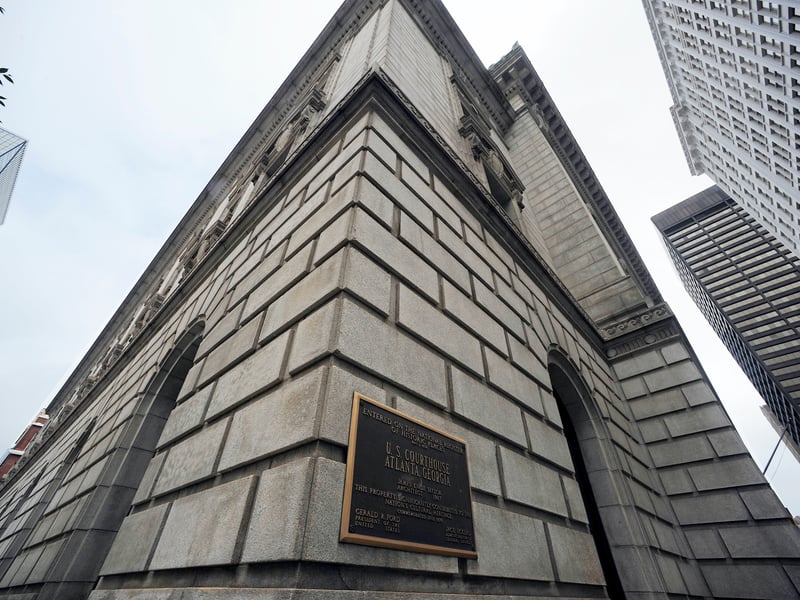
ATLANTA (CN) — Florida anti-abortion activists brought their challenge to a protest-free zone at a women’s health clinic to the 11th Circuit on Tuesday, asking the three-judge panel to overturn a federal judge’s refusal to block a vehicle safety ordinance.
The Clearwater, Florida, City Council passed the ordinance last March in response to increasingly tense protests at the Bread and Roses Women’s Health Center — the city’s only abortion clinic — after the U.S. Supreme Court overturnedRoe v Wade . The ordinance prohibits protesters from crossing the clinic’s driveway or the portion of sidewalk within five feet of the driveway.
Pro-life organization Florida Preborn Rescue, joined by four of its “sidewalk counselors,” sued the city, claiming the buffer zone violates their First Amendment rights.
The plaintiffs say the ordinance targets people “who have a pro-life viewpoint” and deprives them of opportunities to give women entering and exiting the clinic information discouraging them from seeking abortions. Florida law bans most abortions after six weeks of gestation.
An attorney for the plaintiffs told the 11th Circuit panel his clients have not been disruptive and argued the ordinance unfairly prevents them from calmly approaching people. Anyone violating the ordinance may receive a civil citation and a fine and could be arrested for obstruction.
“All we want to do is be able to approach people in a calm and caring manner and let them see our expression, let them see our nonverbal cues, let them know we’re here to help them,” attorney Brennan Tyler Brooks of the Thomas More Society said.
A Florida federal judge last year rejected the plaintiffs’ motion for a preliminary injunction to block the ordinance, ruling that it served the city’s interest in promoting vehicular safety and did not prevent the plaintiffs from engaging in free speech activities.
U.S. District Judge Mary Scriven found the buffer zone is narrowly tailored for public safety in contrast to a 10-foot buffer zone around a Kentucky clinic ruled unconstitutional in 2022 by the Sixth Circuit in Sisters for Life v Louisville-Jefferson County .
Brooks said Tuesday that the ordinance would unfairly force his clients to change their desired communication style. The plaintiffs have argued that being forced to stand five feet away from the driveway makes it impossible to pass out leaflets and prevents them from having quiet conversations with people in cars.
“There’s no ability to make eye contact,” Brooks said. “If we’re going to communicate we have to turn into yellers, we have to turn into people that have signs and that makes us look like protesters and that fundamentally transforms our message from being sidewalk counselors.”
According to Scriven’s ruling, protesters often rushed up to cars before the passage of the ordinance, holding signs up against the passengers’ and drivers’ windows as they exited or entered the driveway. Protesters also stood in the driveway, blocking traffic.
An attorney for the city told the panel the ordinance “leaves ample alternative avenues of communication” while balancing the city’s need to ensure public safety.
“The city was in a position where [the] clinic was the subject of demonstrations, confrontations, things that caused danger to the public health, safety and welfare,” Clearwater-based attorney Luke Lirot said. “They felt if they didn’t do anything, matters would just continue to get worse.”
U.S. Circuit Judge Nancy Abudu pushed back, saying the argument sounded “prophylactic as opposed to reactive” in light of evidence the plaintiffs did not engage in unlawful or inappropriate behavior.
“It almost seems they’re getting punished for other bad apples,” the Joe Biden appointee said.
But Lirot argued a “long history of tragedy and accidents” is not necessary to support the imposition of a minimally restrictive ordinance.
U.S. Circuit Judge Kevin Newsom also appeared skeptical of the city’s arguments. The Donald Trump appointee said it seemed the plaintiffs’ ability to engage in leafletting and close communication with clinic visitors was significantly curtailed by the buffer “just as a matter of spatial physics.”
Lirot told the panel the plaintiffs can still speak to people walking into the clinic beyond the five-foot buffer without even raising their voices.
“Nothing prohibits someone from walking up and getting a leaflet at all,” Lirot added. “The entire perimeter of this clinic is available for the distribution of leafletting. The only restriction is based entirely on vehicular safety.”
Pointing out that the ordinance applies only to the Clearwater clinic, Abudu asked whether the plaintiffs could engage in their sidewalk counseling in another area.
But Brooks said his clients have a “very important message” for women who choose to go to the Clearwater clinic specifically, “which is that she is special, that she is cared about and that we have resources for her.”
U.S. Circuit Judge Britt Grant, also Trump appointee, rounded out the panel. The judges did not indicate when they will reach a decision.
 Follow @KaylaGoggin_CNS
Subscribe to our free newsletters
Our weekly newsletter Closing Arguments offers the latest about ongoing trials, major litigation and rulings in courthouses around the U.S. and the world, while the monthly Under the Lights dishes the legal dirt from Hollywood, sports, Big Tech and the arts.