Search Articles


(CN) — The San Joaquin Valley Air Pollution Control District must face a lawsuit brought by five environmental justice groups after a federal judge on Friday denied its motion to dismiss.
The regulator argued that the Clean Air Act does not authorize citizens to sue air quality control districts, regional government agencies that monitor air pollution and enforce emission limits.
U.S. District Judge Kirk Sherriff disagreed, citing two rulings from the Ninth Circuit Court of Appeals, which he said found “that citizens could pursue an enforcement action … if the state failed to perform its regulatory duties.”
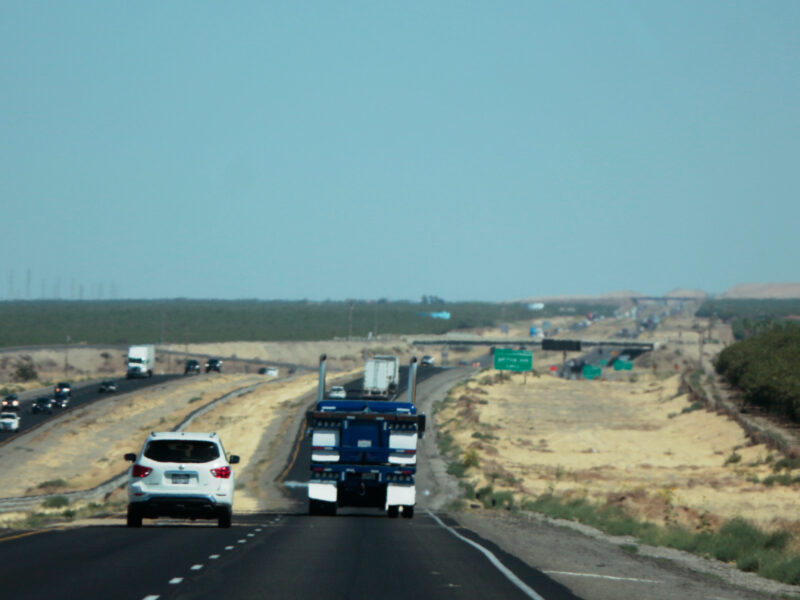
Located in the southern part of California’s Central Valley and including cities like Fresno and Bakersfield, the San Joaquin Valley is one of the most agriculturally productive regions in the world — and has some of the worst air pollution in the country. That’s due in large part to its geography, as well as the prevalence of heavy-duty farm vehicles and trucks.
The Clean Air Act tasks air quality control districts with maintaining certain levels of various air pollutants, including ozone and nitrogen oxide.
If pollutants exceed safe levels, the district must impose limits on new and modified sources of pollution. In order to obtain a permit, the owners of the new pollution sources must “offset” their emissions — for example, by switching from gas-powered vehicles to electric.
Five groups including the Central Valley Air Quality Coalition sued the pollution control district and its governing board in 2023, claiming the agency had “engaged in a series of actions to manipulate the accounting system.”
By “improperly claiming the system demonstrated compliance,” the groups said the district was allowing “thousands of tons of unmitigated air pollution annually into the San Joaquin Valley’s already polluted air.”
A 2020 audit by the California Air Resources Board found, among other things, that the district had “minimized the amount of federally required offsets on one side of the accounting system’s ledger and claimed noncreditable pollution reductions on the other side of the ledger.” In short, the district was counting certain measures as offsets that were not actually creditable under law.
Friday’s ruling means that lawsuit against the pollution control district remains active.
Reached over the phone, the plaintiffs’ attorney Brent Newell called the ruling “a thorough, well reasoned decision,” adding: “Now our clients are looking to move forward on the merits.”
Attorneys for the pollution control district did not respond to an email requesting comment.
 Follow @hillelaron
Subscribe to our free newsletters
Our weekly newsletter Closing Arguments offers the latest about ongoing trials, major litigation and rulings in courthouses around the U.S. and the world, while the monthly Under the Lights dishes the legal dirt from Hollywood, sports, Big Tech and the arts.