Search Articles



BOISE, Idaho (CN) — On a country road some 120 miles outside of Boise in southern Idaho’s Magic Valley, this nondescript white building might not seem like much.
But first impressions can be deceiving. This property belongs to Idaho Springs Foods, a company putting out some of the finest sturgeon caviar that Idaho has to offer. It’s a big player in an often overlooked part of Idaho foodways.
Caviar might seem an odd fit for Idaho, a state best known in the culinary space for its famed potatoes.
In fact, caviar production is a burgeoning industry in the Gem State. Although the delicacy is historically associated with the Russian Empire (think: tsars feasting on beluga eggs from the Caspian Sea), the reality is a bit more complicated. So-called “true” caviar can be made with the eggs of any type of sturgeon fish, including white sturgeon, which is native to the Western United States. Idaho is the second-largest producer of these luxury fish eggs in the country, behind only California.
It’s a surprising bit of trivia. Even some fans of U.S.-produced caviar don’t realize Idaho’s importance in the industry.
“I had no idea I was moving from one caviar spot to another,” Earl Davis, who recently migrated to Idaho from California, told me as he fished at a local park in Boise. “Nobody told me Idaho had good caviar, but I’m glad I know now.”
At the moment, Idaho caviar is still a small sector.
The state only produces around 4,400 pounds of the stuff per year. That’s far less than the Golden State, which accounts for nearly 80% of the nation’s supply and where a single supplier can have production numbers in the tons.
While producers in the Gem State may still be small fish, they believe they have an undeniable edge on the battlefield of the palate.
“It all comes down to the way [the sturgeon] are raised,” said Linda Lemmon, processing manager at Idaho Springs Foods.
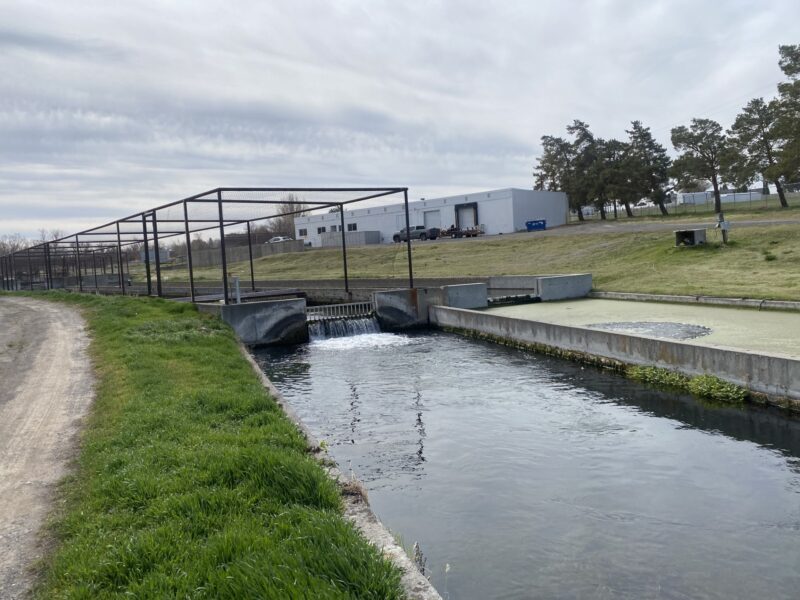
Idaho Springs Foods sold its first tin of caviar in 2005. The roots of the family business stretch back to the 1970s, when they started selling trout and other locally caught fish.
The company recently transitioned fully to sturgeon after spending years building up a supply chain. These days, they operate nearly a dozen fish farms along the Snake River. Lemmon says a constantly flowing supply of fresh river water is reflected in their fish eggs, resulting in a quality caviar product.
Allow fish to live in quality water, and the result is quality taste, agreed Carrie Jo “CJ” Fossette, Lemmon’s niece who also works at the company.
“That’s what makes our caviar so good,” Fossette said. “There’s nothing else in the water.”
Fossette was showing me around the main grounds of Idaho Springs Foods, where thousands of white sturgeons were being raised.
The farm is made up of several interconnected and gated waterways, in which thousands of sturgeon swam around. I also spotted the occasional rainbow trout, holdovers from when the farm transitioned to all-sturgeon last year.
“It’s not canal water with a bunch of contaminants in it. It’s just pure, clean, fresh water,” Fossette said. “So, our caviar tastes like pure, clean, fresh caviar."
Extensive relationships with state officials and researchers are another boon for Idaho caviar producers.
At the Aquaculture Research Institute at the University of Idaho, scientists have developed sturgeon-specific diets. They’ve used biopsies and ultrasounds to determine the exact right moment to harvest eggs — research that’s helped this state industry flourish.
“Our work has always been driven by a shared commitment to getting the product right,” said Brian Small, a University of Idaho professor and the institute’s director.
“We have a real science-to-farm relationship that has farmwide impacts,” he said. “I think Idaho caviar reflects those impacts. It’s part of why this product has earned the reputation it has, both nationally and internationally, and it’s something I’m genuinely proud to be a part of."
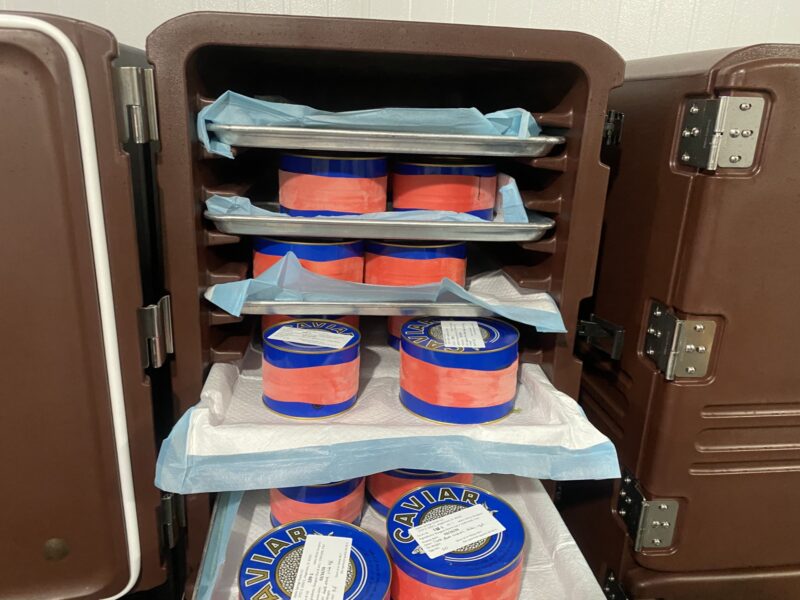
Whatever the factors, Idaho Springs Foods is happy with the result. They advertise a product so good that it can win over even those who might not have a taste for the stuff.
Skeptics, that is, like this reporter. “I think I can change your mind with our caviar,” Fossette told me.
Her hunch proved correct. I had never tasted caviar before — then Fossette and Lemmon treated me to three generous spoonfuls. The fish eggs were buttery and creamy, without even the slightest hint of fishy aftertaste that my palate was expecting. Instead, there was just a bit of saltiness and brininess, evoking the flavors of home-churned butter eaten straight from a cold mason jar.
If Idaho caviar is so good, why do so few people know about it?
For starters, there just aren’t many Idaho companies with fish skin in the caviar game.
Besides Idaho Springs Foods, there seems to be just one other major producer in the Gem State. That business — Fish Breeders of Idaho — was not available for an interview by press time.
Linda Lemmon cited another factor that she says has kept Idaho caviar under the radar.
“We’re farmers,” she said. “We are not advertisers. We’re terrible at marketing.”
“Like a lot of farmers in general, we don’t usually share our story,” she said. “We don’t toot our own horn.”
The complex process of producing caviar helps explain why the industry has such a barrier to entry.
Trout — another fish that the Lemmon family used to raise — can be raised and sold for meat in less than a year. Contrast that with the process of rearing sturgeons for caviar, where it can take up to four years just to tell the difference between males and egg-producing females.
Since both sexes look the same, that process requires a biopsy to determine which are which. After all that, it’s still another several years before the females are ready to produce eggs.
Adding to the headaches, sturgeon females are capable of reabsorbing eggs back into their bodies. Miss the window to harvest and the product might spoil or even disappear. If and when that happens, farmers are forced to wait at least another two years before eggs are ready again.
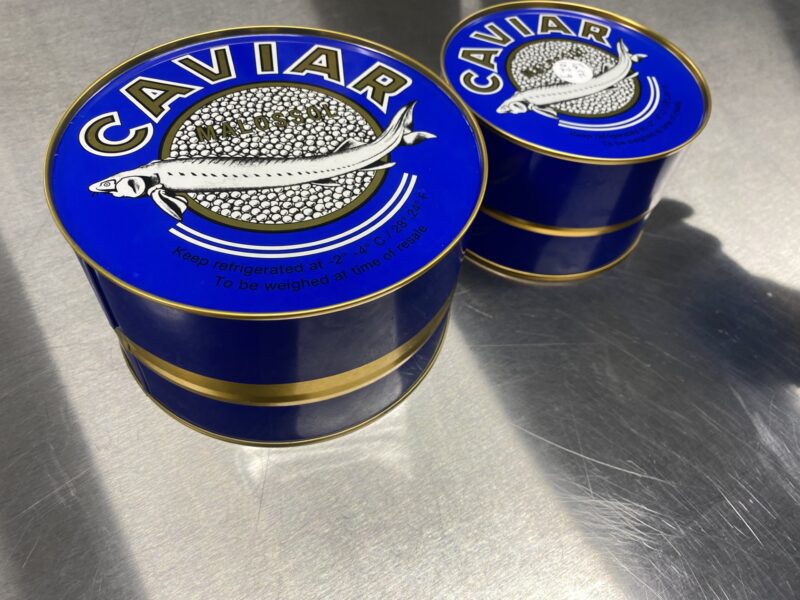
Making a splash in a sea of caviar is also a numbers game — one made difficult by state conservation regulations.
Sturgeons are a protected fish in Idaho, with only catch-and-release fishing allowed.
“There is no harvest of sturgeon in Idaho for anglers,” said Roger Phillips, a spokesperson for Idaho Fish and Game.
To get their footing in the industry, producers like Idaho Springs instead had to partner with the state to get an initial broodstock.
Phillips explained how the process went down. The state oversaw the harvesting of a few sturgeon, which were then sent to the College of Southern Idaho. The college spawned the fish, allowing them to give some to Idaho Springs without making a dent in wild sturgeon populations.
“Once they get a group of fish in their operation,” Phillips added, “the only time that they would need more is possibly if they needed some new genetics in there.”
Despite the challenges, Idaho caviar farmers have developed a product they are fiercely proud of. Maybe someday, it’ll enter the popular image of Idaho gastronomy in the same way the potato has.
That day could be a long way off. Unlike potatoes, which appear in various varieties at even the most humble grocery stores, caviar is a delicacy. Lemmon says she’s cautious about how much she publicizes her product, lest they find themselves with too many mouths to feed and too few fish to breed. “I’ve had to turn away people, because we don’t have the volume to sell.”
 Follow @CarsonAndLloyd
Subscribe to our free newsletters
Our weekly newsletter Closing Arguments offers the latest about ongoing trials, major litigation and rulings in courthouses around the U.S. and the world, while the monthly Under the Lights dishes the legal dirt from Hollywood, sports, Big Tech and the arts.
Additional Reads
 Frida Kahlo trademark dispute April 20, 2026
 Justices set up SEC win over investor harm showing April 20, 2026