
 Search Articles


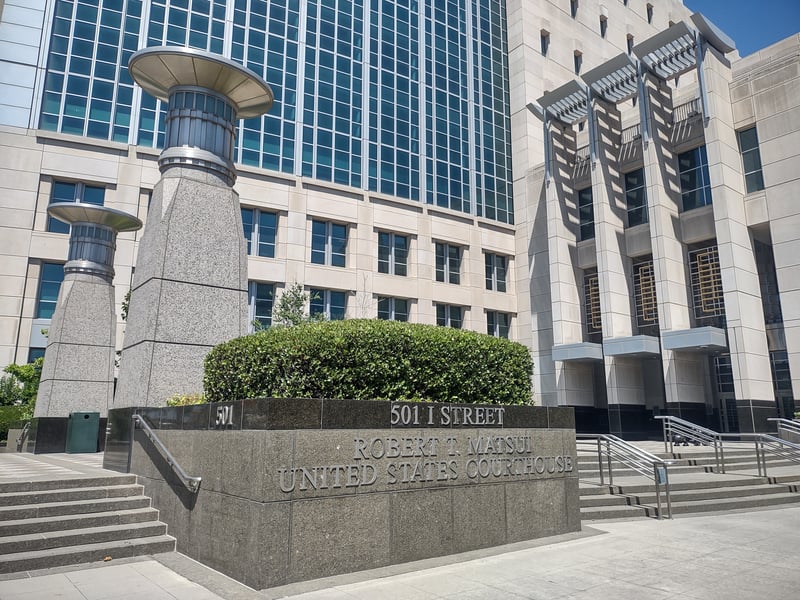
SACRAMENTO, Calif. (CN) — A legal saga stretching over a decade and resulting in a massive settlement over accusations authorities targeted an irksome defense attorney has finally ended.
The quixotic tale started in 2012 in Stanislaus County with a man’s disappearance. What followed were accusations that prominent defense attorney Frank Carson — along with brothers Baljit Athwal, Daljit Atwal and others — was linked to a murder.
A jury in 2019 acquitted Carson, Athwal and Atwal, who spent 18 months in jail during their preliminary hearing. A judge dismissed charges against remaining defendants the following year. Carson, referred to as a thorn in the side of local law enforcement, died in August 2020.
A civil case filed by Athwal, Atwal and others kept churning through the Eastern District of California. In April, days before the civil trial was set to begin, the parties settled for $22.5 million.
The Tuesday order from U.S. District Judge Daniel Calabretta came months afterward because of the time it took for attorney Arturo Jorge Gonzalez’s clients to receive the settlement checks and have them cleared.
“I have very mixed feelings about this case,” Gonzalez said Tuesday in a phone interview. “But I must confess, I’m disappointed. I really wanted to try this case."
He added, “If we had tried that case, I would have asked for a lot more."
Attorneys for Stanislaus County couldn’t be reached for comment.
Gonzalez likened the case to a movie, calling it unbelievable.
The brothers in their suit argued that authorities gained a search warrant for their homes in 2014, purportedly to find evidence linked to the murder of Korey Kauffman. At one point, an officer told Athwal’s wife he was having sex with prostitutes — a claim Gonzalez called a complete fabrication.
Gonzalez said the brothers kept a bed at the back of their store, as they worked 12- to 14-hour days.
“This is such a big story with so many little side roads,” he said. “It was ridiculous.”
Authorities had said Carson had a plan to lure thieves onto his property, supposedly guarded by Athwal and Atwal. Kauffman was last seen going to that property. His body was found over a year later.
A former California Highway Patrol officer, Walter Wells, spent 16 months in jail before prosecutors opted against trying him on a murder charge. Carson and the two brothers spent 18 months in jail during their marathon preliminary hearing.
Prosecutors dropped remaining charges against Wells and another former CHP officer, Scott McFarlane, after the acquittals. Gonzalez also represents both former officers.
“This case could have been settled for a lot less,” Gonzalez said.
The case appeared near trial in January, when Calabretta ruled in favor of the plaintiffs on a handful of motions.
Gonzalez at that hearing pointed to a man who did odd jobs for the brothers. Authorities had questioned that man about Kauffman, arguing officers coerced him into a confession he later recanted.
Authorities also had that man’s mother create a story matching her son’s, linking Carson to Kauffman, Gonzalez said.
The attorney also found fault with a cellphone expert who had used one data connection to link the brothers to Carson’s property around the time Kauffman disappeared. However, that data doesn’t have the same geographic accuracy of a call or text.
The judge in the preliminary hearing never heard about the supposed mother-son collusion and data inaccuracy, Gonzalez said.
Calabretta found evidence of omissions and inaccuracies in the arrest warrant, saying enough factual questions existed for a jury and denying a motion to scuttle the civil case.
Set for an April trial, the parties reached a settlement.
The brothers continue to operate two convenience stores, Gonzalez said. However, he doubts the two former CHP officers he represented will ever find law enforcement work again because of the lingering effects of their criminal accusations.
“They just lost two really good cops,” he said, adding later: “It ends up destroying people’s lives.”
Subscribe to our free newsletters
Our weekly newsletter Closing Arguments offers the latest about ongoing trials, major litigation and rulings in courthouses around the U.S. and the world, while the monthly Under the Lights dishes the legal dirt from Hollywood, sports, Big Tech and the arts.