
 Search Articles


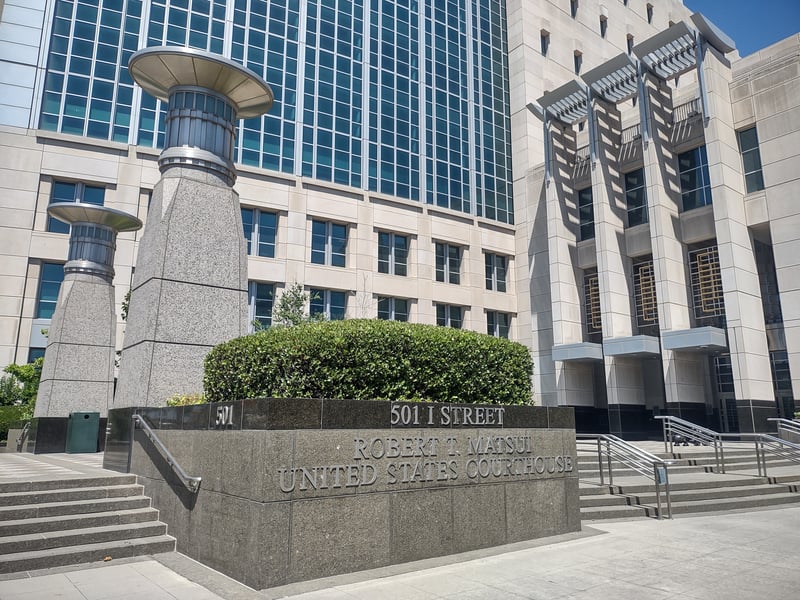
SACRAMENTO, Calif. (CN) — A sprawling case involving accusations that California authorities fabricated evidence in a murder investigation to target a troublesome defense attorney may go to trial after a federal judge ruled in favor of the plaintiffs on several summary judgment motions Wednesday.
U.S. District Judge Daniel Calabretta denied several portions of a motion for summary judgment in the case centered around attorney Frank Carson, now deceased. Carson’s estate — along with Baljit Athwal. Daljit Atwal and others — sued Stanislaus County, its former district attorney and other law enforcement officers over what it has called a vendetta against Carson.
Described as a thorn in the side of local authorities, Carson and others linked to him became embroiled in the murder trial of Korey Kauffman, who went missing in 2013. A jury acquitted Carson, Athwal and Atwal at trial in 2019. The following year, a judge dismissed charges against the remaining defendants.
Carson’s estate and the other plaintiffs argued Wednesday that a jury should hear about the omissions and misstatements a judge considered, or didn’t consider, when she found probable cause against Carson, Athwal and Atwal, who spent 18 months in jail awaiting trial. They also asked Calabretta to allow a jury to hear evidence that law enforcement conspired against the plaintiffs because rhetoric had a vendetta against Carson.
“I need to know what she actually took into consideration,” Calabretta said, referring to the preliminary hearing judge.
Attorney Arturo Jorge Gonzalez, representing Athwal and Atwal, pointed to a man who did odd jobs at Athwal and Atwal’s store. Authorities initially questioned that man about Kauffman, who attorneys have said was coerced into a confession he later recanted.
Authorities also enlisted that man’s mother to concoct a matching story with her son that would link Carson to Kauffman, Gonzalez said.
Additionally, Gonzalez said a cellphone expert used one data connection to link Athwal and Atwal to Carson’s property around the time of Kauffman’s disappearance. Information gleaned from a data connection, like a ping from an app, lacks the same geographic accuracy of a text or call.
Those two points — the alleged mother-son collusion and data connection inaccuracy — weren’t heard by the preliminary hearing judge.
“It’s a lot more complicated than that,” argued attorney John Whitefleet, representing the defendants.
Whitefleet said Gonzalez was relitigating the preliminary hearing from years ago. The judge in that case found probable cause and no evidence existed that prosecutors provided false information.
Calabretta noted that evidence of omissions and factual inaccuracies does exist in the arrest warrant, ruling that enough factual questions exist for a jury to hear the issue. He denied the defendants’ motion for summary judgment on that facet of the case.
The judge also denied summary judgment on all other legal avenues pursued by defendants, except for their argument challenging the estate’s Bane Act cause of action.
Additionally, Calabretta ruled that law enforcement officials wouldn’t have qualified immunity in the case. He also struck down arguments that prosecutors have prosecutorial immunity, ruling that a jury could find that they were improperly involved in law enforcement’s investigation.
Attorney Jayme Walker, representing Carson’s estate, argued that the district attorney’s office continually monitored the investigation and that prosecutors told officers what questions to ask witnesses during the investigatory stage.
Attorney Meredith Angueira, also representing Athwal and Atwal, said prosecutors regularly attended law enforcement task force meetings before charges were filed.
“It’s irrelevant,” Whitefleet said. “Being briefed doesn’t mean they’re directing investigators.”
The judge disagreed, ruling a jury could decide prosecutors’ daily attendance at such meetings meant improper involvement.
Concluding the hearing, the judge ordered both sides to speak with a magistrate judge to determine if the case could be settled.
Calabretta also advised the plaintiffs to consider how they would present the case, noting an aspect of it includes an 18-month preliminary hearing.
That hearing, which began in 2015, is considered one of the longest in state history.
“I have a concern for both of you, frankly,” Calabretta told the attorneys.
The trial is set for April.
Subscribe to our free newsletters
Our weekly newsletter Closing Arguments offers the latest about ongoing trials, major litigation and rulings in courthouses around the U.S. and the world, while the monthly Under the Lights dishes the legal dirt from Hollywood, sports, Big Tech and the arts.