
 Search Articles


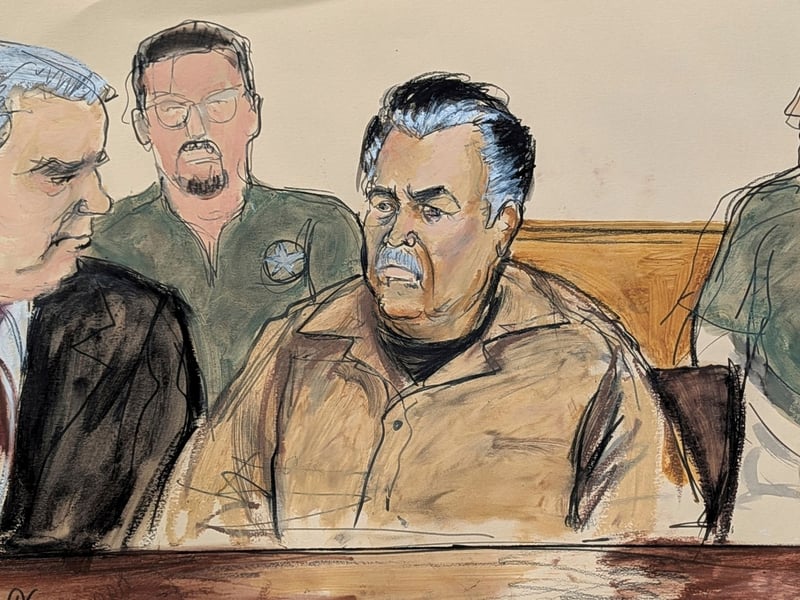
BROOKLYN (CN) — On the heels of the government opting not to seek the death penalty for Ismael “El Mayo” Zambada García, the Sinaloa Cartel leader pleaded guilty Monday in a drug trafficking case where prosecutors say he directed murders, kidnappings and a massive illicit drug operation.
Zambada, one of the most powerful drug lords in the world and longest-surviving capos in Mexico, is considered to have been the violent Sinaloa cartel’s strategist.
He will serve a life sentence, the mandatory minimum for the charges given the amount of drugs trafficked — including at least 1.5 million kilograms of cocaine, Zambada told a courtroom packed with Drug Enforcement Administration agents on Monday.The plea agreement also includes a $15 billion forfeiture order.
The 75-year-old said he dealt in drugs for more than 50 years, helping to create what would become the Sinaloa cartel. During his arrest last year, U.S. officials say he was tricked into flying to the country and then taken into custody along with Joaquín Guzmán López, a son of notorious drug kingpin Joaquín “El Chapo” Guzmán — whose own 2016 arrest and prosecution in the same Brooklyn courthouse ended with a life prison sentence.
Zambada often used “brutal force and intimidation” and maintained an arsenal of military-grade weapons to protect himself, his drugs and “his empire,” prosecutors said, and hired hitmen to carry out assassinations, kidnappings and torture.
The cartel co-founder admitted to those crimes during Monday’s hearing.
“I directed people under my control to kill others to further the interests of my organization,” he told the court.
While the Sinaloa cartel raked in “hundreds of millions” every year, many of Zambada’s own men died along with the rivals he instructed them to target.
“Many innocent people also died,” he said.
On Aug. 5, the Justice Department said it would not seek the death penalty for Zambada, who pleaded guilty Monday to charges in the Eastern District of New York and Western District of Texas.
The septuagenarian, wearing a navy prison uniform with an orange long-sleeved shirt underneath, sported a cropped beard and swept-back gray hair on Monday.
He appeared at ease throughout the hearing, listening intently, and at times rocking back and forth in his chair as U.S. District Judge Brian Cogan accepted his guilty plea.
“I recognize the great harm that illegal drugs have done to the people of the United States and Mexico and elsewhere,” Zambada told the judge.
“I take responsibility for my role for my role in all of it and I apologize to everyone who has suffered from my action.”
Frank Perez, Zambada’s attorney, emphasized that the guilty plea is not a cooperation agreement with the U.S. government.
“I can state categorically that there is no deal under which he is cooperating with the United States government or any other government,” Perez said in an emailed statement.
Perez also delivered a message from Zambada to his home state of Sinaloa.
“He calls upon the people of Sinaloa to remain calm, to exercise restraint, and to avoid violence. Nothing is gained by bloodshed; it only deepens wounds and prolongs suffering. He urges his community to look instead toward peace and stability for the future of the state.”
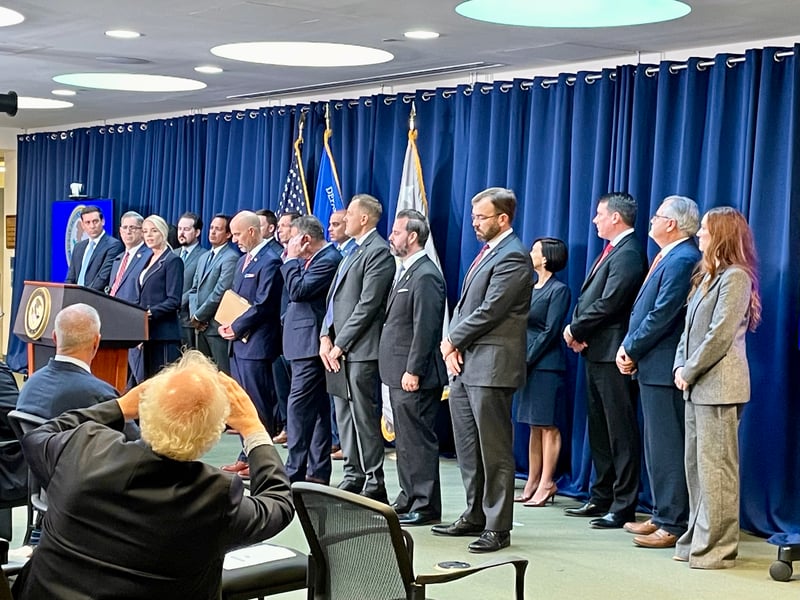
At a press conference following the guilty plea, Attorney General Pam Bondi applauded the work of prosecutors and federal agents who worked on Zambada’s case.
“El Mayo will spend the rest of his life behind bars. He will die in a US federal prison where he belongs,” Bondi said.
Brooklyn federal cartel prosecutions
The Justice Department also announced earlier this month that it would not seek the death penalty for drug lord Rafael Caro Quintero, co-founder of the Guadalajara cartel.
Quintero cofounded the now-disintegrated Guadalajara cartel, which later became absorbed into the Sinaloa cartel, the largest drug trafficking organization in the world.
U.S. officials say corrupt high-ranking Mexican officials were instrumental to trafficking operations that moved huge sums of drugs, including cocaine, fentanyl and methamphetamine, into the country.
In early 2023, a Brooklyn jury found Mexico’s former secretary of public security, Genaro García Luna, accepted millions of dollars in bribes while helping the Sinaloa cartel push thousands of tons of cocaine into the United States. He was sentenced to 38 years in prison.
At Monday’s press conference, DEA Administrator Terry Cole connected those threads and said efforts to take down major drug lords have been successful thanks to close collaboration across federal law enforcement and prosecutorial offices.
“We didn’t care who got credit," he said. “It’s the same model we used when we took down Garcia Luna, when we took down El Chapo, and as we continue to dismantle RCQ.”
Cole also highlighted deaths from fentanyl, a driver of the opioid crisis, as a motivating force.
“Every interview, every wiretap, every sleepless night was for justice — it was for justice for those families who have lost their kids to the Sinaloa cartel”.
 Follow @NinaPullano
Subscribe to our free newsletters
Our weekly newsletter Closing Arguments offers the latest about ongoing trials, major litigation and rulings in courthouses around the U.S. and the world, while the monthly Under the Lights dishes the legal dirt from Hollywood, sports, Big Tech and the arts.