
 Search Articles


ATLANTA (CN) — Carnival Cruise Line on Tuesday asked the 11th Circuit for a new trial after a Florida federal court awarded a cruise ship passenger more than $12 million in damages and interest in a false imprisonment and negligence lawsuit in which she claimed she was raped by a former crew member.
An attorney for Carnival told a three-judge panel of the appeals court that the case should be returned to Florida federal court, where jurors could get the chance to decide for themselves whether the heavily intoxicated Jane Doe was held in a storage closet against her will during a game of hide and seek.
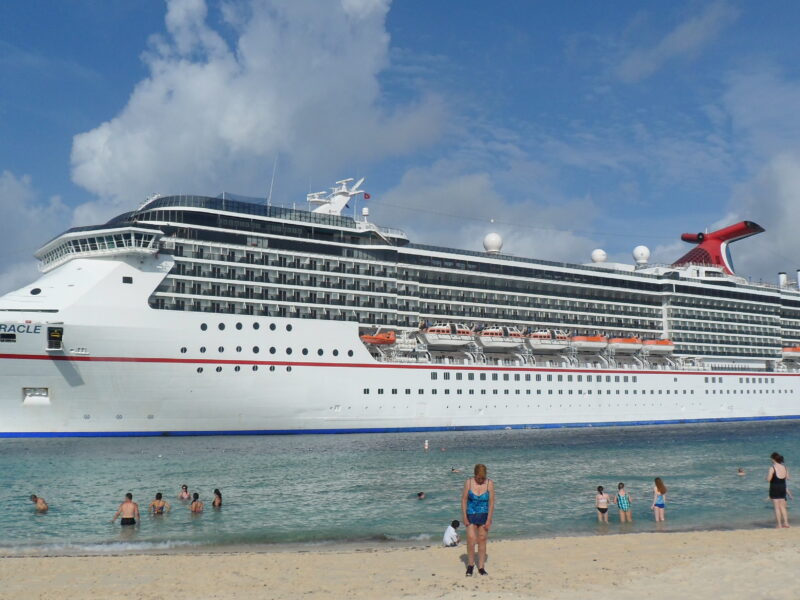
The plaintiff was a passenger on board the Carnival ship Miracle in December 2018. The 21-year-old was “blackout drunk” and had recently hit her head on the ship’s pool deck when she says she was pulled into the closet and raped by Carnival janitor Fredy Anggara.
U.S. District Judge Kathleen Williams ruled in favor of the plaintiff on her false imprisonment claim before trial. The decision came after a magistrate judge found there was no evidence on which a jury could rely to reject the plaintiff’s “undisputed recollection that at some point inside the closet Mr. Angarra did not let her exit the closet after she sought to do so.”
The jury did not find Carnival was negligent but held the company liable for Anggara’s conduct. Anggarra, who was fired by Carnival, was not a defendant in the case.
Arguing on behalf of Carnival, attorney Cate Stetson of Hogan Lovells US said the lower court’s decision was a critical error. The attorney told the panel it was “not a surprise that [the jury] found she was touched against her will” when they had already been told the plaintiff was held against her will.
Stetson also argued Williams should have allowed an FBI report into evidence, which concluded the “encounter” between the plaintiff and Anggara was consensual. FBI agents boarded the ship following the incident and questioned the plaintiff.
Philip Parrish, a Miami attorney for the plaintiff, told the panel Carnival already had its chance to argue the FBI’s conclusion could be admitted under the public records exception to the hearsay rule. Parrish said the FBI report’s conclusions were untrustworthy and based on an incomplete investigation.
But Stetson pointed to “holes” in the plaintiff’s deposition testimony, saying there is a “reliability issue.”
“There was a point where the crewmember had his hand on the door, was looking down at her, but she did not recall whether she attempted to leave and did not recall him stopping her from leaving,” Stetson said.
Parrish, however, said his client was still so drunk two hours after the assault that she was unable to give a statement.
“We have records of nine or 10 drinks [the plaintiff] remembered having, and the records unequivocally show she was still drunk two hours later,” Parrish said. “They accused her of having a convenient memory below. It’s the most inconvenient memory I’ve ever seen. She lacked the capacity to consent.”
U.S. Circuit Judge Kevin Newsom, a Donald Trump appointee, said he agreed the plaintiff’s deposition testimony was “hazy” but characterized her affidavit as “pretty clear… that she definitely remembered him holding the lock or standing by the lock or something like that.”
U.S. Circuit Judge Barbara Lagoa said the bigger problem in the case is that, after partial summary judgment was granted, the jury was told that false imprisonment had occurred. Lagoa said if the FBI report was admitted into evidence, it would have created a “genuine issue of material fact” that the jury would have had to decide on.
“The [District Court] did not allow the finders of fact to make a determination as to whether or not there was a claim for false imprisonment,” Lagoa, also a Trump appointee, said. “She made that decision for them.”
Parrish argued it was Carnival’s fault the jury was not allowed to act as a factfinder.
“Carnival had a year to point out to the court that diametrically opposed testimony was going to come into the record,” Parrish said, claiming the cruise line had numerous opportunities before the last day of trial to raise the issue.
“They had the key to unlock that ruling in their possession for a year. It wasn’t until our client testified and ruined their case that they went looking for something to salvage this case,” Parrish said. “Don’t blame the court, blame Carnival.”
Stetson argued the jury should have been allowed to weigh the evidence and determine the plaintiff’s credibility for themselves.
But U.S. Circuit Judge Embry Kidd questioned Carnival’s “very bare bones” response to the motion for partial summary judgment, saying the cruise line did not explain why the FBI report should be admissible.
“Why should we do the work that Carnival didn’t?” the Joe Biden appointee asked.
Newsom appeared to have similar concerns, asking, “What did take Carnival so doggone long to make the argument you’re now making about this?”
Stetson said there was “a lot going on at this period of time” and called the hectic proceedings “a 10-ring circus,” but argued a new trial was nonetheless warranted.
The panel did not signal when it would issue a decision in the appeal.
 Follow @KaylaGoggin_CNS
Subscribe to our free newsletters
Our weekly newsletter Closing Arguments offers the latest about ongoing trials, major litigation and rulings in courthouses around the U.S. and the world, while the monthly Under the Lights dishes the legal dirt from Hollywood, sports, Big Tech and the arts.