
 Search Articles


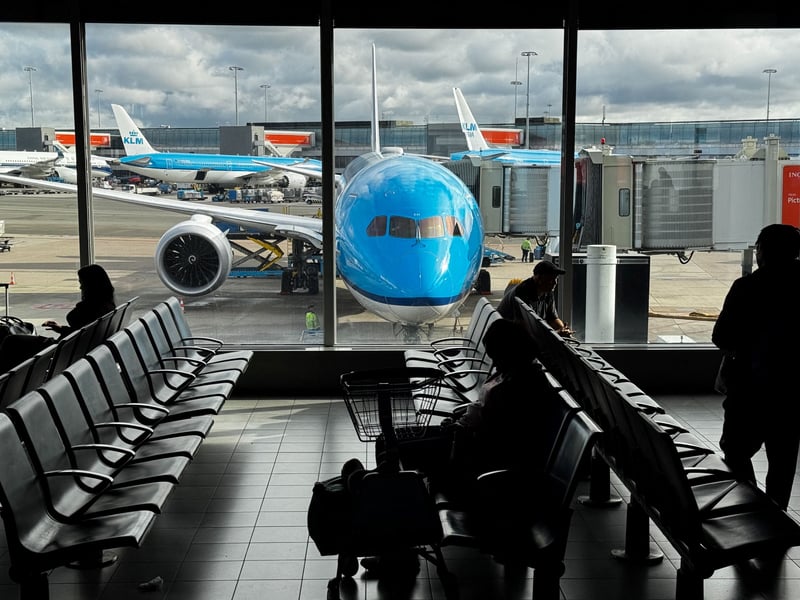
(CN) — When people book flights online, they see a single price and expect it all back if the flight is canceled.
On Thursday, the EU’s top court delivered a ruling that leans on that consumer instinct.
The Court of Justice of the European Union said airlines cannot slice up refunds after a cancellation, ruling that passengers are entitled to get back everything they paid for a ticket including booking fees charged by online travel agencies, even if the airline says it does not know the exact amount.
From the traveler’s perspective, the judges said, a plane ticket is bought as a single package. Whatever airlines and booking platforms sort out between themselves should not determine how much money a passenger gets back if a flight never takes off.
The judges rooted their reasoning in the EU’s longstanding rules on air passenger protection, which are built around a straightforward promise: When a flight is canceled, travelers should get back what they paid.
Refunds, the court made clear, are linked to the passenger’s out-of-pocket cost — not how much money the airline ultimately kept.
In 2020, passengers using the website Opodo booked long-haul flights from Vienna to Lima via Amsterdam with the airline KLM. They paid about 2,053 euros or about $2,383, a sum that covered both the airfare and a separate booking commission of roughly 95 euros (around $110) charged by the travel agency.
After the flights were canceled, KLM refunded the fare but not the commission. That unpaid amount became the focus of the case, as Austria’s consumer watchdog, the Verein für Konsumenteninformation, argued that EU law requires reimbursement of the full price passengers paid for their tickets including the intermediary’s fee.
KLM pushed back, saying it had never authorized that commission and did not know its exact amount. The Austrian Supreme Court asked the EU court to clarify whether such knowledge was legally required.
The answer was no.
The court said airlines cannot wash their hands of fees charged by booking platforms they have authorized to sell tickets. Once a carrier lets an intermediary act on its behalf, the judges said, it comes with the basic understanding that commissions are part of how those tickets are sold.
Just as important, the court rejected the idea that refunds should hinge on whether an airline knew the exact amount charged in a particular booking. Tying reimbursement to that kind of inside knowledge, the judges said, would weaken passenger rights, turn refunds into a procedural mess and “be contrary to the objective of ensuring a high level of protection for air passengers.”
The dispute hinges on Regulation 261/2004, the EU’s cornerstone air passenger rights law. Adopted in 2004 after years of frustration over cancellations, delays and denied boarding, the rules were designed to give travelers clearer, enforceable rights in an industry where complaints are rampant.
The rules guarantee passengers a refund within seven days when a flight is canceled. They also define “ticket” as something that can be issued either by the airline itself or by an authorized agent, including online booking platforms.
That definition proved decisive in this case. Because passengers cannot avoid paying a commission when they book through an intermediary, the court treated the fee as part of the same transaction.
As the judges explained, “the collection of that agency commission, as an ‘unavoidable’ component of the price of the airline ticket, must be regarded as being authorized by the air carrier.”
Legal scholars said the ruling reinforces a familiar thread in EU consumer law, one that looks at passenger rights from the perspective of travelers rather than the internal accounting practices of airlines and booking platforms.
Pablo Mendes de Leon, professor emeritus of air and space law at Leiden University, said the outcome fits squarely within the court’s established approach to passenger protection.
Questioning how airlines could claim ignorance of platform commissions after years of cooperation, he said the broader takeaway was familiar: Once again, the judges interpreted “ticket price” broadly, creating case law that favors predictable refunds for travelers.
Jakub Kociubiński, a professor of EU and international law at the University of Wrocław, said that the same reasoning plays out most clearly from the passenger’s side of the transaction.
Travelers, he noted, see a single price on the screen and pay it. Whether that amount is labeled a fare, a commission or an “arrangement fee” is legally irrelevant to consumers and should not determine how much money they get back after a cancellation. Any lack of awareness on the airline’s part, he added, is an internal business issue that should not be shifted onto passengers.
Marta Infantino, an associate professor of law at the University of Trieste, framed the decision in even broader terms.
She described Regulation 261/2004 as one of the EU’s most successful consumer protection laws, both in theory and in everyday use. Including intermediary commissions in refunds, she said, not only strengthens the position of passengers as the weaker party, but also creates incentives for airlines to keep closer tabs on the practices of the booking platforms they work with.
KLM and Austria’s consumer watchdog, the Verein für Konsumenteninformation, did not immediately respond to requests for comment.
The ruling sends the case back to Austria’s courts, which will now have to apply the EU judges’ interpretation. In the meantime, the decision settles a familiar dispute for travelers in the European Union: When a flight is canceled, a refund means getting all your money back.
Courthouse News reporter Eunseo Hong is based in the Netherlands.
Subscribe to our free newsletters
Our weekly newsletter Closing Arguments offers the latest about ongoing trials, major litigation and rulings in courthouses around the U.S. and the world, while the monthly Under the Lights dishes the legal dirt from Hollywood, sports, Big Tech and the arts.