
 Search Articles


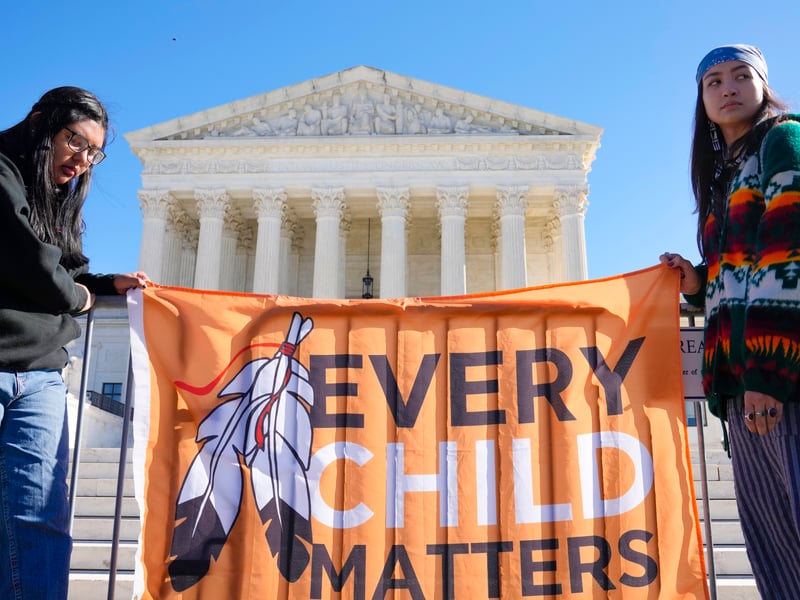
(CN) — If you were a child in foster care, would you rather be cared for by a stranger or a grandparent?
According to researchers from the University of Illinois, foster kids generally do better when placed with family — but it’s not always as simple as finding a relative with a spare room. Instead, families face a variety of barriers when trying to take in an underage relative, from a lack of government assistance to an inability to meet foster care licensing standards.
Criticism of these structural barriers and their role in perpetuating economic and racial inequality goes back decades.
A new law in Illinois known as the Kinship in Demand (KIND) Act seeks to break down some of them.
The KIND Act aims to make it easier for Illinoisans to foster relatives by offering more state resources and support. Democratic Governor J.B. Pritzker signed the measure earlier this month, after it passed both chambers of the state General Assembly in January.
Starting in July, the Illinois Department of Family and Child Services will make certified relative caregivers eligible for compensation at the same rates as licensed foster homes.
Those who aren’t certified are still eligible to receive “no less” than 90% of that funding. The bill also eases standards for kinship caregivers, so that they’re no more restrictive than what federal law requires.
The law was supported by an array of groups, from the Illinois**** ACLU and the state chapter of the National Association of Social Workers to the Illinois Department of Children and Family Services itself. In a prepared statement, agency director Heidi Mueller said “children are more likely to thrive if they remain connected to their loved ones and community.”
The KIND Act follows longstanding evidence that foster kids face better outcomes when they end up with family members, said Nora Collins-Mandeville, a policy expert at the Illinois ACLU who helped write the law.
“We now have decades of research showing kids do better when they’re placed with relatives,” Collins-Mandeville told Courthouse News.
Among that research: A 2007 MIT study focused on Illinois children linked home removals with higher rates of juvenile delinquency and teen births and lower life earnings. A pediatric review from 2011 likewise found that foster children in the care of relatives “fared better with behavioral and social skills problems.”
And yet currently in Illinois, people who want to care for relatives may not want or be able to complete the state’s monthslong process for foster licensure. To get a license, applicants must complete at least 27 hours of training, get criminal background checks for their entire household and prove they are “financially stable.”
“Often, families don’t want to go through the formal process of becoming licensed foster care providers,” said William Schneider, director of the Children and Family Research Center at the University of Illinois. Instead, he said they might think: “Why do I need to go through these trainings? Why do I want to involve myself more in the formal child welfare system?”
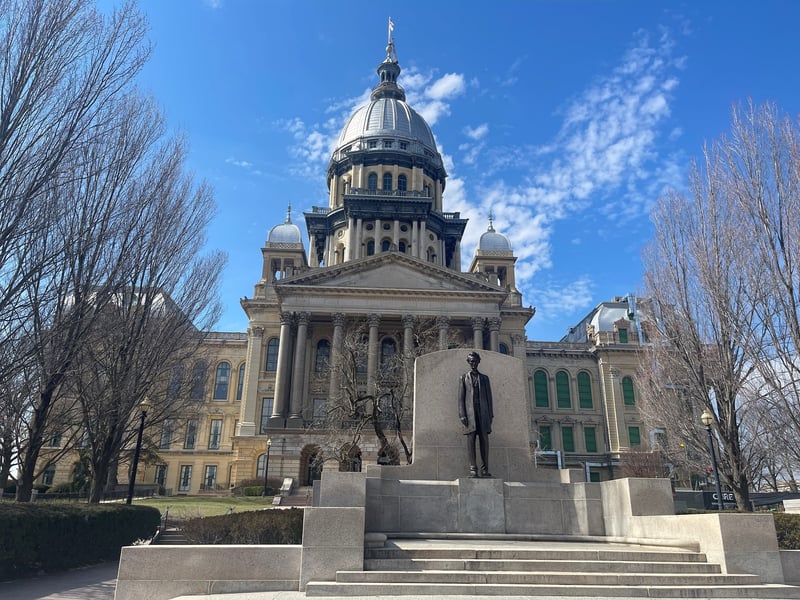
Advocates hope the changes will help address racial and economic inequalities in the foster care system. Of the roughly 18,000 children in state DCFS care in January, around 7,800 or 43% are Black.
“Black and minority families do have disproportionate contact with the child welfare system,” Schneider said. “We know that there is a lack of culturally and racially diverse foster families.”
Being family doesn’t necessarily make someone a better child caregiver. One person, who spent time in foster care and spoke to Courthouse News on the condition of anonymity, noted that family caregivers could also abuse or neglect children. Without more state funding, they voiced skepticism that the KIND Act would tangibly benefit children.
But abuse and neglect are already concerns, Schneider said, and have been for years.
In 1991, an Illinois federal court put DCFS under a consent decree after a group of foster kids argued in a class action that the state care system caused “serious damage to their mental health, development and physical well-being,” including by leaving them “warehoused” in violent and overcrowded shelters and psychiatric hospitals. Per the decree, DCFS was supposed to make a number of reforms, including limiting the number of cases per caseworker and barring unnecessary placement in psychiatric hospitals.
Reports of abuse and neglect continued regardless. Nearly 62,000 children in Illinois foster care were moved four or more times, sometimes ending up in bad homes, a 2023 investigation by CBS News found. The investigation cited a lack of resources or suitable placements. Research from the Children and Family Research Center shows that Illinois foster kids wait an average of over 50 months exiting to guardianship — the longest wait of any state. Less than half reunite with parents within a year.
Realities on the ground don’t always reflect a careful consideration of whether family placement would be best for a child facing removal, Collins-Mandeville said. Instead, she said when child protective workers are removing a child, “sometimes they’ll look for a foster home in the middle of the night, because that’s easier.”
With the KIND Act, she and other policymakers hope to make it easier for Illinoisans to take in kids from their own families — and to offer more resources for them. State lawmakers have also tried to pump more funds into the foster-care system, increasing the DCFS budget from around $2 billion in 2024 to around $2.36 billion for 2025.
The KIND Act isn’t a panacea that will fix all issues with Illinois foster care, said Ted Cross, another researcher with the Children and Family Research Center at the University of Illinois. Still, he argued it is a step in the right direction.
In particular, he praised the law’s kinship navigator program, designed to connect relative caregivers with information and assistance.
“This is a program that actually makes sure that kin are found, contacted, and become the first option for the care for the child,” he said.
 Follow @djbyrnes1
Subscribe to our free newsletters
Our weekly newsletter Closing Arguments offers the latest about ongoing trials, major litigation and rulings in courthouses around the U.S. and the world, while the monthly Under the Lights dishes the legal dirt from Hollywood, sports, Big Tech and the arts.