
 Search Articles


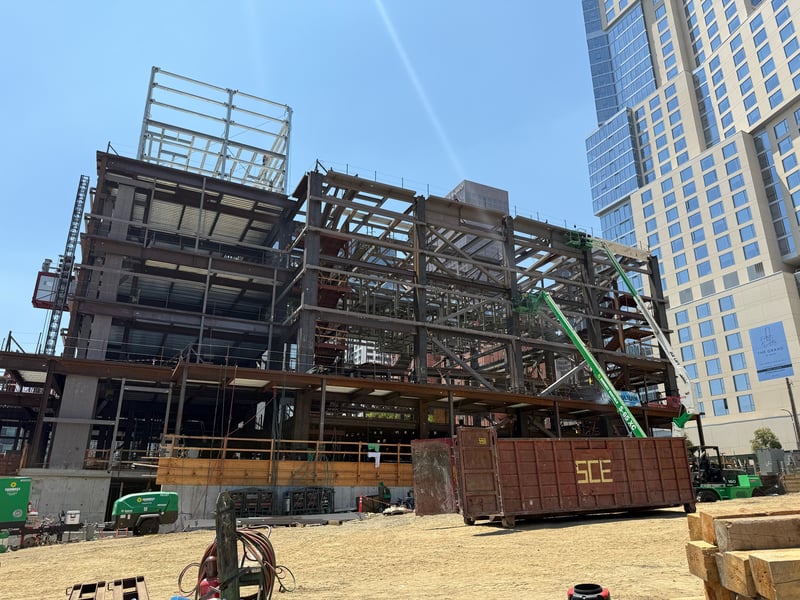
(CN) — It’s been called “the law that swallowed California” and the “third rail of politics” in the Golden State. At least four previous governors stretching back to the early 1980s have tried and failed to reform it.
Finally, after 54 years, lawmakers this summer took a chainsaw to the California Environmental Quality Act or CEQA, cutting out key aspects of a law that has long strictly regulated most construction in the Golden State.
Effective immediately, they exempted a wide array of building projects from the onerous law, which often held up construction for years. Those include certain infrastructure projects, advanced manufacturing facilities, health care centers and, perhaps most importantly, large apartment buildings in cities.
The reforms were shoved through the state budget with only days’ warning at the behest of Democratic Governor Gavin Newsom. Critics said these legislative maneuvers were a subversion of the typical democratic process.
“If this was such a great idea, why did it have to be done in three days?” said Douglas Carstens, an environmental attorney who often files CEQA lawsuits. “This is the kind of stuff that would normally be debated.”
Backers, including the governor himself, say the reforms were necessary to finally address the state’s housing crisis. Rents and home prices have skyrocketed in the last few decades, driving tens of thousands into homelessness or out of the state.
“If we can’t address this issue, we’re going to lose trust, and that’s just the truth,” Newsom said at a press conference after signing the budget. At stake, he said, was “the reputation of not just Sacramento and the legislative leadership and executive leadership, but the reputation of the state of California.”
Other proponents also stressed the need for change. Democratic State Assemblymember Buffy Wicks, who represents part of the Bay Area, wrote a bill exempting urban infill housing from the CEQA process. As part of the reforms, her bill was incorporated into the budget. In a statement, she said the CEQA rule changes were “a major step toward building desperately needed homes faster, fairer and with more certainty."
Signed into law in 1970 by then-Governor Ronald Reagan, CEQA (pronounced “SEE-kwah”) created a variety of red tape around construction.
It requires local governments to analyze the environmental impacts of projects needing discretionary approval — a category that covers basically anything bigger than a single-family home, including sports stadiums, solar farms, police stations, homeless shelters, parks, subway stations and most larger apartment buildings.
Under CEQA, the agency produces an environmental impact report, paid for by the would-be builder, which is then publicly disclosed. Members of the public can voice their objections. If the analysis finds a significant impact, the report must list alternatives and proposals to mitigate it.
Finally, a governing body like a city council must vote to either approve or deny the project. All that, critics say, is a lot of bureaucracy for just one building — and under the new reforms, most apartments and a variety of other building projects will thus be exempted.

It remains to be seen what impacts the CEQA reforms will have, whether they will trigger a new golden age in the Golden State or transform cities like San Francisco into urban paradises with Manhattan-level density. The future is unpredictable, and reforms have a funny tendency to underwhelm.
Still, proponents of the new laws are cautiously optimistic. For large- and medium-sized apartment buildings, they say reforms could shave years off build times while also saving developers millions. Those are savings that, at least in theory, could be passed on to renters and buyers.
“This will not end the housing crisis overnight — no one should be surprised to hear that,” said Daniel Golub, a partner and land-use expert at the firm Holland & Knight. “But it’s a very meaningful attempt to reduce the cost and uncertainty of building housing in infill locations, and I expect it to have a significant effect.”
At its best, CEQA is meant to turn environmental reviews into one streamlined process, albeit a slow and cumbersome one.
“By design, it’s a one-stop shop for project proponents to consider all the factors — the Endangered Species Act, the Clean Water Act, the Clean Air Act” and so on, said Matthew Baker, policy director for the Planning and Conservation League, a smart-growth nonprofit based in the state capital of Sacramento which helped write CEQA. “If you take CEQA away, you still have to comply with all those other laws.”
Besides providing information to elected officials, CEQA also creates a forum for average citizens to share their input, Baker said.
“It lets the community be part of the decision-making process,” he said. “We think that’s good democracy.”
Even so, CEQA critics say it’s become far too hard to build anything new in California.
They put much of the blame on the landmark law, which they say has come to protect much more than just the environment. Despite the name, CEQA’s environmental reviews don’t just analyze ecological impacts but also effects on traffic and parking. Even the project’s aesthetics are considered. CEQA reviews also come with the threat of litigation. Anyone can file a CEQA lawsuit challenging the accuracy of the environmental impact review, or EIR.
If the plaintiff wins — and to win, they only have to be right about one aspect of the review — the process starts over. The government agency must produce a new EIR and go through the long public-comment period again.
The process can greatly drag out build times — and time, as they say, is money. Mott Smith, a developer based in LA and board chair of the Council of Infill Builders, estimates that for a project costing $10 million, it takes an additional $3,000 every day to keep that project alive due to costs like interest on loans, property taxes, overhead, maintenance and utilities.
For a $100 million building, a six-month delay amounts to a $5 million penalty, he said. A two-year delay would cost an additional $20 million.
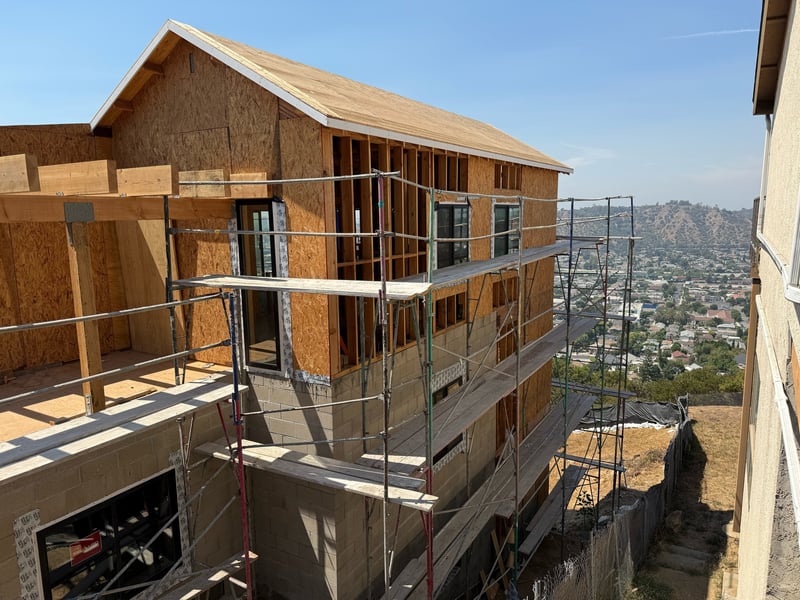
The reforms — which exempts most housing built in cities from the environmental review process — are a game changer, Smith said. Although cities and counties still have to sign off on projects requiring discretionary approval, the new rules will do away with long and costly EIRs, public-comment periods and CEQA lawsuits.
That’s the theory, anyway. “Nothing creates a magical force field around a courthouse,” noted Golub, the land-use attorney. “People will litigate this because they will litigate anything, but now there’s a much clearer pathway toward winning that lawsuit than previously existed.”
Even if Californians continue to sue over new builds, simply removing the specter of CEQA lawsuits could be enough to encourage developers.
Under the old CEQA rules, some developers were wary of trying anything too big. Others even resorted to paying off local homeowner groups just to avoid litigation. “CEQA is like a holstered gun,” said Michael Manville, a professor of urban planning at the University of California, Los Angeles. “It’s prevented some projects from getting off the ground.”
Under the new rules, cities and counties will have at most five months to review and vote on a project. That, too, will cut approval times. A 2024 study found that in LA, a 25% reduction in permitting time would result in a 13.5% increase in housing production.
For urbanists like Manville, the hope is that the rule changes — what Newsom calls “the most consequential housing reform in modern history in the state” — will usher in a bold new era of building in California, particularly in Los Angeles, which faces a severe housing crunch. When median income is compared against median home price, it’s the priciest city to live in in the United States.
But even backers warn that the CEQA reform package, though monumental, will only go so far.
“It is a necessary but not sufficient fix to our production problems,” said Smith, the LA developer. “It removes one of many roadblocks.”
Some of those roadblocks — including the costs of labor and materials — are beyond the control of politicians. Even so, Smith says Los Angeles has a long way to go to become builder-friendly. He cited design standards, which differ and even conflict across various city agencies. This issue adds to costs and delays and “is the main driver, I believe, of corruption," he said. “As a builder, you cannot resolve that conflict without engaging in an elected official’s office.”
The real importance of the CEQA reforms may be symbolic. The changes show that with enough pressure, even the most intractable state issues can overcome gridlock.
“It shows that you can touch something that’s been called the third rail of politics and survive," Smith said. And with CEQA reform now passed, “there are other third rails out there that we should be touching.”
 Follow @hillelaron
Subscribe to our free newsletters
Our weekly newsletter Closing Arguments offers the latest about ongoing trials, major litigation and rulings in courthouses around the U.S. and the world, while the monthly Under the Lights dishes the legal dirt from Hollywood, sports, Big Tech and the arts.