
 Search Articles


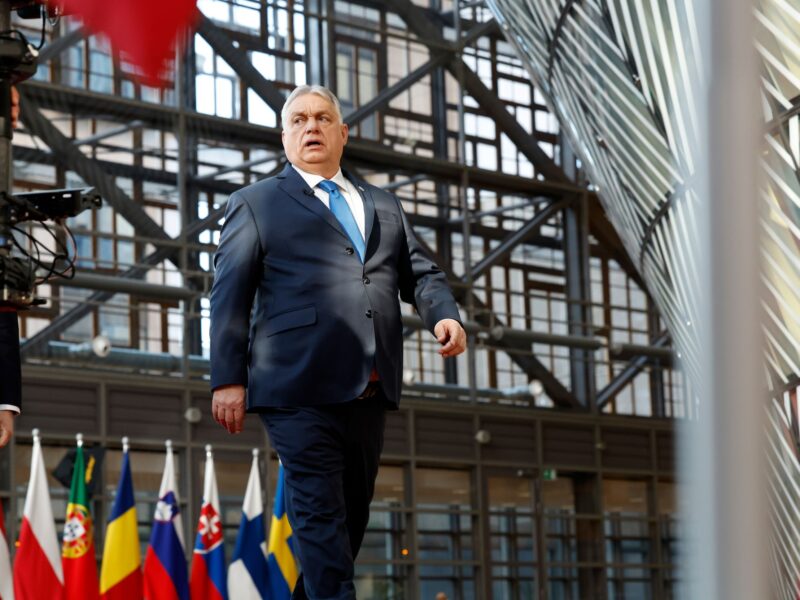
(CN) — Hungarian Prime Minister Viktor Orbán, the longest-serving leader in the European Union and an ideologue-in-chief for the far right, is on the ropes with polls projecting he will lose parliamentary elections on April 12 to a former insider turned rival.
Orbán and his Fidesz party have been in power since 2010 and in the view of critics they’ve turned Hungary into a corrupt pro-Russian authoritarian state undermining the EU, NATO and democracy over these past 16 years.
“There is an increasing enthusiasm in the belief that the authoritarian period will be over,” said András Bozóki, a Hungarian political scientist at the Central European University in Vienna. “Opinion polls give reason for such optimism.”
For liberal-minded Brussels, Orbán is a cartoon villain with his defiant vetoes of support for Ukraine, dislike of the LGBTQ community and migrants, rants against “globalized liberal elites,” trips to visit Russian President Vladimir Putin and alliance with U.S. President Donald Trump.
Orbán’s star-status among far-right figures has been clear in the runup to this election.
Last weekend, a plethora of far-right leaders— including Argentinian President Javier Milei, Alice Weidel of the Alternative for Germany and Geert Wilders of the Freedom Party in the Netherlands — descended on Budapest to attend a Conservative Political Action Conference and give their blessings to Orbán. Trump, and Netanyahu appeared on video messages to endorse him.
“Orbán is the role model for the far right in Europe, and they have supported him throughout this campaign,” said Gabriela Greilinger, an expert on far-right and Hungarian politics at the University of Georgia in the United States.
But Orbán’s era may be coming to an end.
Polls show Orbán is on track to lose to Péter Magyar, a 45-year-old former Fidesz insider who’s turned into a nimble and charismatic opposition leader. He’s spent months campaigning throughout Hungary and fine-tuning his message. He accuses Orbán of impoverishing Hungary by running a “mafia regime” that’s in the Kremlin’s pocket.
Magyar is promising to steer Hungary away from Moscow’s sphere and back toward the EU and NATO. At the same time, he vows to investigate the Fidesz government and root out corruption. On many domestic issues, though, Magyar is conservative and widely seen as “Orbán-lite.”
Magyar’s pitch is resonating: A survey released Wednesday by Median, a respected polling firm, found Tisza ahead by 23% among decided voters, by far the biggest lead yet. Pundits say Tisza could even win a two-thirds majority, key to undoing constitutional changes and laws passed by Fidesz.
Bozóki said Magyar would likely carry out promises to roll back Orbán’s “authoritarian laws” if his party wins two-thirds of the seats in the parliament, the National Assembly.
“This is what voters expect from Tisza,” he said in an email. “Péter Magyar cannot go against popular will, and I do not think that he has such an intention.”
But without a two-thirds majority, Bozóki said “it will be a long and winding road” for Tisza.
Magyar has been ahead in polls for months, a reflection of widespread dissatisfaction with Orbán over economic stagnation and corruption scandals.
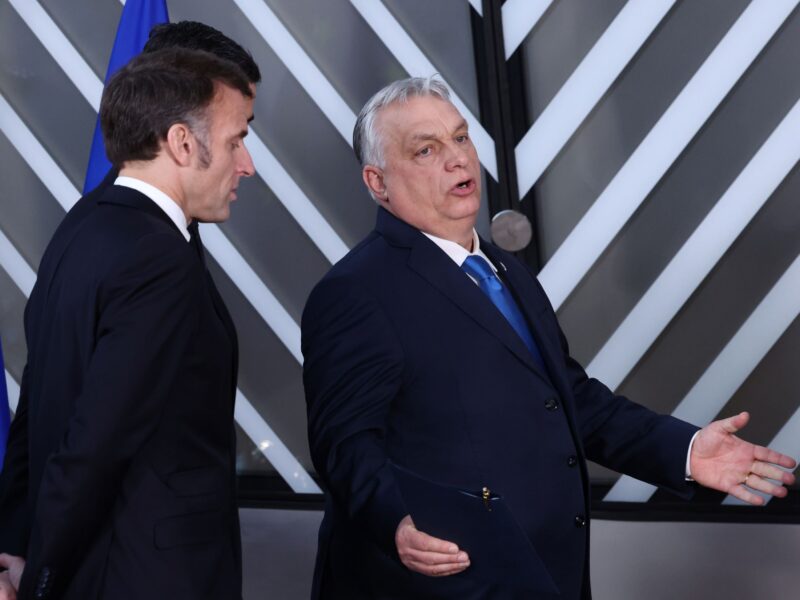
With so much at stake, the campaign has become extremely dirty and contentious with both sides accusing outside forces of seeking to sway the outcome.
In recent days, a string of news reports, often citing unnamed intelligence officials, have painted a picture of Orbán’s government working hand-in-glove with Russia.
On March 6, VSquare, a Hungarian investigative news outlet, reported that a team of Russian military intelligence agents was deployed to interfere in the election. A few days later, the Financial Times reported that a Kremlin-linked operation sought to flood Hungarian social media with messages to boost Orbán’s sagging popularity.
Last Saturday, the Washington Post issued a report citing EU security officials who accused Hungarian Foreign Minister Péter Szijjártó of routinely providing Russian Foreign Minister Sergey Lavrov with details from top-level EU meetings. The newspaper quoted an official saying Szijjártó even called Lavrov during EU summits to provide “live reports” on internal discussions, effectively giving Moscow a “seat at the table.”
Magyar used the reports to sharpen his attacks on Orbán and he vowed to investigate his rivals for possible acts of treason.
“This is an open betrayal of Hungarian and European interests,” he said.
Szijjártó acknowledged speaking with his Russian counterpart, though he insisted it was part of routine talks he held with allies, including Israel, Serbia, the U.S. and Turkey.
Orbán has unleashed his own barrage against Magyar, accusing him of receiving covert help from Ukraine, which he claims is working to oust him.
Since Russia invaded Ukraine in February 2022, Orbán has consistently taken an antagonistic approach toward Kyiv and vowed to stop it from joining the EU. Most recently, Orbán blocked billions of dollars in EU loans for Ukraine.
Meanwhile, Orbán has accused Ukrainian President Volodymyr Zelenskyy of deliberately damaging and then not repairing a Russian oil pipeline to Hungary and neighboring Slovakia.
On March 6, Hungary seized two armored cash-transport vehicles belonging to a Ukrainian bank carrying $40 million, 35 million euros and 19.8 pounds of gold through the country. Hungary said the vehicles were seized as part of a money-laundering investigation and then claimed the money was meant to be funneled to Tisza.
Tensions escalated Thursday when Hungarian prosecutors filed criminal charges against Szabolcs Panyi, an investigative journalist who specializes in tracing links between Orbán’s government and Russia. Panyi reported in VSquare on the deployment of Russian spies to aid Orbán.
Hungarian authorities accused Panyi of conducting spying activities by sharing Szijjártó’s phone number with an EU member state’s intelligence service to enable surveillance.
For his part, Magyar is accusing Hungarian intelligence officials of spying on his campaign. In February, Magyar warned the government was seeking to damage him with a secretly recorded sex tape. He said he had been targeted in a “Russia-style” honeypot operation, claiming a former girlfriend lured him to a hotel party in August 2024, where they had consensual sex. No sex tape has emerged.
Despite the polls and momentum behind Magyar’s campaign, experts say the election may wind up being much closer than projected due to Fidesz’s gerrymandering and even possible vote rigging.
Bozóki said he expected Fidesz to manipulate the vote as much as possible to prevent Tisza from getting a two-thirds majority “to prevent regime change on the spot.”
But he doubted Orbán would attempt to “declare the whole elections invalid.”
“Official results will be declared on April 25 only, when all votes from abroad will arrive,” he added. “These two weeks between the voting day and the final results will give some time to Fidesz for further manipulations.”
Still, an Orbán loss looks ever more likely and that would send shock waves across Europe and raise hopes in liberal quarters that the far-right tide is being held in check.
However, Greilinger, the University of Georgia expert, cautioned reading too much into such a scenario.
“I wouldn’t overstate the significance of Hungary or a potential Orbán loss for the European far right,” she said in an email. “It won’t mean the end of the far right, and lessons from the Hungarian case will be taken as part of their authoritarian learning.”
Courthouse News reporter Cain Burdeau is based in the European Union.
 Follow @cainburdeau
Subscribe to our free newsletters
Our weekly newsletter Closing Arguments offers the latest about ongoing trials, major litigation and rulings in courthouses around the U.S. and the world, while the monthly Under the Lights dishes the legal dirt from Hollywood, sports, Big Tech and the arts.